Night-shift workers reducing fat
You want a portable break snack and need to judge its fat content without treating low-sugar packaging as a reduced-fat claim.


If reducing fat is your priority, look for an explicit reduced-fat claim and compare fat per 100g as well as per bar with a similar product. A low-sugar or high-protein bar can still be a convenient night-shift snack, but neither description establishes that it is reduced fat. Choose a portion that fits your break, and check the current label for ingredients and allergens.
You want a portable break snack and need to judge its fat content without treating low-sugar packaging as a reduced-fat claim.
You want protein during a break but may prefer a smaller bar alongside the meals you have planned for your shift.
You need to read the label for the exact flavour, rather than assuming every bar in a range has the same ingredients or allergen information.
Start with the fat comparison if that is why you are buying the bar. Then check what one bar provides and whether its size and ingredients suit your break.
| Priority | What to check | Your needs |
|---|---|---|
| Fat comparison | Look for explicit reduced-fat wording and identify the similar product used for comparison. Read fat per 100g for a like-for-like comparison and per bar for the portion you would eat. | If cutting back on fat is my aim, I want to compare fat figures directly, not infer them from protein or sugar claims. |
| Protein and sugar | Read both figures per bar. Myprotein describes Lean Layered as providing 15g protein; Grenade states 20g protein and 1.4g sugar for its Chocolate Chip Salted Caramel bar. Neither set of figures establishes reduced-fat status. | I may want protein in a portable snack, while treating a low-sugar claim as a separate consideration from fat. |
| Break portion | Check the weight of one bar and the nutrition figures for that serving. PhD states that its Smart Bar Half Size provides 10g protein; a smaller portion alone does not establish lower fat per 100g. | For a short break, I might prefer a smaller bar while still planning meals around my shift. |
| Ingredients and allergens | Read the current ingredients, allergen declaration and any “may contain” statement for the exact flavour. Check sweeteners or polyols if those ingredients matter to you. | Before putting a bar in my work bag, I want to know whether that particular flavour meets my ingredient requirements. |
Protein, sugar and fat claims describe different things. A bar promoted for its protein or sugar content has not thereby been shown to contain less fat than a similar bar.
If fat reduction is the reason for buying, check for a reduced-fat claim and compare the fat declarations with the stated reference product.
A smaller bar gives you a smaller serving, so its per-bar figures alone cannot show how its composition compares with a larger bar.
Use per-bar figures to plan your break portion and per-100g figures to compare products of different sizes.
A bar is a snack, not a plan for every meal during an overnight shift. NHS TIMS night-shift guidance advises a full meal before work and food partway through the shift.
Plan when you will eat a meal, then decide whether a bar is useful for one of your breaks.
Ingredients and precautionary statements need checking on the flavour you buy. The Food Standards Agency explains that “may contain” labelling communicates possible unintended allergen presence.
Read the current pack, including its allergen declaration and any “may contain” wording, before choosing a flavour.
Myprotein describes its Lean Layered Protein Bar as having less fat and fewer calories than its original Layered Bar, and states that it provides 15g protein.
PhD states that its Smart Bar provides 21g protein and 1g sugar, while Smart Bar Half Size provides 10g protein and less than 2g sugar.
Grenade states that its Chocolate Chip Salted Caramel bar provides 20g protein and 1.4g sugar.
Barebells states that its Salty Peanut bar contains 20g protein and no added sugar.
Quest’s US product information includes protein-bar nutrition figures, but those figures are specific to the products presented on its US site.
Tesco is a retailer rather than a protein-bar manufacturer; its grocery listings include bars from several brands.
These Grenade bars offer different flavours and pack sizes for planning night-shift snacks. If reduced fat is your deciding requirement, compare the current fat information separately rather than choosing from protein-bar or low-sugar wording alone.
 No image available
The 50g bar size gives you a defined portion to pack for a break. This Double Chocolate option comes as 12 bars; check the current nutrition and ingredient label if fat or sweeteners affect your choice.
 No image available
This Golden Caramel variant comes as 12 x 50g bars for separately planned breaks. Compare its own fat and ingredient information rather than assuming it matches another Soft Core flavour.
 No image available
The 12 x 50g pack offers a Peanut Butter flavour in a defined bar size. Check the exact pack’s allergen statement before choosing it, as well as its fat figures if reduction is your aim.
 No image available
Each bar in this four-pack is 60g, a larger portion than the 50g Soft Core bars shown here. The High Protein Low Sugar name does not establish reduced fat; check the fat and allergen information for this Oreo Flavour variant.
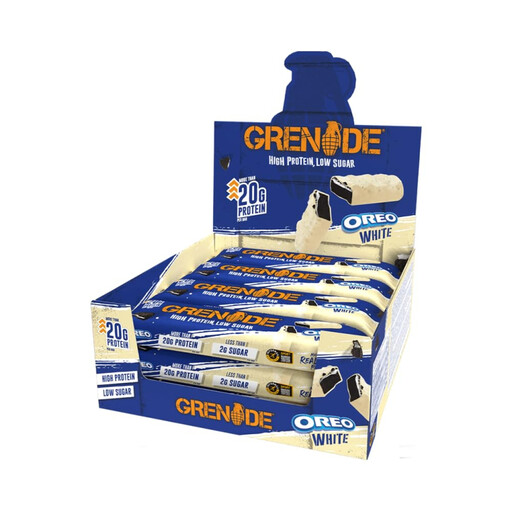 No image available
This White Oreo variant comes as 12 x 60g bars, so consider whether one bar fits the portion you want during a break. Read its current fat figures and flavour-specific ingredient label before buying.
No. Sugar wording does not tell you whether a bar has less fat than a similar product. Check for an explicit reduced-fat claim and compare the fat figures; Barebells’ no-added-sugar statement for Salty Peanut, for example, addresses sugar rather than fat.
Use it as a planned break snack, not as your entire meal plan. NHS TIMS advises eating a full meal before starting a night shift and having food partway through it; decide whether a bar fits alongside the meals you plan to bring.
Read nutrition figures per bar to understand the portion you would eat, then use per-100g figures for a like-for-like comparison. A smaller per-bar figure can reflect a smaller serving rather than a difference in composition.
Yes. Read the current label for the exact flavour, including its ingredients, allergen declaration and any “may contain” statement. The Food Standards Agency explains that precautionary allergen wording signals possible unintended allergen presence.