Shoppers avoiding a specific allergen
Check the exact flavour’s ingredients, highlighted allergens and any “may contain” statement. A broad free-from label may address a different ingredient from the one you need to avoid.


Choose a protein bar by the exact ingredient and allergen information, not by treating “vegan”, “dairy-free” and “gluten-free” as interchangeable. A gluten-free bar can contain milk or nuts, while a vegan bar can contain wheat or carry a “may contain” warning; if you need to avoid an allergen, check the specific flavour and pack before comparing protein, sugar or multipack size.
The useful starting point is the ingredient or dietary requirement you cannot compromise on; a shelf filter alone does not settle whether an individual bar fits.
Check the exact flavour’s ingredients, highlighted allergens and any “may contain” statement. A broad free-from label may address a different ingredient from the one you need to avoid.
A vegan or dairy-free designation helps narrow the choice, but check wheat, soya, peanuts and nuts separately where those matter to you. Precautionary warnings also need their own check.
For a desk, commute or gym-bag top-up, compare the protein and sugars declared per bar, the number of bars in the pack and any sweetener guidance after checking that the ingredients suit you.
Start with the exclusion named on your shopping list, then inspect the individual bar. Once it fits that requirement, compare serving information and pack format.
| Priority | What to check | Your needs |
|---|---|---|
| Named allergens | Read the ingredients and highlighted allergens on the exact flavour. Check any “may contain” statement separately: the Food Standards Agency explains that it communicates possible unintentional allergen presence. | I need to know whether the particular bar fits the allergen I avoid, including any relevant precautionary warning. |
| Gluten-free choice | Look for the gluten-free designation on the product, then inspect the other allergens. Tesco lists KIND Protein Milk Chocolate Latte as gluten-free, but its ingredients include peanuts, milk, almonds and soya. | Gluten is my main exclusion, but I may need to rule out milk, peanuts, tree nuts or soya as well. |
| Vegan or dairy-free choice | Check which designation the exact bar carries, then read its ingredients and warnings. Myprotein Vegan Carb Crusher and Barebells Vegan Fudge Brownie illustrate why vegan status does not settle wheat, soya or precautionary allergen questions. | I want to avoid animal ingredients or milk-derived ingredients without assuming the bar meets my other exclusions. |
| Protein and portions | Compare declared protein per bar alongside bar weight and pack count. Keep the serving basis the same when comparing different pack formats. | For a quick top-up, I want to know what one bar provides and how many individual portions I am buying. |
| Sugars and sweeteners | Read sugars per bar and any polyol or sweetener information independently of allergen suitability. Grenade and PhD warn that excessive consumption of certain bars may have laxative effects. | If I am considering a multipack, I want to check the serving guidance before making the bars a regular snack. |
| Flavour and pack | Recheck the label when changing flavour, choosing a selection box or buying a different pack. Do not carry an allergen decision over from another product in the range. | A flavour I have bought before does not tell me what is in every other bar in the range. |
A gluten-free bar can still contain milk, peanuts or soya; a vegan bar can contain wheat. Tesco’s KIND Milk Chocolate Latte and the vegan bars from Myprotein and Barebells provide examples of these different label boundaries.
Identify the ingredient you need to avoid, then check the full declaration on the bar before comparing its nutrition information.
The Food Standards Agency distinguishes precautionary allergen labelling, which communicates possible unintentional presence, from allergens intentionally used as ingredients. Both pieces of information can matter when avoiding a named allergen.
Read them separately. If a relevant warning conflicts with the advice you follow for an allergy, choose another product rather than relying on a broad free-from description.
Grenade and PhD warn that excessive consumption of certain protein bars may have laxative effects. The number of bars in a pack does not tell you how much suits you at one time.
Check the specific bar’s sweetener information and serving guidance before buying it for frequent use.
Ingredients and warnings in the product examples differ, so a familiar brand or range name cannot establish the allergen profile of a new flavour or selection box.
Read the label again whenever the flavour, recipe or pack changes.
These brands illustrate different labels and ingredient combinations, not a shared standard of allergen suitability. Check the individual product rather than applying a range-level description to every flavour.
Grenade’s Salted Caramel bar is an example of a conventional milk-protein bar for shoppers comparing protein and sugars after checking dietary fit.
PhD Smart Bar is a whey-protein option for shoppers considering a conventional protein-bar multipack.
Myprotein has a UK dairy-free category that includes Vegan Carb Crusher, offering a starting point for a vegan or dairy-free search.
Barebells Vegan Fudge Brownie shows how a vegan bar can still need a detailed allergen check.
Quest describes its protein-bar range as gluten-free, which makes its range information relevant to a gluten-focused search.
Tesco’s grocery listings provide free-from categories alongside product-level ingredient information for a top-up shop.
These Grenade packs are conventional protein-bar options for a top-up shop. They are not interchangeable with a vegan, dairy-free or gluten-free choice: check the exact flavour’s ingredients, allergen declaration and any precautionary warning against your requirements.
 No image available
A 12-bar pack for shoppers considering a conventional protein-bar top-up. Check the Double Chocolate flavour’s milk and soya information, along with its sweetener guidance, before choosing a multipack.
 No image available
This 12-bar pack offers a different Soft Core flavour in the same stated 50 g bar format. Check Golden Caramel’s own milk and soya declarations and any sweetener warning rather than relying on another flavour’s label.
 No image available
A 12-bar Peanut Butter pack for shoppers without a conflicting allergen exclusion. Peanut, milk and soya information is especially relevant for this flavour; read the pack’s full declaration and sweetener guidance before buying.
 No image available
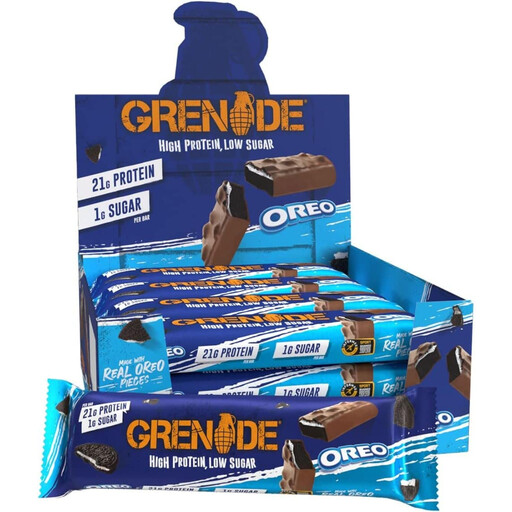
A four-bar pack with 60 g bars, rather than the 50 g Soft Core format above. Check this Oreo Flavour pack’s milk, soya and wheat information and its sweetener guidance against your needs.
 No image available
This Oreo Flavour listing is a 12-bar pack of 60 g bars. Before choosing the larger pack, check its milk, soya and wheat declarations, any precautionary warnings and the sweetener guidance on the exact product.
No. Barebells Vegan Fudge Brownie contains cereals containing gluten, soya and wheat and may contain peanuts and tree nuts. Myprotein Vegan Carb Crusher also has allergen warnings. Use the vegan designation for the animal-ingredient question, then check the exact bar for every other exclusion.
No. Tesco lists KIND Protein Milk Chocolate Latte as gluten-free, while its ingredients include peanuts, milk, almonds and soya. Read the full ingredient and allergen declaration if you avoid any of those foods.
The Food Standards Agency explains that precautionary allergen labelling communicates possible unintentional presence of a regulated allergen, rather than identifying an ingredient intentionally used in the recipe. Check a relevant warning separately from the ingredients when assessing a bar against your allergen-avoidance requirements.
No. Grenade and PhD warn that excessive consumption of certain bars may have laxative effects. Read the specific bar’s sweetener information and serving guidance before buying a multipack for regular use.
Check the exact flavour’s ingredients, highlighted allergens and any “may contain” statement first. If it meets your dietary requirements, compare the declared protein and sugars per bar, bar weight, pack count and sweetener guidance; repeat the label check when switching flavours or choosing a selection box.