Who needs to check which claims?
The right label check depends on whether your priority is a named allergen, a dietary choice or the bar’s nutritional information.
Office workers avoiding a named allergen
Check the ingredients and precautionary statement for the exact flavour before adding a bar to your packed lunch. Milk, peanuts, tree nuts, soya and gluten-containing cereals call for distinct checks; one free-from claim does not answer them all.
Vegan or dairy-free lunch-pack shoppers
A vegan or dairy-free label can help narrow your choice, but it does not settle questions about peanuts, soya, gluten or precautionary milk warnings. Read the full label if you also avoid any of those allergens.
Protein-bar buyers without an allergen exclusion
For a bar to take to work, compare protein per bar alongside serving size and ingredients. If sweeteners have affected you before, check the packet’s guidance before committing to a multipack.
What should you check before buying?
Start with the exclusion that matters to you, then compare nutrition and lunch-bag practicality among the bars that meet it.
| Priority |
What to check |
Your needs |
| Named allergens |
Read the exact flavour’s ingredient list and any ‘may contain’ statement on the current pack. The Food Standards Agency distinguishes declared allergen ingredients from precautionary wording about possible unintentional presence. |
I need to know whether this particular bar fits the allergen I avoid before I pack or share it at work. |
| Dietary claims |
Match vegan, gluten-free or dairy-free wording to your actual requirement; check other allergens separately. Tesco lists a gluten-free, dairy-free Nākd peanut bar that contains peanuts, while Barebells says its vegan Caramel Peanut bar contains wheat protein with gluten. |
A vegan label matters to me, but I may also need to screen for gluten, peanuts, soya or milk warnings. |
| Protein and serving size |
Compare protein per bar with the stated bar weight, rather than treating figures for different serving sizes as interchangeable. PhD lists 21g protein per 64g bar for its Choc Brownie Smart Bar flavour. |
For a snack between meetings, I want to compare what one bar contains, not just the claim on the front of the packet. |
| Sweeteners |
Read the ingredients and serving guidance if sweeteners or sugar alcohols matter to you. PhD warns that excessive consumption of its Smart Bar may cause laxative effects; Quest says tolerance of the sugar alcohols in its bars varies. |
I would rather check how a bar fits my usual eating habits before buying several at once. |
| Workday use |
Check the pack format, storage instructions and readable label for the flavour you intend to carry. Myprotein describes its vegan snacks as convenient for busy schedules; confirm the individual product suits your lunch routine. |
I want a bar that is straightforward to carry and whose ingredients I can check before eating it away from home. |
Brand and retailer references
These examples show why claims and ingredients need checking at product and flavour level; a brand name alone does not establish allergen suitability.
Grenade
Grenade describes its protein-bar range as containing over 20g protein per bar, but allergen decisions still depend on the flavour.
- The range offers a stated protein figure for shoppers comparing bars.
- Grenade specifically tells people with a peanut allergy to avoid its Peanut Nutter, White Chocolate Salted Peanut and Peanut Butter & Jelly protein-bar flavours.
PhD
PhD lists 21g protein and 1.2g sugars per 64g Choc Brownie Smart Bar.
- The flavour-specific serving figures allow a per-bar comparison.
- PhD identifies a whey protein centre and warns that excessive consumption may cause laxative effects; check the exact product if avoiding dairy or assessing sweeteners.
Myprotein
Myprotein presents a vegan snack range for busy routines, including protein-bar options.
- The vegan range offers a starting point for avoiding animal-derived ingredients.
- A vegan category does not establish peanut, soya or gluten suitability; inspect the chosen product’s label.
Quest
Quest describes its protein-bar line as gluten-free and made with dairy-based proteins. These are product-line statements from its US storefront, not confirmation of wording on a UK pack.
- Its stated protein source helps identify dairy as a necessary check.
- Quest says its bars contain sugar alcohols and that tolerance varies; check the particular packet before choosing it.
Barebells
Barebells offers original, soft and vegan protein-bar lines, with allergen details that differ by product.
- The separate lines let shoppers look for the type of bar they want before checking individual labels.
- Barebells says its vegan Caramel Peanut bar contains wheat protein with gluten and that other bars may contain traces of gluten.
Tesco
Tesco’s grocery listings provide examples of how dietary claims and allergen statements can differ between protein bars.
- Its Nākd and Misfits listings illustrate why ingredients should be read alongside vegan, gluten-free or dairy-free wording.
- Tesco advises shoppers to read the product label rather than rely solely on website information, as food products can be reformulated.
Joybuy bars for conventional snack choices
These Grenade and PhD packs are options to examine if you are choosing a conventional protein-bar snack for work. They are not a selection of bars established as suitable for every free-from requirement: check the current packet for your exact exclusions before buying or sharing.
 No image available
Grenade Oreo Flavour Protein Bars, 4 × 60g
This four-bar pack offers portions to put in separate work lunches. Check the Oreo flavour’s current ingredients and precautionary allergen statement against any dietary exclusion before choosing it.
View on Joybuy
 No image available
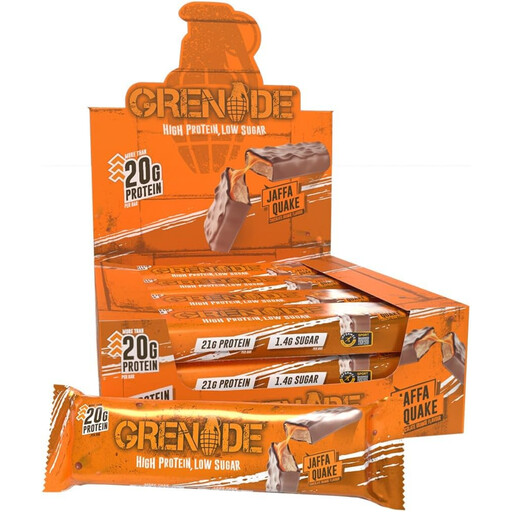
Grenade Jaffa Quake Protein Bars, 12 × 60g
This 12-bar pack is a larger commitment for repeated packed lunches. Read the Jaffa Quake packet’s ingredients, allergen warnings and serving information before deciding whether that format suits you.
View on Joybuy
 No image available
PhD Smart Chocolate Peanut Butter Flavour Bars, 12 × 64g
Compare this flavour’s per-bar nutrition with other work snacks using its stated 64g serving size. If dairy, peanuts or sweeteners matter to your choice, check this exact pack’s ingredients and warnings rather than applying figures or claims from another PhD flavour.
View on Joybuy
 No image available
Grenade Soft Core Double Chocolate Bars, 12 × 50g
The 50g bar size gives you a stated serving to compare with larger bars for a packed lunch. Check the Double Chocolate pack for allergen ingredients and any precautionary warnings; the Soft Core name does not establish free-from suitability.
View on Joybuy
 No image available
Grenade Soft Core Golden Caramel Bars, 12 × 50g
This pack contains twelve 50g Golden Caramel bars for shoppers considering repeat work snacks. Assess this flavour’s current ingredients, allergen statements and serving guidance before choosing the multipack.
View on Joybuy
Questions about free-from protein bars
Does vegan mean a protein bar is free from milk, gluten and nuts?
No. Vegan describes the absence of animal-derived ingredients, not every allergen or precautionary warning. Tesco’s vegan Misfits Peanut Butter Fudge listing warns that it may contain gluten-containing cereals, milk and nuts; Barebells says its vegan Caramel Peanut bar contains wheat protein with gluten. Check the exact pack for the allergens you avoid.
Can a gluten-free, dairy-free bar contain peanuts?
Yes. Tesco lists Nākd Peanut Butter Protein Bars as gluten-free and dairy-free, but peanuts are an ingredient and the listing says the bars may contain soya and nuts. Judge suitability by your named allergen, not by unrelated free-from claims.
What does ‘may contain’ mean on a UK food label?
The Food Standards Agency describes precautionary allergen labelling, including ‘may contain’, as a way to communicate that a regulated allergen could be unintentionally present. It differs from declaring an allergen used as an ingredient, but remains relevant when checking a bar against an allergy avoidance plan.
Should I check the packet if I have read the online listing?
Yes. Tesco advises shoppers to read the product label rather than rely solely on its website because ingredients, nutrition and allergen information can change. Check the packet you intend to take to work, especially when buying another flavour or a new pack.
Why check sweeteners before buying a protein-bar multipack?
Sweetener tolerance can affect whether a particular bar suits your routine. PhD warns that excessive consumption of its Smart Bar may cause laxative effects, and Quest says tolerance of the sugar alcohols in its bars varies. Read the chosen product’s ingredients and serving guidance; if this has affected you before, consider trying one bar before buying several.


