What should you check before buying?
Start with who will receive the item, then compare the exact pack’s warnings and nutrition information. A lower fat figure cannot settle the age and allergen questions.
A child-oriented snack or non-food item
Consider for: A mixed party group, particularly when guests’ requirements are not yet known.
Keep in mind: Any food still needs an individual age and allergen check; a non-food item avoids choosing a shared edible option.
A particular protein bar
Consider for: One child whose parent or carer has confirmed that the exact bar is appropriate.
Keep in mind: Lower sugar or fat does not override an age restriction, allergen warning or serving guidance.
| Priority | What to check | Your needs |
|---|
| Age guidance |
Read the age statement on the exact pack. Tesco lists a lower age limit of 14 years for its Grenade Carb Killa Chocolate Chip Salted Caramel bar. |
I need an item appropriate for the children receiving the bags, not one chosen solely for its protein or sugar figures. |
| Allergens |
Compare each flavour’s ingredients, declared allergens and precautionary statements with information from parents or carers. |
With several guests, I cannot assume that a different flavour from the same brand meets everyone’s requirements. |
| Fat and sugar |
Compare fat and sugars per 100 g and per bar. In Great Britain, the low-fat claim threshold for solid food is no more than 3 g fat per 100 g, according to legislation.gov.uk; it is not a child-suitability test. |
I want to know what a fat claim means without mistaking a lower sugar figure for a lower fat figure. |
| Sweeteners |
Read the ingredients and any warning on the exact pack. PhD and Barebells product pages warn that excessive consumption of certain bars may have laxative effects. |
Before putting a bar in a child’s bag, I want to know which sweeteners and warnings apply to that product. |
| Packaged-snack labels |
Read the serving size and front-of-pack traffic lights alongside the age and allergen information. NHS Healthier Families advises looking for more greens and ambers when choosing packaged snacks. |
A quick label comparison helps me narrow the options, but I still need to check whether each item suits its recipient. |
Protein-bar brands in context
These brand examples show why the exact product and flavour matter; they are not a list of bars suitable for children’s party bags.
Grenade
Carb Killa is a protein-bar range; Tesco publishes nutrition and age information for its Chocolate Chip Salted Caramel listing.
- Tesco lists 21 g protein, 1.3 g sugars and 9.3 g fat per 60 g bar, allowing those figures to be considered separately.
- That listing specifies a lower age limit of 14 years, so it is not an option for younger guests.
PhD
PhD presents Smart Protein Bar as a high-protein, low-sugar snack for adult lifestyle goals.
- Named products provide nutrition information that can be checked by flavour and serving.
- PhD warns that excessive consumption may cause laxative effects; its adult-focused positioning does not establish suitability for children.
Barebells
Barebells offers original and vegan protein-bar lines with product-level ingredient information.
- Its Salty Peanut and Vegan Fudge Brownie pages disclose different ingredients and allergen statements for the two bars.
- The Salty Peanut bar contains milk, peanuts and soy; the Vegan Fudge Brownie bar contains gluten, soy and wheat. Check precautionary statements on the exact pack too.
Myprotein
Myprotein UK lists several sports-nutrition snack formats, including protein bars, wafers, cookies and oatbakes.
- Different formats can be assessed individually rather than treated as one type of bar.
- A category name does not establish an individual product’s fat content, age guidance or allergen suitability; check its own pack.
Quest
Quest presents its protein bars as macro-oriented snacks; the cited product information concerns the US market.
- Quest’s US S’Mores page identifies ingredients and allergens for that named product.
- Its US nutrition and labelling should not be transferred to a UK pack. The US S’Mores listing contains milk, almonds and soy and notes shared equipment for peanuts and other tree nuts.
Joybuy options for party bags
These are child-oriented snack options for considering instead of a protein bar. Neither product’s name establishes that it meets a reduced-fat claim; check the current pack and each child’s requirements before adding food to a party bag.
 No image available
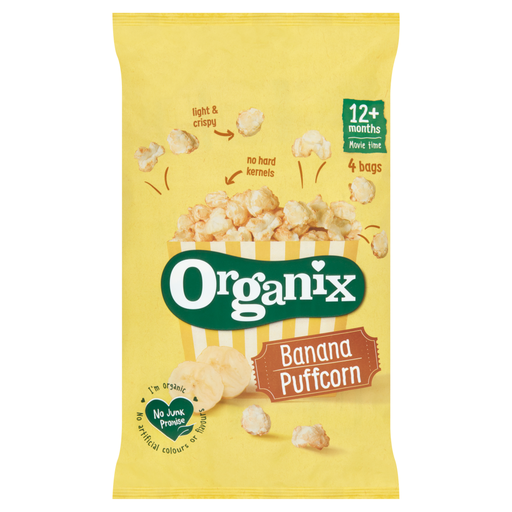
Organix Banana Puffcorn 12+ Months 4×10g
The stated 12+ months age guidance makes this a child-labelled snack to consider in place of a protein bar for an eligible recipient. Check the current pack’s ingredients, allergen advice and serving guidance, and supervise young children while they eat.
View on Joybuy
 No image available
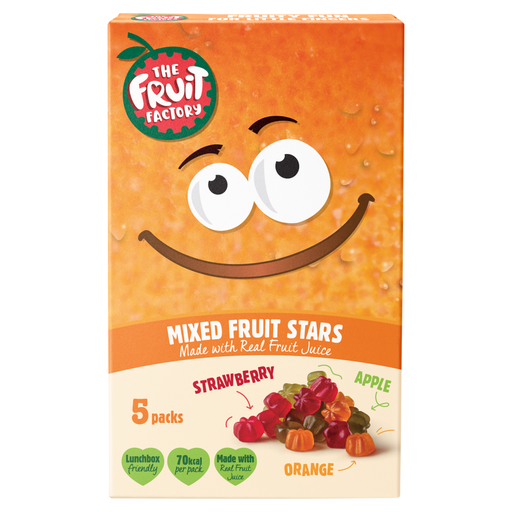
The Fruit Factory Mixed Fruit Stars 5 Packs
These fruit stars are another packaged option to assess for party bags rather than an adult protein bar. Check sugars and fat per 100 g, along with the exact pack’s age guidance and allergen statement; a fruit-themed name does not make a sweet equivalent to fresh fruit.
View on Joybuy
Questions about protein bars and party bags
Does “low fat” mean a protein bar suits a child’s party bag?
No. Under the Great Britain nutrition-claim framework reflected by legislation.gov.uk, a low-fat claim for solid food has a threshold of no more than 3 g fat per 100 g. That describes fat content, not age suitability or allergen compatibility; check those on the exact pack.
Are “reduced fat” and “low fat” interchangeable?
No. “Low fat” refers to a specified fat threshold for solid foods in Great Britain, while assessing a reduction calls for a comparison with another product. Check what is being compared and read fat per 100 g and per bar rather than treating either phrase as a child-suitability claim.
Why not give the same adult protein bar to every child?
Age guidance and allergens can rule out a particular bar for a guest. Tesco’s Grenade Carb Killa Chocolate Chip Salted Caramel listing specifies a lower age limit of 14 years, and named Barebells bars disclose different allergens. Ask parents or carers about restrictions and check each exact pack before providing food.
Does a low sugar figure settle the sweetener question?
No. The UK Office for Health Improvement & Disparities notes that non-sugar sweeteners used in the UK have undergone safety assessment, but that does not establish that a particular bar suits every child. Read the ingredients and product warnings: PhD and Barebells warn that excessive consumption of certain bars may have laxative effects.
How useful are traffic-light labels for party-bag snacks?
They provide a quick way to compare labelled nutrients on packaged snacks. NHS Healthier Families advises looking for more greens and ambers, but the colours do not replace a check of age guidance, ingredients and allergens for each recipient.


