People eating between meetings
An individually portioned bar is easy to keep nearby when there is little time for a break. Treat it as a between-meal snack rather than assuming it replaces lunch.


A protein bar makes sense as a portable snack between meals, but do not assume that one bar is a complete desk lunch. If it has to form part of lunch, consider what other food you can bring alongside it, and compare the exact bar’s portion size, nutrition and allergen label rather than choosing by its protein claim alone. The NHS Eatwell Guide describes dietary balance across a day or week, not as something every individual food must provide.
The first distinction is whether the bar is a snack before your next meal or one part of the lunch you have brought to work.
An individually portioned bar is easy to keep nearby when there is little time for a break. Treat it as a between-meal snack rather than assuming it replaces lunch.
If protein and sugars matter to your choice, compare the whole portion you will eat. Fibre, energy and saturated fat can differ even between bars presented for a similar purpose.
An allergy, dietary restriction or concern about polyols makes the exact flavour and current packet label more useful than a general statement about a brand.
Decide what the bar needs to do in your working day, then compare the nutrition and ingredients for that portion—not just the claims on the front.
| Priority | What to check | Your needs |
|---|---|---|
| Snack or lunch component | Check the size and nutrition of one bar. If it will form part of lunch, consider what other food you can take with it. | “I need something quick between meetings” is a different choice from “this is all I have for lunch.” The NHS Eatwell Guide considers balance across the day or week. |
| Protein and fibre | Compare grams per bar and check the flavour and portion size. Myprotein UK lists 20g protein and 6.6g fibre for its 60g Layered Bar example. | If I am choosing a bar for its protein or fibre, I want the amounts for the portion I will actually eat. |
| Sugars and full nutrition | Read sugars alongside energy, saturated fat and the serving size. PhD lists 21g protein and 250kcal for its 64g Chocolate Brownie Smart Bar example. | A lower-sugar sweet snack may appeal to me, but the sugar figure alone does not describe the whole bar. |
| Ingredients and allergens | Read the exact packet’s ingredient and allergen information, including any precautionary statement relevant to you. Check dietary-suitability statements for that flavour. | When I need to avoid an ingredient, another flavour’s label is not enough to make this one suitable. |
| Portion and storage | Check how many bars are in the pack, each bar’s weight and whether the format works for keeping portions at your desk. | I may want one bar for today or a multipack to keep at work; either way, I need to know what counts as one portion. |
A portable bar offers less variety than a lunch assembled from different foods. The NHS Eatwell Guide describes balance across a day or week rather than requiring every food to provide it.
If the bar is part of lunch, bring other practical items, such as fruit or a starchy food, instead of treating its protein figure as a measure of the whole meal.
Bare figures are hard to compare when bars and flavours have different portion sizes. The stated protein amount also leaves out other nutrition information.
Use the per-bar label to compare protein, fibre, energy, saturated fat, sugars and salt for the portions under consideration.
Ingredients and precautionary allergen statements can differ by product. UK food-labelling guidance requires ingredient and allergen information on prepacked food.
For an allergy or other required avoidance, read the current packet for the exact bar before eating it.
Some listed bars carry a warning that excessive consumption may have a laxative effect. Adding another bar changes the portion as well as the amount of each declared nutrient.
Read the warning on the product you choose; if one bar is not enough for lunch, consider adding different food rather than assuming several bars are an equivalent substitute.
These ranges illustrate different formats and label details to compare; a brand name alone does not establish the nutrition or suitability of a particular flavour.
Grenade’s UK range includes individual bars and larger selections. Its White Chocolate Cookie product page states 23g protein and 1.7g sugar per bar.
PhD lists Smart Bar packs, including a Chocolate Brownie example with 21g protein and 250kcal per 64g bar.
Myprotein lists Layered Bars and variety formats. Its 60g Layered Bar example states 20g protein, 6.6g fibre and 212kcal.
Barebells bars have appeared in Tesco’s UK protein-bar listings; Barebells also provides a UK/Ireland selection for product information.
Quest describes individual bars, mini bars and variety packs in its own range; its bar information also mentions sugar alcohols.
Tesco is a retailer, not a protein-bar manufacturer. Its UK protein-bar category includes single bars and multipacks from different brands.
These options are portioned bars and flapjacks that could be kept for a quick desk snack or used as one component of lunch. Compare the exact pack and label before deciding which fits your meal.
 No image available
A multipack of 50g bars for keeping individual portions at work. Check the exact pack’s nutrition, milk and soya allergen information, and polyol warning before choosing it.
 No image available
A four-pack of 60g bars if you want several desk-snack portions without choosing a larger box. Read the exact flavour’s ingredient and allergen label, including its polyol warning.
 No image available
A multipack format for individual desk-snack portions. The product title identifies Chocolate Peanut Butter but its description identifies White Chocolate Blondie, so confirm the flavour and its matching nutrition and allergen label before buying.
 No image available
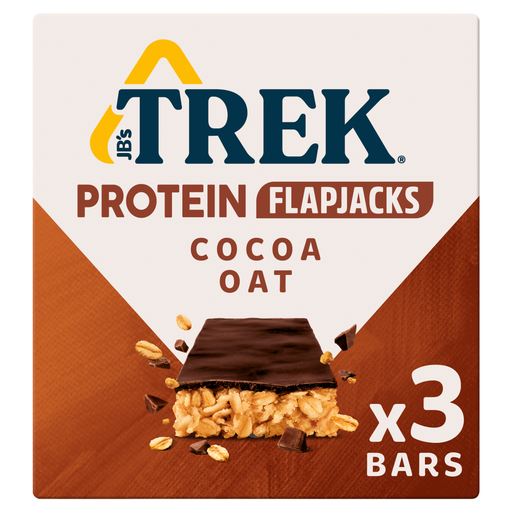
An oat-flapjack format rather than a confectionery-style protein bar, in three 50g portions. Compare its per-flapjack nutrition with any protein bars you are considering, and check the ingredient and allergen label.
 No image available
A four-pack of 40g bars for portioned snacks at your desk. Because this is a peanut-and-chocolate variant, check its full ingredient, allergen and per-bar nutrition information against your needs.
Do not assume one protein bar is a complete lunch. It can be a convenient snack or one part of lunch; if it replaces your usual meal, consider adding other foods such as fruit or a starchy item. The NHS Eatwell Guide describes dietary balance across a day or week.
Start with the exact packet’s ingredients and highlighted allergens, then check its portion size and nutrition information. UK food-labelling guidance requires ingredient and allergen information for prepacked food; a different flavour’s label is not a substitute for the one you will eat.
Some bars containing polyols carry a warning about excessive consumption. Read the warning on your chosen product and do not assume that eating several bars is the same as adding other food to lunch.
Suitability depends on the exact product and flavour. Check the current packet’s ingredients, dietary-suitability statement and allergen information rather than relying on the brand name or another bar in the range.
Sugar is only one part of the comparison. Read it alongside the bar’s portion size, energy, protein, fibre, saturated fat and ingredients, and decide whether you need a snack or a component of lunch. Manufacturer examples from Myprotein and PhD also show why figures should be checked for the named bar and flavour.