Hosts serving guests with different dietary needs
Choose varieties whose exact ingredients and allergens guests can identify. Keep wrappers or pack information available rather than putting unlabelled bars together in a shared bowl.


For a New Year’s Eve party, choose snack bars by the protein in each bar, then check the sugars, saturates and allergens on the exact pack. A vegan or gluten-free label may help with one guest’s requirement without making that bar suitable for everyone, so keep varieties identifiable when serving them.
Choose varieties whose exact ingredients and allergens guests can identify. Keep wrappers or pack information available rather than putting unlabelled bars together in a shared bowl.
Check both the dietary label and protein per bar. TREK describes its protein flapjacks as vegan and gluten-free with 9g plant protein; Tesco lists 7.2g protein per 45g bar for Nakd Cocoa Hazelnut, which is labelled suitable for vegans.
Chocolate, caramel and nut flavours can be compared on a per-bar basis rather than by the word “protein” on the front. In its November 2025 review of 458 snack bars from 10 major UK retailers, Action on Salt & Sugar classified 55% as high in saturated fat and 37% as high in sugars under UK front-of-pack thresholds. Those figures describe the products reviewed, not every bar.
Start with the amount in one bar, then read the nutrition and allergen information for each flavour you plan to serve.
| Priority | What to check | Your needs |
|---|---|---|
| Protein per bar | Read the labelled protein amount for one bar, not just per 100g. Check the bar weight when comparing different pack sizes. | “I’d like guests to know how much protein is in the bar they pick up.” |
| Allergens and dietary labels | Check the exact flavour’s ingredients, highlighted allergens and any vegan, gluten-free or dairy-free claim. Keep its identification with the bars when serving. | “Some guests avoid particular ingredients, so I need each variety to remain clearly labelled.” |
| Full nutrition panel | Compare sugars, saturates and energy alongside protein, using the same per-bar basis. Read “no added sugar” separately from the total sugars value. | “I’m offering chocolate or nut flavours, but I still want to compare what each portion contains.” |
In its November 2025 review of 458 UK snack bars, Action on Salt & Sugar classified 37% as high in sugars and 55% as high in saturated fat under UK front-of-pack thresholds. A protein figure alone does not describe the rest of a bar’s nutrition panel.
Compare protein, sugars, saturates and energy per bar before choosing a multipack.
Recipes in this selection include ingredients such as peanuts, other nuts, soya and milk. Without their identification, guests cannot readily tell which variety they are taking.
Keep wrappers visible or put each variety beside its pack’s ingredient and allergen information.
Nature Valley Salted Caramel Nut is labelled gluten-free but contains peanuts, soya and milk, according to Nature Valley UK. Tesco lists Nakd Cocoa Hazelnut as vegan and “no added sugar”, while its nutrition panel gives 13g sugars per 45g bar.
Match each claim to the guest’s actual requirement, then check the full label for that flavour.
These examples describe particular products or lines, not every flavour a brand makes.
Nature Valley UK describes its Salted Caramel Nut protein bar as a 40g gluten-free bar with around 10g protein and 4g fibre.
TREK describes its protein flapjacks as vegan and gluten-free, with 9g plant protein per flapjack.
Tesco lists Graze Cocoa Vanilla Protein Flapjack at 9g protein, 13g sugars and 252kcal per 54g portion.
Eat Natural UK gives 7.8g protein per 40g bar for its Dark Chocolate & Peanut product.
Tesco lists Nakd Cocoa Hazelnut as a vegan, gluten-free, dairy-free 45g bar with 7.2g protein.
An Amazon UK listing for Alpen Protein Berries & Yoghurt, in 34g bars, states 19g protein per 100g.
These Joybuy options cover protein flapjacks and peanut-based protein bars for a party assortment. Compare each pack’s current nutrition and allergen label before serving.
 Image unavailable
A salted caramel flapjack option when planning a separate plant-based selection. Check this flavour’s protein amount, sugars and allergens on the pack; TREK’s protein-flapjack range is described as vegan and gluten-free.
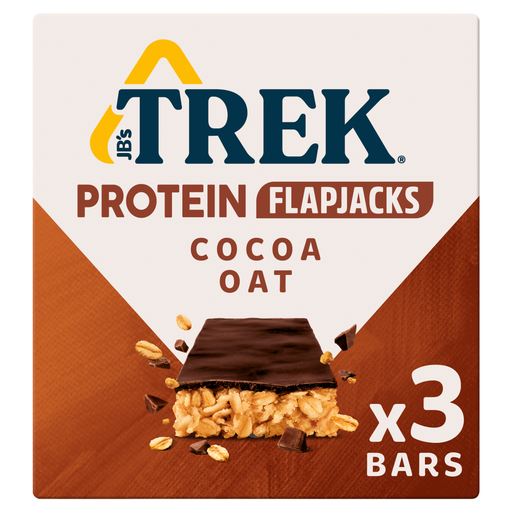 Image unavailable
A cocoa-and-oat flapjack for guests seeking a plant-based choice. Tesco describes TREK Cocoa Oat as vegan and gluten-free; confirm the exact pack’s ingredients and allergens before serving it.
 Image unavailable
A peanut-and-chocolate option to keep clearly identified in a mixed assortment. Nature Valley UK lists its Peanut & Chocolate protein bars at 10g protein and 4g fibre per bar and describes them as gluten-free; check the pack’s full allergen statement.
 Image unavailable
A salted caramel nut option with around 10g protein and 4g fibre per 40g bar, according to Nature Valley UK. It is described as gluten-free but contains peanuts, almonds, soya and milk, so keep its identification visible when serving.
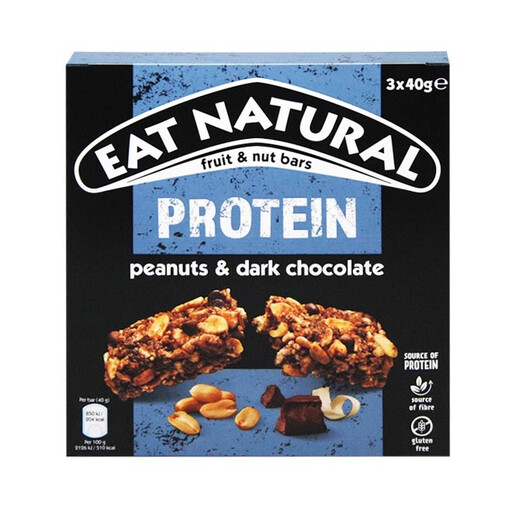 Image unavailable
A peanut-and-chocolate bar for a clearly labelled nut-based part of the assortment. Check this pack’s protein and nutrition values rather than applying figures from another Eat Natural flavour; inspect its allergen statement before serving.
Keep the varieties identifiable instead of mixing unlabelled bars. The products discussed here have differing nut, soya and milk ingredients or warnings, so retain wrappers or place each variety beside its ingredient and allergen information.
No. Tesco lists Nakd Cocoa Hazelnut as “no added sugar” but gives 13g sugars per 45g bar. Read the sugars value on the nutrition panel when comparing portions.
Not on that claim alone. Nature Valley UK describes its Salted Caramel Nut bar as gluten-free, but its ingredients include peanuts, almonds and milk. Check every relevant allergen on the exact pack before offering a bar to a guest.