Calorie-aware desk and commute snackers
If you want a smaller mid-morning snack, start with kcal for the amount you will actually eat. Then compare the rest of the nutrition panel rather than assuming a small bar has little sugar or saturated fat.


For a lighter mid-morning snack, compare calories for the whole bar before choosing by its protein or no-added-sugar wording. Tesco lists 146 kcal and 9.2 g protein for a 40 g Bio&Me Cocoa Protein Bar, while PhD lists 245 kcal and 21 g protein for its 64 g Choc Peanut Butter Smart Bar: the more suitable choice depends on whether calories or protein matter more to you. Check the exact bar’s sugars, fibre, saturated fat, salt and ingredients as well.
If you want a smaller mid-morning snack, start with kcal for the amount you will actually eat. Then compare the rest of the nutrition panel rather than assuming a small bar has little sugar or saturated fat.
If protein per bar matters more to you, compare its grams of protein alongside its calories and serving size. A higher protein figure does not, by itself, tell you whether the bar fits a lighter snack.
Check the ingredients and allergen information for the exact flavour. Vegan, gluten-free and no-added-sugar descriptions apply to individual products, not automatically to every bar from a brand.
Start with the whole-bar serving you plan to eat, then decide how much protein you want from that portion. Use the remaining label details to compare bars that meet those two needs.
| Priority | What to check | Your needs |
|---|---|---|
| Calories and portion | Compare kcal per whole bar and bar weight in grams. Use per-100 g figures when comparing different-sized products, but return to the portion you will eat. | I want a lighter mid-morning portion without mistaking a smaller bar for a lower-calorie product on every basis. |
| Protein | Read protein grams and kcal for the same complete bar. Tesco lists 9.2 g protein and 146 kcal for its 40 g Bio&Me Cocoa bar; PhD lists 21 g and 245 kcal for its 64 g Choc Peanut Butter Smart Bar. | Protein per bar matters to me, but I also want to see what that serving contributes in calories. |
| Full nutrition panel | Compare fibre, total sugars, saturated fat and salt for the portion, using per-100 g figures for a consistent comparison across bar sizes. Do not treat a front-of-pack claim as the complete panel. | If two bars have similar calories, I want their other label values to help me choose. |
| Ingredients and suitability | Check the exact flavour’s ingredients, emphasised allergens and any polyol warning. Confirm vegan or gluten-free labelling on that product rather than elsewhere in the range. | I need a bar whose individual ingredients and warnings fit my dietary requirements or tolerance. |
Neither phrase gives the energy value of the whole bar. Sugars, saturated fat and salt also need their own checks.
Read kcal for the portion you will eat, then compare the full nutrition panel before using a front-of-pack phrase to narrow your choice.
The documented 40 g Bio&Me Cocoa bar has 9.2 g protein at 146 kcal, according to Tesco. PhD lists 21 g protein at 245 kcal for its 64 g Choc Peanut Butter Smart Bar; those figures describe different portions as well as different protein amounts.
Decide whether this snack needs to be lighter or provide more protein, then compare both figures per whole bar.
Ingredients can differ across a range. Grenade’s Dark Chocolate Raspberry bar, for example, carries a warning that excessive consumption may cause a laxative effect because it contains more than 10 g polyols per 100 g.
Read the chosen flavour’s ingredients, allergen information and warnings, particularly if you avoid certain ingredients or are sensitive to polyols.
Brand ranges can point you towards a format, but the nutrition and ingredients of the individual bar determine whether it meets your mid-morning requirements.
Its Cocoa Protein Bar is a documented smaller-portion option for comparing calories, protein and fibre.
The Smart Bar offers a higher-protein route when that matters more than choosing the lighter documented portion.
Soft Core is a 50 g protein-bar format worth comparing by individual flavour.
Its protein-bar range includes products with differing ingredients and dietary suitability.
Its UK snack range includes several bar and other snack formats.
Its protein bars are a separate range to assess by exact product label.
As a retailer, Tesco lists protein bars from different brands rather than a single shared nutrition profile.
These options include Grenade Soft Core 50 g bars, a larger Grenade bar and a Nature Valley nut bar. Compare the chosen flavour’s whole-bar nutrition panel before deciding whether it suits a lighter mid-morning snack; the documented Bio&Me and PhD examples above are separate points of comparison, not products in this selection.
 No image available
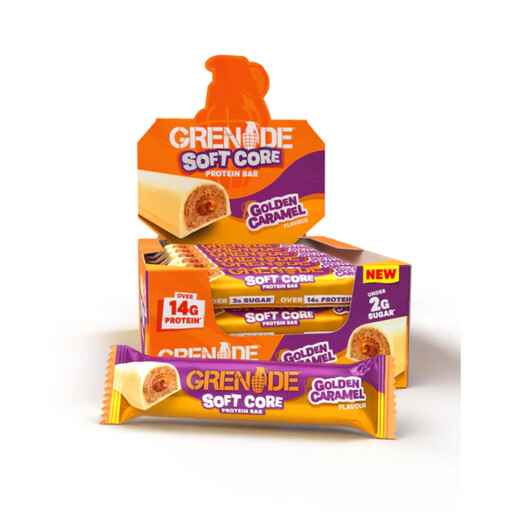
The 50 g Soft Core format may suit you if you prefer a smaller bar; Grenade describes the range as providing 15 g protein and less than 2 g sugar per bar. Check this flavour’s kcal, ingredients and polyol information on the pack before choosing it for a lighter snack.
 No image available
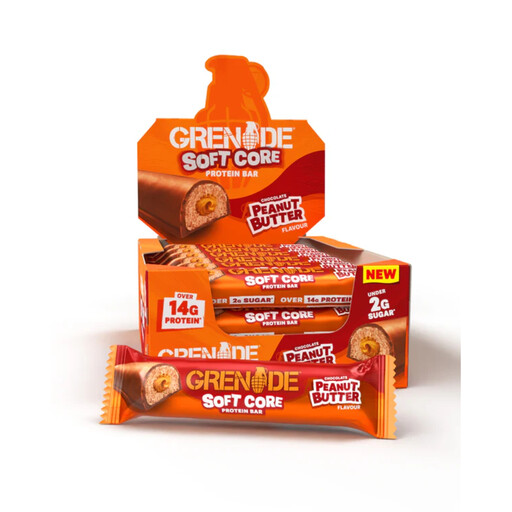
This is another 50 g Soft Core flavour for a smaller mid-morning portion; Grenade’s range figures are 15 g protein and less than 2 g sugar per bar. Compare its own calorie panel and check ingredients and polyol information before buying.
 No image available
Choose between this and other Soft Core flavours by their individual labels, not the shared 50 g format alone. Grenade gives range figures of 15 g protein and less than 2 g sugar per bar; check this pack’s kcal, peanut and other allergen information, and polyol warning.
 No image available
This 60 g bar is a different portion size from the Soft Core options. Compare its own kcal and protein per bar before choosing it for a protein-priority snack, and check the pack’s ingredients and polyol information.
 No image available
The 40 g bar offers another portion size to consider for mid-morning snacking. Compare its whole-bar kcal, protein, fibre and sugars with the other options, and read the nut and wider allergen information on the pack.
Compare kcal for the complete bar, or for the amount you will actually eat, against the snack you have in mind. Then read protein, fibre, sugars, saturated fat and salt for that portion. Bar sizes differ: Tesco lists 146 kcal for a 40 g Bio&Me Cocoa bar, while PhD lists 245 kcal for its 64 g Choc Peanut Butter Smart Bar.
No. That wording alone tells you neither the bar’s calorie total nor that it contains zero sugars. Check kcal and total sugars on the nutrition panel for the exact product.
Per-bar figures show what the portion you eat contributes; per-100 g figures give you a consistent basis for comparing bars of different sizes. Read both when a smaller bar appears to have a lower calorie total.
Check the individual bar rather than relying on its brand or range. Ingredients, allergen statements and dietary labels can differ by product and flavour; GOV.UK guidance explains that required allergens must be identified in the ingredients information for pre-packed food.
Read the exact product’s ingredients and warning, especially if you are sensitive to sugar alcohols or intend to eat more than one bar. Grenade’s Dark Chocolate Raspberry product page warns that excessive consumption may cause a laxative effect for its bar containing more than 10 g polyols per 100 g; do not assume that statement describes every flavour.