Office workers comparing fat as well as protein
If you pack a bar for work, the total-fat and saturated-fat figures matter more to a lower-fat choice than a low-sugar message on the front of the pack.


For an office packed lunch, compare total fat per 100g before deciding whether a smaller bar provides enough protein per serving. YuBi Bar lists 9g fat per 100g and 10.5g protein per 35g bar for its representative Peanut, Caramel and Speculoos nutrition, while Myprotein lists 10g fat per 100g and 20g protein per 60g Layered Protein Bar. Neither meets the NHS low-fat label guideline of 3g fat or less per 100g, and a low-sugar claim does not establish that a bar is low in fat.
If you pack a bar for work, the total-fat and saturated-fat figures matter more to a lower-fat choice than a low-sugar message on the front of the pack.
A larger bar may provide more protein per serving, but check its fat and energy per bar before treating it as interchangeable with a smaller snack.
Check the ingredients and allergen statement for the exact flavour. Formulations across these ranges differ, so a brand name alone cannot establish suitability.
Start with the per-100g nutrition panel to compare bars of different sizes, then use the per-bar figures to judge the portion you would pack.
| Priority | What to check | Your needs |
|---|---|---|
| Total fat | Compare total fat per 100g, then per bar. The NHS low-fat label guideline is 3g or less per 100g; a lower figure within a group does not necessarily meet it. | I want to compare formulations fairly, even when one bar is much smaller than another. |
| Protein per serving | Read protein alongside the stated bar weight and fat per bar. YuBi Bar lists 10.5g protein per 35g bar for its representative panel; Myprotein lists 20g per 60g Layered Protein Bar. | A smaller snack may be enough for me, or I may prefer the protein quantity in a larger bar. |
| Saturates and energy | Read saturated fat and energy on the exact flavour’s panel as separate figures. Do not use a low-sugar statement in place of either check. | I want to know what the bar I actually pack contributes, not just what its front-of-pack wording highlights. |
| Ingredients and storage | Check the flavour-specific allergens, sweeteners and any consumption warning. Follow the storage directions on the pack you buy. | Before leaving a bar at work or putting it in my lunch, I need one whose ingredients and storage instructions suit my circumstances. |
They describe different parts of the nutrition panel. Tesco Groceries lists 14g total fat per 100g for Grenade Carb Killa Peanut Nutter, regardless of its sugar positioning.
Compare total fat and saturated fat directly, using the figures for the flavour you intend to buy.
YuBi Bar’s representative 35g bar lists 10.5g protein and 3.1g fat; Myprotein’s 60g Layered Protein Bar lists 20g protein and 6.2g fat. The servings answer different portion needs.
Compare fat per 100g for the formulation, then protein and fat per bar for your packed lunch.
Allergen statements can differ between products and flavours, which matters when choosing a bar to take to work.
Read the current pack’s ingredient list, allergen statement and any sweetener warning rather than relying on another flavour’s details.
These examples show why flavour and serving size matter; a brand’s wider range should not be treated as having one nutrition profile.
Its representative Peanut, Caramel and Speculoos nutrition covers a 35g plant-based bar.
The Layered Protein Bar is a larger, 60g serving for buyers comparing protein per bar.
The Chocolate Brownie bar provides a 55g point of comparison.
The Smart Protein Bar Chocolate Brownie is a 64g serving.
Carb Killa Peanut Nutter is a 60g example from Grenade’s protein-bar range.
Quest Chocolate Brownie is listed in a 60g bar size by iHerb UK.
Barebells offers several protein-bar ranges and describes its bars as having no added sugar.
These Grenade and KIND bars are options to assess against your packed-lunch needs. Check each flavour’s current fat-per-100g figure before choosing one for a lower-fat goal; low-sugar wording or a nut-based recipe does not settle that question.
 No image available
The 60g bar size may suit a packed-lunch protein top-up. Its low-sugar wording is not a lower-fat claim; compare fat per 100g on the Oreo Flavour pack and check its allergens.
 No image available
Each stated bar is 50g. If that portion suits your workday snack, compare its per-bar protein with its fat per 100g, and read the Double Chocolate allergen statement.
 No image available
This Golden Caramel variant is supplied as 12 x 50g. For a lower-fat comparison, use its own nutrition panel rather than assuming it matches another Soft Core flavour; check the ingredient list too.
 No image available
The stated serving is a 50g Peanut Butter bar. Check its fat and protein figures for that serving, and read the flavour-specific peanut and other allergen information before packing it for work.
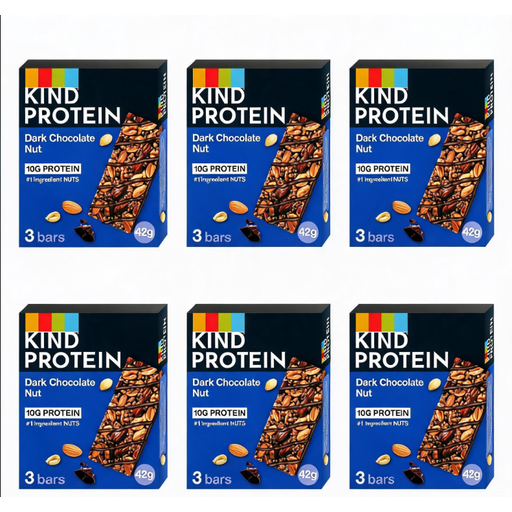 No image available
This is a nut-based bar with a stated 42g bar size. If reducing fat is your priority, compare its fat per 100g with other options and check the current nut and other allergen statements.
No. Sugar and fat are separate nutrition figures. For example, Tesco Groceries lists 14g fat per 100g for Grenade Carb Killa Peanut Nutter; check total fat and saturates on the exact bar rather than using its sugar positioning as a substitute.
Use fat per 100g to compare different bar sizes, then fat per bar to understand your portion. The NHS low-fat label guideline is 3g total fat or less per 100g; a smaller bar is not automatically a low-fat formulation.
YuBi Bar’s representative Peanut, Caramel and Speculoos panel lists 3.1g fat and 10.5g protein per 35g bar. That may suit a smaller portion, while Myprotein’s 60g Layered Protein Bar lists 20g protein and 6.2g fat per bar if the larger protein serving matters more to you.
Read the current ingredient and allergen statement for the exact flavour, including any precautionary wording. Do not assume that another flavour—or another bar from the same brand—has the same ingredients.
Follow the storage instructions on the exact pack before leaving it at work. Check them again when changing brand or flavour rather than assuming all bars have identical directions.