Picnic packers adding a protein bar to lunch
A bar can be packed alongside other picnic foods without preparation on site. Compare the protein and serving size of the exact bar, and follow its storage instructions.


For a picnic lunch, compare the protein in the whole bar you will pack, then check its size, energy, sugars, ingredients and allergens rather than choosing by the words “high protein” alone. PhD lists 21–22g protein in selected 64g Smart Bar flavours, while Barebells lists 20g in its 55g Cookies & Cream bar; the smaller bar is not necessarily the right choice if its ingredients or allergen warning do not suit the people sharing lunch.
The useful checks change depending on whether the bar is an extra item in lunch, a lower-sugar snack or food you intend to share.
A bar can be packed alongside other picnic foods without preparation on site. Compare the protein and serving size of the exact bar, and follow its storage instructions.
If sugars matter to your choice, read the per-bar figure alongside energy, ingredients and sweetener warnings. A lower-sugar description does not describe the whole nutrition panel.
Read the exact flavour’s ingredients, declared allergens and any “may contain” statement. The Food Standards Agency explains that precautionary allergen wording communicates a possible unintended presence of an allergen.
Start with the portion you will actually pack, then check whether its ingredients and storage directions work for the outing.
| Priority | What to check | Your needs |
|---|---|---|
| Protein per bar | Read protein in grams per bar and the bar’s weight; use per 100g figures when comparing different sizes. PhD lists 21g in its 64g Chocolate Brownie Smart Bar and 22g in its 64g Strawberries & Cream version; Barebells lists 20g in its 55g Cookies & Cream bar. | I want to know what one bar contributes to my lunch, not rely on a front-of-pack phrase. |
| Energy, sugars and fibre | Compare the per-bar kcal, sugars and fibre on the exact flavour’s nutrition panel. A flapjack-style bar and a confection-style bar may have different weights and ingredients; do not assume either has a particular fibre content. | If this is an addition to an already packed lunch, I want its portion size and nutrition figures to be clear. |
| Ingredients and allergens | Read the ingredient list, declared allergens and any “may contain” wording on the exact pack. Check the protein source if dairy, collagen or plant ingredients affect your choice. | Someone sharing the picnic may need a particular ingredient or cross-contact risk checked before the bar is offered. |
| Sweeteners | Check named sweeteners and any excessive-consumption warning, especially if packing several bars. PhD includes a warning that excessive consumption of Smart Bars may cause laxative effects. | I may pack more than one sweet-tasting bar, so the ingredient and warning text matters as well as the sugars figure. |
| Packing and storage | Check the best-before or use-by date, applicable storage directions, individual bar weight and the number of bars in a multipack. | I need the right number of portions for the picnic and a product I can store as its label directs. |
The wording alone does not tell you how many grams of protein are in the portion you will eat. For example, Barebells lists 20g per 55g Cookies & Cream bar, while PhD lists 21–22g in selected 64g Smart Bar flavours.
Compare protein grams, bar weight and energy for the exact flavour and serving.
Wrapping makes a bar a separate item to pack; it does not establish that its ingredients suit everyone at a shared picnic. Barebells Cookies & Cream carries a “may contain” statement for cereals containing gluten, soy, peanuts and nuts.
Read the current pack for the precise flavour before buying and again before sharing it.
Some bars use sweeteners or polyols. PhD’s Smart Bar information warns that excessive consumption may cause laxative effects.
Check ingredients and warnings as well as sugars, particularly if you plan to pack more than one bar.
A pack count does not establish the weight, flavour or nutrition of each bar. These details matter if you are dividing bars among several people.
Compare the number and weight of individual bars, then check each flavour’s label and date.
These ranges provide different formats to examine; a brand-level description is no substitute for the label on a particular flavour.
Grenade’s UK range includes confection-style protein bars in multiple flavours and formats.
PhD presents Smart Bar as an on-the-go snack rather than a complete meal.
Myprotein UK lists bars alongside wafers, oatbakes and flapjacks.
Barebells has Original, Soft and Vegan bar lines; its Cookies & Cream bar is a documented 55g example.
Tesco is a retailer carrying a mixture of protein bars, flapjacks and pack formats, not a single protein-bar product line.
Quest describes an on-the-go protein-bar range on its US storefront.
These Grenade bars offer Oreo-flavour multipacks and a Double Chocolate Soft Core multipack to consider when packing individual bars for a picnic. Compare their pack sizes and check the exact product labels before choosing.
 No image available
A four-bar pack to consider when you need several separately portioned picnic snacks. Each bar is listed as 60g; check its per-bar nutrition, ingredients and allergen wording on the exact pack.
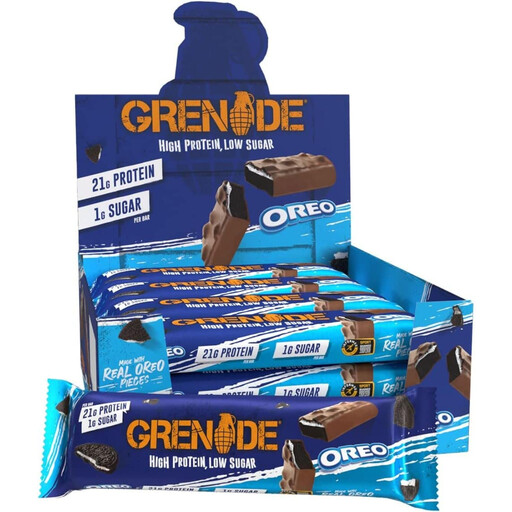 No image available
A twelve-bar format if you need more portions of the Oreo variant. The listing names 60g bars; check the exact pack’s nutrition, ingredients, allergens and date before dividing them among picnic guests.
 No image available
A Double Chocolate Soft Core option in a pack of twelve 50g bars. If you are comparing it with the 60g Oreo bars, read the protein and other nutrition values per whole bar rather than assuming the portions are equivalent.
No fixed grams-per-bar amount follows from that phrase alone. Read the protein figure for the whole bar and its serving weight, especially when comparing different pack sizes.
Start with protein per bar if that is the portion you will pack and eat. Per 100g figures can then help you compare bars of different weights; check energy, sugars and fibre on the same basis.
No. Compare its full nutrition panel and ingredients with the rest of the lunch you are packing. The NHS notes that lower- or no-calorie sweeteners do not necessarily make a food nutritionally suitable overall.
Read the exact flavour’s ingredients, declared allergens and any “may contain” statement before offering it to someone else. Precautionary wording signals a potential unintended allergen presence, as the Food Standards Agency explains.
Follow the storage directions and date on the exact pack rather than assuming all bars tolerate the same conditions. UK government food-labelling guidance says pre-packed food labels must give a best-before or use-by date and special storage conditions where applicable.