What should you check before choosing?
Start with the time until exercise, then compare nutrition per individual bar and check whether its ingredients meet your requirements.
| Priority |
What to check |
Your needs |
| Workout timing |
Check how long it is until exercise and when you last ate. University College London Hospitals NHS Foundation Trust distinguishes a carbohydrate-and-protein snack with minimal fat at 60–90 minutes from faster-acting carbohydrate at 15–30 minutes. |
If I have time before training and have missed a meal, I may want carbohydrate alongside protein. Close to exercise, I may need a lighter carbohydrate-led option instead. |
| Protein per bar |
Compare grams per individual bar and its weight, not just the word ‘protein’. TREK lists 16g per 55g Biscoff bar, 15g per 55g Choc Caramel bar and 9.5g per 50g Smooth Lemon bar; Nature Valley lists 10.2g per 40g Peanut & Chocolate bar. |
I want to know how much protein is in the portion I would actually eat, without treating bars of different sizes as interchangeable. |
| Full nutrition panel |
Read carbohydrate, sugars, fat and fibre for the same serving size as the protein figure. TREK lists 24g carbohydrate and 13g sugars per 50g Smooth Lemon bar, compared with 8.7g carbohydrate and 2.2g sugars per 55g Choc Caramel bar. |
Protein alone will not tell me whether a particular bar fits the time I have before exercise or my preference for a less fibre-rich snack. |
| Ingredients and allergens |
Check the exact flavour’s ingredients and precautionary allergen statement on the current pack. Nature Valley says its Protein Peanut & Chocolate bar contains peanut, soy and milk and may contain other tree nuts. |
I need a bar whose ingredient and ‘may contain’ information is compatible with the allergens I avoid; a vegan label would not answer every allergy question. |
Brand and product-range references
These examples show why flavour-specific labels matter; a brand name alone does not identify a bar’s nutrition or allergens.
TREK
TREK lists both protein oat bars and other plant-based protein bars, with different nutrition figures by flavour.
- TREK lists 15g protein and 15g fibre per 55g Choc Caramel bar, and 16g protein and 12g fibre per 55g Biscoff bar.
- Its Smooth Lemon bar has a different profile: TREK lists 9.5g protein and 13g sugars per 50g bar. Check the particular product rather than applying one flavour’s figures across the range.
Nature Valley
Nature Valley’s Protein Peanut & Chocolate bar is a 40g cereal-and-nut option.
- Nature Valley lists 10.2g protein per Peanut & Chocolate bar.
- That flavour contains peanut, soy and milk and may contain other tree nuts. Its figures should not be applied to other Nature Valley Protein products.
Eat Natural
Eat Natural’s Peanuts, Almonds & Cocoa product is a nut-led protein bar.
- Eat Natural lists 8.0g protein per 40g bar for this flavour.
- It contains peanuts and almonds, may contain other nuts, milk and soya, and lists 15.2g fat per 40g bar. Check whether those details fit your ingredients and timing requirements.
Kellogg's Special K
A Kellogg's UK press release describes a Special K Protein cereal bar made with ingredients including soy and seeds.
- For a purchase decision, use the exact bar’s current pack to compare protein per serving, other nutrition figures and allergens.
Joybuy protein-bar options
These protein bars are options to consider when comparing a bar with the time available before exercise. Check carbohydrate, fat and fibre on the exact pack as well as the protein wording; a bar is not a substitute for a lighter carbohydrate-led snack in every situation.
 No image available
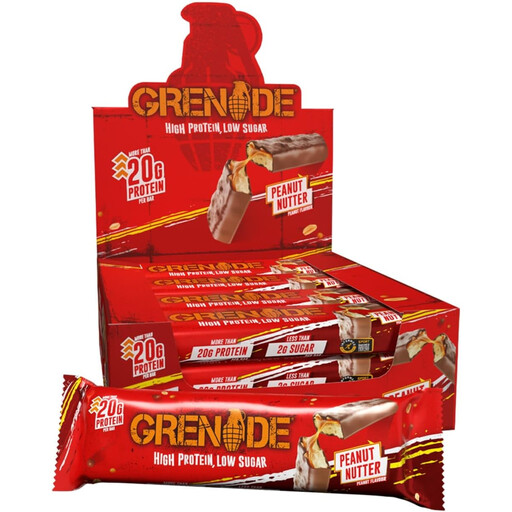
Grenade Peanut Butter Protein Bar, 12 × 60g
A 60g bar option to compare when choosing a snack with time before exercise. It contains milk, soy and peanuts; check the current pack’s nutrition and allergen information, including gluten information if relevant to you.
View on Joybuy
 No image available
Grenade Soft Core Double Chocolate, 12 × 50g
This 50g Soft Core bar is another portion size to compare for a pre-workout snack. It contains milk and soy; read the current pack if you need to check gluten information or other allergens.
View on Joybuy
 No image available
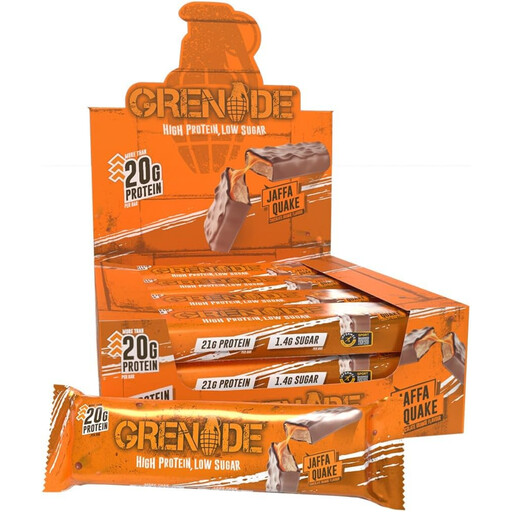
Grenade Jaffa Quake Protein Bar, 12 × 60g
Compare this 60g bar’s full nutrition panel with your intended snack timing, not just its protein wording. It contains milk and soy; check the current pack for all allergen and gluten information you require.
View on Joybuy
 No image available
Nature Valley Protein Salted Caramel Nut Bar, 4 × 40g
This nut-bar option comes in individual 40g portions; compare its carbohydrate and fat per bar when deciding when to eat it. It contains almonds, milk, peanuts and soy, so check the current pack if any of these affect your choice.
View on Joybuy
 No image available
Grenade Soft Core Golden Caramel, 12 × 50g
Use this 50g bar’s current nutrition panel to judge whether it fits the time before your workout. It contains milk and soy; check the pack for gluten information and any other allergen statements you need.
View on Joybuy
Questions about pre-workout bars
Should I eat a protein bar immediately before exercise?
Not necessarily. University College London Hospitals NHS Foundation Trust advises a snack containing carbohydrate and protein with minimal fat 60–90 minutes before exercise if you have not eaten a meal for 2–3 hours; at 15–30 minutes, faster-acting carbohydrate may be more appropriate. Seek individual advice if you manage blood glucose around exercise.
Does ‘protein’ in a bar’s name tell me how much I will eat?
No. Check grams of protein per individual bar and the stated serving weight. TREK lists 16g per 55g Biscoff bar, while Nature Valley lists 10.2g per 40g Protein Peanut & Chocolate bar; the names alone do not show those portion sizes or quantities.
How do the named bars compare for protein per bar?
TREK lists 16g per 55g Biscoff bar, 15g per 55g Choc Caramel bar and 9.5g per 50g Smooth Lemon bar. Nature Valley lists 10.2g per 40g Protein Peanut & Chocolate bar, and Eat Natural lists 8.0g per 40g Peanuts, Almonds & Cocoa bar. These figures compare the stated portions, not overall suitability before exercise.
Can I choose one of these bars if I avoid nuts, soy or milk?
Check the exact current pack against the allergens you avoid before choosing. Nature Valley says its Protein Peanut & Chocolate bar contains peanut, soy and milk and may contain other tree nuts; Eat Natural says its Peanuts, Almonds & Cocoa bar contains peanuts and almonds and may contain other nuts, milk and soya. A vegan or gluten-free description does not resolve a separate nut or milk-allergen question.


