Students packing a snack between classes
An individually portioned bar needs no preparation. Compare its labelled serving size, protein, energy and ingredients rather than assuming all protein bars offer the same combination.


For a school-day snack, choose by the exact flavour’s protein, energy, sugars and allergen information rather than a front-of-pack protein claim alone. PhD’s Choc Brownie lists 21g protein and 250 kcal per 64g bar, while Barebells’ Cookies & Cream lists 20g and 190 kcal per 55g bar; their portions differ, so compare the full labels. The NHS Eatwell Guide frames a balanced diet across a day or week, rather than around one snack.
An individually portioned bar needs no preparation. Compare its labelled serving size, protein, energy and ingredients rather than assuming all protein bars offer the same combination.
A portable bar can fit between school and sport. Consider it as a snack within varied eating across the day or week, in line with the NHS Eatwell Guide, rather than as a complete meal.
Where allergens or sweeteners matter, check the exact flavour’s ingredients, precautionary statements and pack guidance before putting it in a school bag.
Start with the serving and flavour you would actually buy, then check the ingredients before deciding whether a multipack suits your routine.
| Priority | What to check | Your needs |
|---|---|---|
| Protein per bar | Read the protein amount and serving size for the exact flavour. PhD lists 21g per 64g Choc Brownie bar; Barebells lists 20g per 55g Cookies & Cream bar. | I want to know what one bar contributes when I pack a snack between classes. |
| Energy and sugars | Compare energy and sugars on the same per-bar basis, noting portion size. PhD lists 250 kcal and 1.2g sugars for Choc Brownie; Barebells lists 190 kcal and 1.4g sugars for Cookies & Cream. | A protein figure alone does not tell me whether the whole bar fits the way I eat during the day. |
| Ingredients and allergens | Read the exact pack’s ingredients and emphasised allergens, then check any “may contain” statement. Barebells Cookies & Cream lists possible traces of cereals containing gluten, soya, peanuts and nuts. | If an ingredient matters to me, I need the label for this flavour—not another bar from the same range. |
| Pack format and guidance | Check the number and size of bars, plus any guidance about excessive consumption. PhD’s Choc Brownie product page warns that excessive consumption may cause laxative effects. | For a snack I can put in my bag, I want a practical portion and pack guidance I can follow. |
Per-bar figures differ: PhD’s Choc Brownie lists 21g protein and 250 kcal per 64g bar, while Barebells’ Cookies & Cream lists 20g and 190 kcal per 55g bar. The portion matters alongside the protein figure.
Check protein, energy, sugars and serving size on the exact flavour before choosing a multipack.
Ingredients and precautionary statements need checking for the particular bar. Barebells Cookies & Cream, for example, carries a “may contain” statement for cereals containing gluten, soya, peanuts and nuts.
Read the pack’s ingredients, emphasised allergens and “may contain” wording whenever you change flavour or product.
PhD warns that excessive consumption of its Smart Protein Bar may cause laxative effects. That warning is relevant if you plan to pack bars regularly.
Read the exact product’s ingredients and consumption guidance before deciding on a multipack.
Grenade describes its UK protein-bar range as “high protein” and “low sugar”. Those range-wide descriptions do not replace the nutrition panel for a particular flavour.
PhD’s Smart Protein Bar Choc Brownie provides a specific label example: 21g protein, 1.2g sugars and 250 kcal per 64g bar.
Barebells lists 20g protein, 1.4g sugars and 190 kcal per 55g Cookies & Cream bar.
Myprotein offers several snack formats. Its Soft Protein Bar examples list 16g protein and 244–262 kcal per bar, depending on flavour.
Quest is another protein-bar brand to recognise, but its referenced product information is from a US-facing site.
These Joybuy options include multipacks of portioned bars for a school-day snack. Check the exact pack’s protein, ingredients and allergen information against your needs, particularly where a listing’s flavour details differ.
 No image available
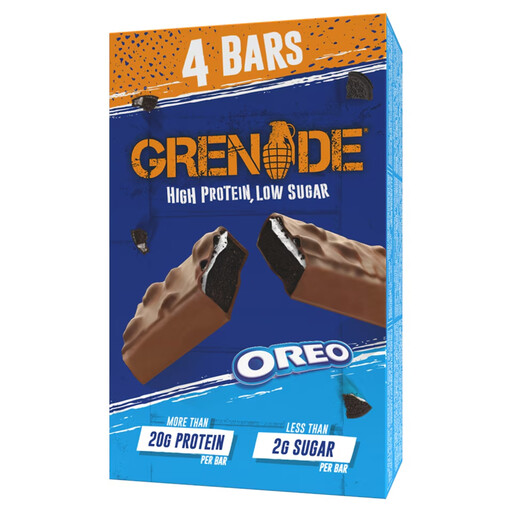
The 4 × 60g format provides portioned bars to pack for a school-day snack.
Check the Oreo flavour’s protein and sugars per bar, ingredients and sweetener guidance on the pack, especially if milk, wheat or soya are relevant to you.
 No image available
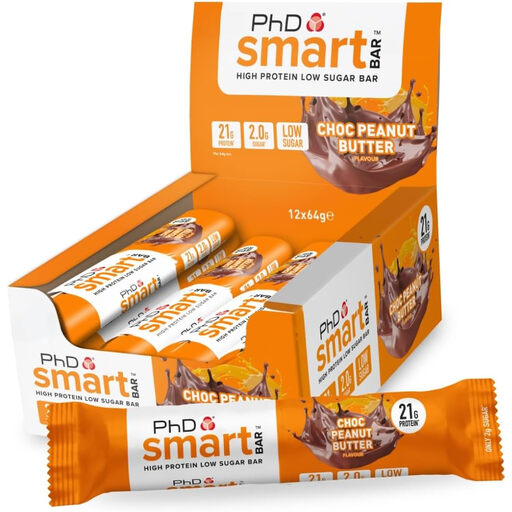
The listed 12 × 64g format may suit someone planning several school-day snacks, but confirm the flavour before choosing it.
The product title says Chocolate Peanut Butter, while its accompanying description refers to White Chocolate Blondie. Confirm which flavour the pack contains and check its own nutrition, allergen and sweetener information.
 No image available
This 4 × 40g peanut and chocolate pack is another portioned option for a school-day snack.
Check protein per bar against the amount you are looking for, and read the peanut and other allergen statements on the exact pack.
Compare protein, energy and sugars per bar, then read the exact flavour’s ingredients and allergen information. PhD lists 21g protein and 250 kcal per 64g Choc Brownie bar, while Barebells lists 20g and 190 kcal per 55g Cookies & Cream bar, so their serving sizes differ too.
Treat a protein bar as a snack rather than an automatic replacement for a varied meal. The NHS Eatwell Guide describes balance across food groups over a day or week; one bar does not show how the rest of that food fits together.
Read the exact pack’s ingredients, emphasised allergens and any “may contain” statement. The Food Standards Agency says prepacked food must have an ingredients list with allergens present in the product emphasised; Barebells Cookies & Cream also carries a precautionary statement for cereals containing gluten, soya, peanuts and nuts.
No. Check the actual sugars figure alongside serving size, ingredients and pack guidance. PhD’s Choc Brownie page lists 1.2g sugars per 64g bar and warns that excessive consumption may cause laxative effects.