What should you check?
Decide what will make up the main lunch first. If a bar still has a place as a snack, compare its exact label with the pupil’s needs and the school’s rules.
| Priority |
What to check |
Your needs |
| Lunch composition |
Plan the main item and other lunch foods before considering a bar. NHS lunchbox guidance suggests bread, rice, pasta or potatoes for the main item; its Eatwell Guide includes protein foods. |
For an everyday lunch, I want the bar to be an extra snack, not the food the rest of the lunch depends on. |
| Portion and label |
Compare protein and other nutrition figures for the exact flavour and serving size. Read the ingredient list as well as front-of-pack claims. |
If I choose a bar for convenience, I need to know what one bar contains and how it fits alongside the food already packed. |
| Allergens and school rules |
Check the current pack’s allergen statement and whether any dietary claim addresses the pupil’s actual restriction. Confirm the school’s packed-lunch policy separately. |
Where allergies or food restrictions matter, I cannot rely on a brand name, a vegan claim or a retailer category to decide what can go into the lunchbox. |
| Ingredients and frequency |
Look for sweeteners, sugar alcohols and any consumption warning on the exact bar. Consider whether a single bar is appropriate before choosing a multipack. |
I would rather try an appropriate snack separately than make an unfamiliar bar a regular part of the school day. |
Brand references
Brand ranges can help narrow a search, but claims for one flavour or line should not be applied to every bar—or taken as approval for a school lunch.
Grenade
Grenade states that its Chocolate Chip Cookie Dough bar contains 21g of protein and 1.4g of sugar.
- Flavour-specific figures allow a comparison using that particular bar’s stated serving.
- Those figures do not establish the ingredients or suitability of another Grenade flavour; check its current pack.
PhD
PhD states that its standard Smart Bar contains 20g of protein and less than 2.5g of sugar per bar. The brand also has a Smart Plant line.
- The separate lines give shoppers different products to examine when checking dietary requirements.
- Check the chosen flavour’s ingredients and serving information; a range name does not confirm suitability for an individual lunch.
Myprotein
Myprotein markets its Performance Protein Bar with 30g of protein per serving in a sports-nutrition context.
- The stated serving figure is available to compare with the portion being considered.
- A sports-nutrition claim does not make the bar a substitute for the main part of a school lunch; check the exact product label and warnings.
Barebells
Barebells lists Original, Vegan and Soft Protein Bars on its UK site and describes its range as having no added sugar.
- The distinct ranges provide formats and dietary positioning to compare.
- A range-wide description does not confirm an individual flavour’s ingredients, allergens or protein amount.
Quest
Quest describes its Original Protein Bars as containing up to 21g of protein per bar.
- The stated amount gives a starting point for checking a particular bar’s serving information.
- Quest says its bars contain sugar alcohols and that tolerance varies; check the exact pack before choosing one for a school snack.
Tesco
Tesco is a retailer rather than a protein-bar manufacturer. Its protein-bar category lists products from several brands, including Barebells, Grenade, TREK and Nature Valley.
- A retailer category lets shoppers examine different bar formats and pack sizes.
- Category placement does not confirm that an individual product meets a school’s policy or a pupil’s dietary requirements.
Protein bar options on Joybuy
These bars and flapjacks are options to examine if an occasional packaged snack fits the packed lunch. Compare the exact pack and the school’s rules before choosing; this list does not assess the whole lunch.
 No image available
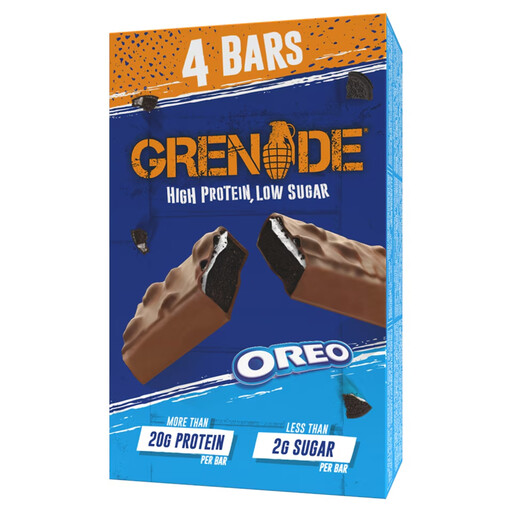
Grenade Oreo Flavour Protein Bar, 4 × 60g
A four-pack to consider if an individual bar is wanted as a separate snack rather than the main lunch item. Check the Oreo flavour’s current nutrition, ingredients and allergen information, along with the school’s policy.
View on Joybuy
 No image available
Nature Valley Protein Peanut & Chocolate Bars, 4 × 40g
Four 40g bars in a peanut and chocolate variant. If considering one for a lunchbox snack, check the exact pack’s ingredients and allergen statement and confirm any school restrictions before packing it.
View on Joybuy
 No image available
Nature Valley Protein Salted Caramel Nut Bars, 4 × 40g
This salted caramel nut variant also comes as four 40g bars. Choose by the exact flavour’s label and the pupil’s dietary requirements, not by assuming its ingredients match another Nature Valley bar.
View on Joybuy
 No image available
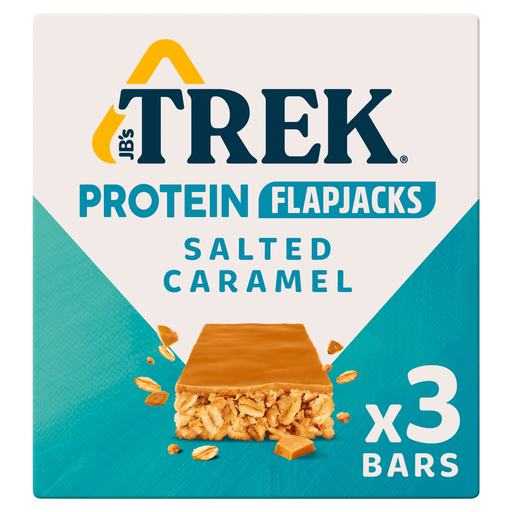
TREK Salted Caramel Protein Flapjacks, 3 × 50g
A flapjack-format option supplied as three 50g portions. Read the current pack if ingredients or dietary restrictions matter, and check that this type of snack is permitted in the school lunchbox.
View on Joybuy
Questions about packed lunches
Should a protein bar replace the main part of a school packed lunch?
Usually not. NHS lunchbox guidance suggests basing the main item on bread, rice, pasta or potatoes, while the Eatwell Guide includes protein foods as one part of a varied diet. Consider a bar as a separate convenience snack rather than using its protein figure to stand in for the lunch.
Do England’s School Food Standards approve bars brought from home?
No product-by-product approval follows from those standards. The Department for Education describes the School Food Regulations 2014 as applying to food and drink provided to pupils on school premises; check the individual school’s packed-lunch policy for food brought from home.
What should I check when a pupil has a food allergy?
Read the exact current pack’s ingredients and allergen information, and follow the pupil’s arrangements with the school. The Department for Education says schools in England must publish an allergy safety policy setting out how they reduce contact with known allergens.
Does a vegan or gluten-free label cover every dietary restriction?
No. Each claim addresses a particular characteristic, not every ingredient or allergen that may matter to a pupil. Match the full label of the exact bar to the relevant dietary requirements and check the school’s rules.
Why try a bar before buying a multipack for school?
Trying an appropriate single bar first lets a family check whether its flavour and texture are accepted. Read any pack warnings too: Quest says its bars contain sugar alcohols and that tolerance varies. An unfamiliar bar should not be the only substantial food in the lunchbox.


