Families packing a secondary-school lunch
A bar can be a portable snack alongside the main lunch item and fruit or vegetables. NHS lunchbox guidance suggests building the main item around foods such as bread, rice, pasta or potatoes.


A protein bar can be one snack in a secondary-school packed lunch, but it should not replace the main lunch item, fruit or vegetables. Compare protein per bar alongside sugars, saturated fat and salt, then check the exact flavour’s allergens against the pupil’s needs and the school’s policy.
A bar can be a portable snack alongside the main lunch item and fruit or vegetables. NHS lunchbox guidance suggests building the main item around foods such as bread, rice, pasta or potatoes.
Vegan, dairy-free and gluten-free claims need checking on the exact flavour. Trek Original Oat Protein Flapjack and nākd. Cocoa Hazelnut have different ingredients and precautionary allergen statements, despite both being presented as plant-based options.
Check the individual school’s packed-lunch arrangements before sending a bar containing, or potentially containing, peanuts or other nuts. Department for Education allergy guidance for England says schools must publish an allergy safety policy covering known allergens.
Start with the lunch as a whole, then compare the portion you would pack—not just the claim on the front of the wrapper.
| Priority | What to check | Your needs |
|---|---|---|
| Place in lunch | Plan a main item and fruit or vegetables separately. Treat the bar as a snack rather than the meal. | I want something straightforward to pack without letting a snack take the place of lunch. |
| Protein per bar | Compare the amount in one bar and its weight. For example, Tesco Groceries lists 10.4g per 40g Eat Natural Peanuts, Almonds & Salted Caramel bar; different flavours need their own label check. | If protein is why I am considering a bar, I want to know what the actual portion provides. |
| Other nutrition | Read the traffic-light label and compare sugars, saturated fat and salt per bar. Check total sugars even when a pack says no added sugar. | A protein claim alone will not tell me how this snack compares with another one. |
| Allergens and school rules | Read both the declared allergens and any may-contain statement for the exact flavour. Check the school’s current packed-lunch and allergy policies. | The bar needs to fit the pupil’s allergies and the school’s arrangements, especially if it contains nuts. |
| Dietary claims | Check vegan, dairy-free or gluten-free wording on the chosen pack; read the ingredient and allergen lists as well. | When a particular ingredient matters to my family, I need the claim to apply to this flavour, not another bar in the range. |
A bar’s protein figure does not describe its full nutrition profile. Action on Salt & Sugar’s November 2025 audit of 458 UK retail snack bars classified 37% as high in sugars and 55% as high in saturated fat under UK front-of-pack thresholds; those figures describe the audited products, not every bar.
Compare the chosen bar’s traffic-light label and per-bar nutrition information, including sugars, saturated fat and salt.
Peanuts, other nuts, soya or milk may appear in the ingredients or precautionary allergen statement of bars considered for this lunchbox. School arrangements and individual allergies can change whether a particular bar is appropriate.
Read the exact flavour’s current allergen wording and check the school’s packed-lunch and allergy policies before packing it.
No added sugar does not mean zero total sugars. Tesco Groceries lists 13g sugars per 45g nākd. Cocoa Hazelnut Protein Bar, described as naturally occurring.
Compare total sugars for the portion eaten as well as the wording of the claim.
A bar in place of the main item can leave out other parts of the packed lunch. NHS lunchbox guidance recommends a main item based on foods such as bread, rice, pasta or potatoes, with fruit and vegetables added.
Pack the bar as a snack alongside lunch, or choose another school-approved snack if that bar does not fit.
Nature Valley lists a Protein Peanut & Chocolate bar with 10g protein and 4g fibre per bar in its UK protein range.
Eat Natural has fruit-and-nut protein bars, including a Peanuts, Almonds & Salted Caramel variant sold as 40g bars.
Trek Original Oat Protein Flapjack is an oat-based option described by its retailer as vegan, dairy-free and gluten free.
The nākd. Cocoa Hazelnut Protein Bar is a fruit-and-nut option presented as vegan, gluten-free and dairy-free.
Graze describes plant protein or fibre among the features of snacks in its range.
Alpen’s UK product information describes a muesli range.
These Joybuy options cover protein bars and a flapjack that could be packed as a snack. Check each exact flavour against the pupil’s needs and the school’s rules.
 No image available
A bar to consider as one packed-lunch snack where its allergens are permitted. Nature Valley lists 10g protein and 4g fibre per Peanut & Chocolate bar; Joybuy lists peanuts, soya and milk as allergens and says it may contain nuts.
 No image available
This Salted Caramel Nut variant comes as four 40g bars. Check its own per-bar nutrition and allergen statement, then confirm that it fits the school’s packed-lunch policy.
 No image available
A three-pack of 50g flapjacks for families considering a bar-style lunchbox snack. Check this Salted Caramel flavour’s own nutrition, dietary claims and allergen statement rather than using figures from Trek’s Original Oat flapjack.
 No image available
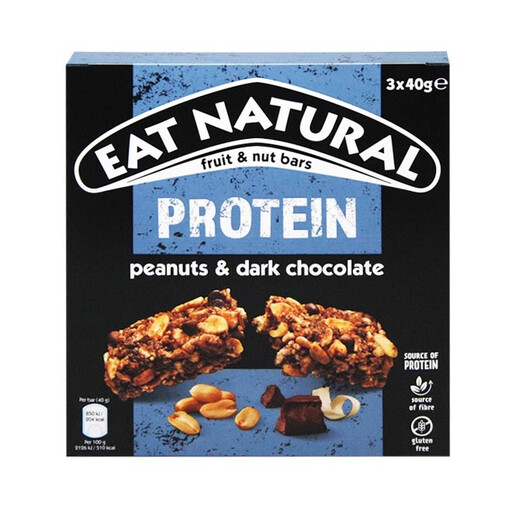
A peanuts-and-chocolate option supplied as three 40g bars. Before packing this flavour, compare its per-bar nutrition and check its declared and possible allergens against the pupil’s needs and school rules.
Use it as a snack, not as the main lunch item. NHS lunchbox guidance recommends a main item based on foods such as bread, rice, pasta or potatoes, with fruit and vegetables added.
No. A no-added-sugar claim does not mean the bar contains no sugars: Tesco Groceries lists 13g naturally occurring sugars per 45g nākd. Cocoa Hazelnut Protein Bar. Check total sugars for the portion you would pack.
Check the individual school’s current packed-lunch and allergy policies before sending one, as well as the pupil’s allergies. Department for Education guidance for England says schools must publish an allergy safety policy; local arrangements determine how known allergens are managed.
Read that flavour’s per-bar nutrition table, ingredients, declared allergens, may-contain statement and dietary claims. Figures or allergen information for another flavour in the same range may not describe the bar you plan to pack.