Parents packing an occasional snack
An individually portioned bar is convenient to pack, but convenience alone does not establish a need for a protein bar. Compare it with the child’s usual snack options and check the school’s packed-lunch policy.


Consider a portioned protein bar for a school packed lunch when it serves a specific convenience or higher-protein need, and the exact flavour fits the child’s needs and the school’s food and allergy policy. For routine snacks, the NHS recommends fruit and vegetables first; a low-sugar claim alone does not settle whether a bar belongs in the lunch. Check the serving size, ingredients, allergens, sugars and polyols before buying a multipack.
An individually portioned bar is convenient to pack, but convenience alone does not establish a need for a protein bar. Compare it with the child’s usual snack options and check the school’s packed-lunch policy.
Check the exact flavour’s ingredients and precautionary allergen statements against the child’s needs and the school’s rules. A vegan label does not mean a bar is free from nuts, wheat or soya.
Where there is a defined reason to choose a protein bar, compare protein on the stated serving basis alongside sugars, polyols and ingredients. The figures for one flavour should not be applied to the rest of a range.
Decide what role the snack needs to play, then screen the exact pack against school rules and the child’s requirements before comparing nutrition figures.
| Priority | What to check | Your needs |
|---|---|---|
| School rules and allergens | Read the school’s current packed-lunch and allergy policy. Check every flavour’s ingredient list and precautionary allergen statements, particularly in a mixed pack. The Department for Education’s school allergy guidance for England notes that settings may discourage certain allergens. | I need a snack that the child can have and the school permits, rather than one that merely fits in a lunchbox. |
| Purpose of the snack | Decide whether a portioned higher-protein bar serves a particular need. The NHS recommends fruit and vegetables as the first choice for children’s snacks and advises no more than two packaged snacks a day. | If portability is my only reason for choosing a bar, I want to compare ordinary snack options before choosing a protein product. |
| Sugars and polyols | Compare figures per bar or on another consistent serving basis, then read the ingredients and any polyol warning. Tesco lists 1.3g sugars and 18g polyols for its Grenade Chocolate Chip Salted Caramel 60g bar; Myprotein lists 6.6g sugars for its Chocolate Orange 60g Layered Protein Bar. These are flavour-specific examples, not figures for the Joybuy products below. | A low-sugar claim will not answer my questions about the rest of the bar’s ingredients or whether it is familiar to the child. |
| Dietary preferences and fibre | Check dietary claims separately from allergens. If fibre matters to the comparison, use the stated serving: Myprotein lists 8.3g fibre for its Chocolate Orange 60g bar, while Barebells lists peanuts, soybeans and wheat in its Vegan Caramel Peanut bar. | I may want a vegan or fibre-containing option, but I still need to check the exact flavour against dietary restrictions and school rules. |
| Pack format | Check the number and size of bars, whether each flavour is identified, and the label on each product before committing to a multipack. | A pack of separate portions suits my routine only if every bar I plan to send meets the relevant checks. |
Protein describes one part of the product, not its whole role in a child’s lunch. The NHS recommends fruit and vegetables first for children’s snacks.
Decide what the bar needs to do. If convenience is the only reason, compare it with other snacks the child can take to school.
Tesco’s Grenade Chocolate Chip Salted Caramel bar lists 1.3g sugars and 18g polyols per 60g serving. NHS guidance says sweeteners do not necessarily make a food healthy.
Read the sugars figure, ingredients, polyols and any pack warning together. Avoid making an unfamiliar bar the child’s first experience of that product during a school day.
Barebells lists peanuts, soybeans and wheat in its Vegan Caramel Peanut bar, along with precautionary statements for other allergens. A different flavour or bar in a mixed pack needs its own check.
Check the school’s current policy and the label of every flavour you intend to pack before buying a larger quantity.
A pack may be impractical for school lunches if some of its flavours conflict with the child’s needs or the school’s policy.
These examples describe particular products or ranges, not a school-lunch endorsement or a statement that the same products are listed below.
Grenade’s Carb Killa range includes individually portioned bars. Tesco’s Chocolate Chip Salted Caramel listing is for a 60g bar.
PhD presents Smart Bar as a portioned protein snack and describes a half-size version.
Myprotein’s Layered Protein Bar range includes a Chocolate Orange 60g serving.
Barebells offers a 55g Vegan Caramel Peanut bar among its protein snacks.
Quest’s S’Mores protein-bar information is published on its US product page.
Tesco is a retailer whose protein-bar category includes individual bars and multipacks from different brands.
These listings cover Grenade Oreo-flavour protein-bar multipacks and Trek protein-flapjack multipacks. Their portion sizes help with pack comparison; check the current label and school policy before choosing a bar for a packed lunch.
 Image unavailable
The four-bar format offers separate 60g portions for a planned snack. Check this Oreo flavour’s allergens, polyols and any age-related pack guidance rather than applying figures from another Grenade flavour.
 Image unavailable
This pack contains twelve 60g bars, so check the exact flavour against school rules before buying for repeated lunches. Read its allergen declaration, polyols and any age-related guidance on the current pack.
 Image unavailable
The three 50g flapjacks offer a different bar format from the Grenade multipacks. Compare the current pack’s sugars, protein and allergen declaration with the role you want the snack to play.
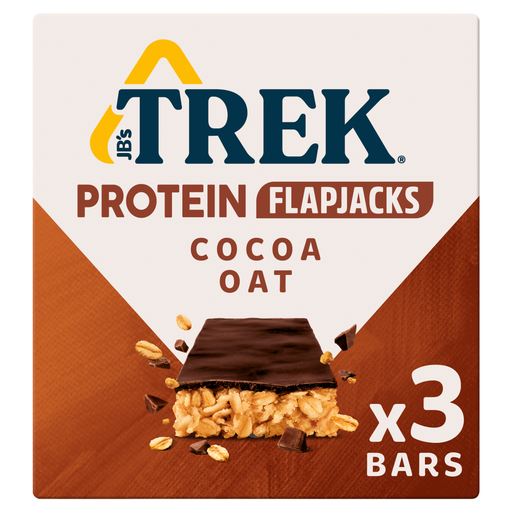 Image unavailable
These cocoa oat flapjacks come as three 50g bars. Check this flavour’s nutrition and allergens on its own label rather than assuming it matches the Salted Caramel version.
No blanket approval follows from those standards. The Department for Education’s guidance, updated in September 2026, addresses food and drink provided in state-funded schools in England; check the individual school’s current packed-lunch policy for food brought from home.
No. NHS guidance says sweeteners do not necessarily make a food healthy. Read the serving size, full nutrition panel and ingredients, and decide whether a protein bar has a particular role in the child’s lunch.
No. Barebells lists peanuts in its Vegan Caramel Peanut bar and says it may contain tree nuts. Check the exact product’s allergens and the school’s policy; vegan labelling addresses a different question.
Ingredients and nutrition can differ by flavour. For example, the checked Grenade Chocolate Chip Salted Caramel and Myprotein Chocolate Orange bars have different listed ingredients and nutrition figures. Read each included flavour’s label before putting it in a school lunch.
Read it alongside the serving size and ingredients rather than choosing by the sugars figure alone. The NHS says products with more than 10% added polyols require a warning that excessive consumption may produce laxative effects; Tesco lists 18g polyols per 60g serving for its Grenade Chocolate Chip Salted Caramel bar.