Hosts serving protein-focused adult guests
If guests specifically want a protein-focused snack, compare the amount per whole bar. A large protein claim on the front of a pack does not tell you the amount in each serving.


For a street party, compare the protein stated per whole bar, then check the ingredients and allergen information for every flavour before buying a multipack. A larger protein serving may suit guests looking for a protein-focused snack, but vegan labelling, sweetener use and the needs of guests with allergies can change which bars are suitable to put out.
If guests specifically want a protein-focused snack, compare the amount per whole bar. A large protein claim on the front of a pack does not tell you the amount in each serving.
Look for a vegan-labelled option, then read its full allergen statement. A plant-based bar can still contain wheat or soya and carry warnings about possible contact with other allergens.
Multipacks can make serving straightforward, provided guests can see the ingredients for each flavour. Keep the original wrappers accessible rather than assuming one type of protein bar suits everyone.
Start with the nutrition declaration for the complete bar, then check each flavour’s ingredients and how the bars will be served.
| Priority | What to check | Your needs |
|---|---|---|
| Protein per bar | Compare protein per whole bar and the bar’s weight, not just front-of-pack wording. Check the exact flavour: PhD lists 21g per 64g Choc Brownie bar, while Barebells lists 15g per 55g Vegan Fudge Brownie bar. | I’m buying for guests who want a protein-focused snack, so the amount in one bar matters more than the category name. |
| Allergens and dietary suitability | Read the ingredients, emphasised allergens and any precautionary allergen statement on each pack. Check vegan suitability separately from allergy requirements; Barebells lists wheat and soya in its Vegan Fudge Brownie bar. | Some guests may avoid animal ingredients or particular allergens. I need to leave the exact wrappers available so they can check their own requirements. |
| Sweeteners and warnings | Check the sweetener ingredients and any on-pack consumption warning, particularly if guests might take more than one bar. Do not assume a low-sugar description means the same formulation across flavours. | I’d like guests to be able to read what is in the bar before choosing one. |
| Pack and serving format | Check the number and size of bars, whether each has its own labelled wrapper, and whether the chosen flavours cover the guests’ dietary needs. | For a shared table, I want bars that can be offered with their ingredient information intact. |
| Food alongside the bars | Plan other food and drinks as well. The NHS Eatwell Guide describes dietary balance across food groups over a day or week; a protein bar does not represent the whole spread. | I’m offering bars as one snack choice, not relying on them for everything guests might want to eat. |
The amount varies by product and serving size. For example, Myprotein states 30g per serving for its High-Protein Bar, while Barebells states 15g per 55g Vegan Fudge Brownie bar.
Compare the nutrition declaration per complete bar for the exact products you plan to serve.
Barebells lists wheat and soya in its Vegan Fudge Brownie bar, along with precautionary information for other allergens. Neither a vegan nor a low-sugar description answers every guest’s ingredient question.
Keep labelled wrappers accessible, and check each flavour against the needs of guests with allergies before putting it out.
A case commits you to a particular flavour and formulation, which may not work for every guest’s preferences or dietary requirements.
Where practical, try a single bar or smaller selection first; check the exact case’s ingredients and nutrition before ordering.
An unsuitable case can also leave bars unused after the party.
Tesco advises that food formulations and product information can change. A previously viewed listing may therefore differ from the pack you receive.
Check the current listing when ordering and the physical packs before serving, with another suitable snack option planned if your chosen bars cannot be obtained.
These examples show why it is worth comparing specific flavours and packs rather than treating a brand name as an ingredient or nutrition guarantee.
Grenade’s UK range includes Carb Killa and Soft Core protein-bar formats.
PhD’s Smart Bar range includes multiple flavours and multipack formats.
Myprotein’s High-Protein Bar is an option to examine when the stated protein amount per serving is a deciding factor.
Barebells offers several protein-bar formats, including a vegan Fudge Brownie bar.
Tesco’s protein-bar category includes different brands and pack formats for shoppers considering grocery collection.
Quest Nutrition describes protein bars on its own site, but its general range description is not a substitute for a UK product label.
These Grenade and PhD multipacks are options to examine when buying protein bars for guests who want that type of snack. Compare each pack’s current nutrition and ingredient label before deciding which flavours belong in a mixed street-party selection.
 No image available
The four-bar pack is a smaller multipack to consider for a street-party selection. Check protein per bar, individual wrapping, milk, soya and wheat allergen information, and any sweetener warning on the exact pack before serving.
 No image available
The 12-bar format may suit a larger group if this flavour meets guests’ requirements. Compare the current protein declaration per bar and check individual wrapping, milk, soya and wheat allergen information, and sweetener warnings.
 No image available
This Chocolate Peanut Butter multipack is distinct from PhD’s Choc Brownie bar, so use its own nutrition panel when comparing protein. Check the pack for peanut, milk and soya allergen information, possible contact with other allergens, and any sweetener warning.
 No image available
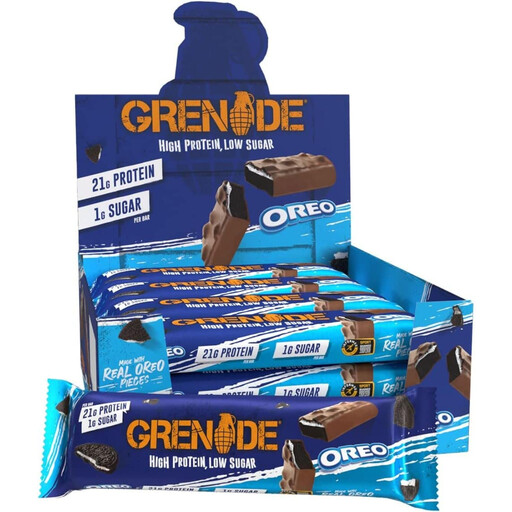
These 50g bars offer a different size and format from the 60g Grenade Oreo bars. Compare protein per complete bar rather than pack size alone, and check milk and soya allergen information and the sweetener declaration before serving.
 No image available
The 12-bar Golden Caramel pack offers another flavour in the 50g Soft Core format. Check its own protein declaration, milk and soya allergen information, and sweetener ingredients rather than assuming they match Double Chocolate.
There is no single amount that every guest needs from a party snack. Compare the figure per whole bar: PhD lists 21g per 64g Choc Brownie bar, Barebells lists 15g per 55g Vegan Fudge Brownie bar, and Myprotein states 30g per serving for its High-Protein Bar. Choose according to what the intended guests want, alongside checks on ingredients and serving size.
Keep the exact pack information accessible so guests can check ingredients and allergens for themselves. The Food Standards Agency explains that precautionary allergen labelling communicates possible unintended presence of regulated allergens; it is important to read that information as well as the ingredient list.
Not necessarily. Barebells says its Vegan Fudge Brownie bar contains wheat and soya and may contain milk, peanuts, tree nuts and sesame. Check the exact flavour’s full label against each guest’s allergy requirements; vegan labelling alone does not answer that question.
Offer them as one labelled snack option alongside other food and drinks. The NHS Eatwell Guide describes balance across food groups over a day or week, rather than relying on a single type of bar to provide variety.
Read the physical pack for the ingredients, allergens and nutrition of the bars you will serve. Tesco advises that food formulations and product information can change, so a webpage viewed earlier may not describe the pack received.