If fat per bar is your priority, Myprotein UK lists 3.4g fat and 15g protein in a 40g Lean Layered bar. PhD lists 21–22g protein but 8.5–9.2g fat in the checked 64g Smart Bar flavours, making them a different choice when protein per bar matters more. Because the bars differ in size, compare the exact flavours per 100g as well as per bar, then check allergens and storage instructions before packing them for a summer picnic.
Who is choosing?
The useful comparison depends on whether fat per bar, protein per bar or sharing food safely is the main concern.
Picnic snackers watching fat per bar
Compare the exact flavour’s fat declaration per bar and per 100g rather than relying on high-protein or low-sugar wording. Myprotein UK lists 3.4g fat in a 40g Lean Layered bar; other bar sizes need a like-for-like check.
Shoppers prioritising protein per bar
A larger individual serving may matter more than choosing the lower-fat option. PhD lists 21–22g protein in the checked 64g Smart Bar flavours, alongside 8.5–9.2g fat per bar.
People packing bars for a group
Check each flavour’s ingredients and precautionary allergen statement before sharing. Storage matters too: Myprotein UK instructs shoppers to keep its Lean Layered bar cool, dry and away from direct sunlight.
What should you check?
Choose which measure matters for your snack, then check the exact pack for sharing and storage.
| Priority | What to check | Your needs |
|---|
| Fat content |
Read fat per bar and per 100g for the exact flavour. Check bar size before comparing per-bar figures, and read the stated comparator if the pack makes a fat-reduction claim. |
I want to keep track of fat grams in the bar I actually pack, not treat low-sugar wording as a substitute for the fat declaration. |
| Protein serving |
Compare protein and fat together on each bar’s label. Myprotein UK lists 15g protein and 3.4g fat per 40g Lean Layered bar; PhD lists 21–22g protein and 8.5–9.2g fat in its checked 64g Smart Bar flavours. |
If protein in one bar matters most to me, I can consider the larger serving while checking its fat content separately. |
| Shopping format |
Check whether the exact flavour and pack size fit the picnic plan. A retailer’s range page shows options, not the nutrition or ingredients of every bar. |
I may be buying bars alongside other picnic food. In a Glanbia Nutritionals survey of UK and Irish bar consumers, 54% of protein-bar purchasers said they typically bought protein bars at supermarkets; that figure describes where they shopped, not a preference for lower-fat bars. |
| Sharing and allergens |
Read the current ingredients and precautionary allergen statement for each flavour. Food Standards Agency research explains that a ‘may contain’ statement communicates possible unintended allergen presence. |
Before I offer a bar to someone else, I need its wrapper and allergen information available rather than assuming another flavour has the same ingredients. |
| Picnic storage |
Follow the chosen pack’s storage directions and plan where it will sit during the outing. Myprotein UK specifies a cool, dry place away from direct sunlight for Lean Layered bars. |
On a warm day, I want to keep coated bars shaded and in their wrappers until they are served. |
Picnic buying pitfalls
-
Treating low sugar as lower fat
These describe different parts of the nutrition declaration. PhD’s checked Smart Bar flavours list 1.2–2.4g sugars but 8.5–9.2g fat per 64g bar; Myprotein UK lists 3.4g fat per 40g Lean Layered bar. The serving sizes differ.
Check fat, sugars and protein for the exact flavour, using both per-bar and per-100g figures when comparing different sizes.
-
Applying a range description to every flavour
A high-protein or low-sugar range description does not establish the fat content of each product. Tesco’s protein-bar category includes different brands and formats, while individual flavours can have different nutrition declarations.
Use a range page to find candidates, then read the selected bar’s own label before choosing it for a lower-fat picnic snack.
-
Sharing bars without checking allergens
Ingredients differ between products, and precautionary statements can indicate possible allergen cross-contact. Checked protein-bar examples contain ingredients such as milk, peanuts or soy.
Keep each wrapper available and check both the ingredients and precautionary statement before offering that flavour to someone with an allergy.
-
Leaving coated bars in direct sun
Warm conditions can soften a coating and make a bar messy to serve. Myprotein UK specifically instructs shoppers to store Lean Layered bars somewhere cool and dry, away from direct sunlight.
Keep bars shaded, in their wrappers, and use an insulated picnic bag when conditions call for one.
Brand and retailer references
These examples point to different formulations and shopping routes; a brand or retailer name alone cannot establish the nutrition of an individual bar.
Myprotein
Its Lean Layered Protein Bar is a relevant product to examine when fat per bar is the priority.
- Myprotein UK lists 3.4g fat, 15g protein and 138 kcal per 40g bar. It says its White Chocolate and Raspberry flavour contains 38% less fat than its stated typical protein-bar comparator.
- That manufacturer comparison applies to the named flavour and comparator, not every Myprotein bar. Check the nutrition panel and storage directions for the flavour you choose.
PhD
Its checked Smart Bar flavours offer a route for shoppers focusing on protein in a full-size bar rather than fat reduction.
- PhD lists 21–22g protein and 1.2–2.4g sugars per 64g bar for the checked Choc Brownie and Strawberries and Cream flavours.
- Those flavours list 8.5–9.2g fat per bar. PhD also warns that excessive consumption may cause laxative effects.
Grenade
Grenade UK describes its protein-bar range as high protein and low sugar.
- A Joybuy Oreo four-pack listing states over 20g protein and under 2g sugar per 60g bar.
- Neither the range description nor those protein and sugar figures establish the fat content of every Grenade flavour. Read the exact pack’s fat declaration.
Barebells
Its White Salty Peanut bar is another protein-bar format to compare by its individual label.
- Barebells states that White Salty Peanut contains 20g protein and has no added sugar.
- The product page directs UK and Irish shoppers to the pack for nutrition information. Its ingredients include milk protein and peanuts, with additional precautionary allergen information to check.
Quest
Quest’s S’Mores bar provides a US-market product example, not a UK pack comparison.
- Quest Nutrition’s US page lists 21g protein and 7g fat per 60g bar.
- Those are US product-page figures. For a UK picnic purchase, check the nutrition and allergen information on the actual pack rather than applying the US figures to it.
Tesco
Tesco is a grocery shopping route, not a single protein-bar formulation.
- Tesco Groceries lists protein bars from brands including Grenade and Barebells, in individual and multipack formats.
- A category listing cannot establish a bar’s fat content or allergen suitability. Check the individual product and pack before buying for a group.
Joybuy protein-bar options
These Grenade and PhD bars are options for shoppers considering individual or multipack protein snacks for a picnic. Their product names and formats do not by themselves establish that they are lower-fat choices; check the exact flavour’s fat declaration if that is your priority.
 Image unavailable
Grenade Oreo Protein Bars, 4 × 60g
The four individually sized bars can be packed for a picnic; Joybuy’s listing states over 20g protein and under 2g sugar per 60g bar. Check the pack’s fat declaration before choosing it for a lower-fat snack.
View on Joybuy
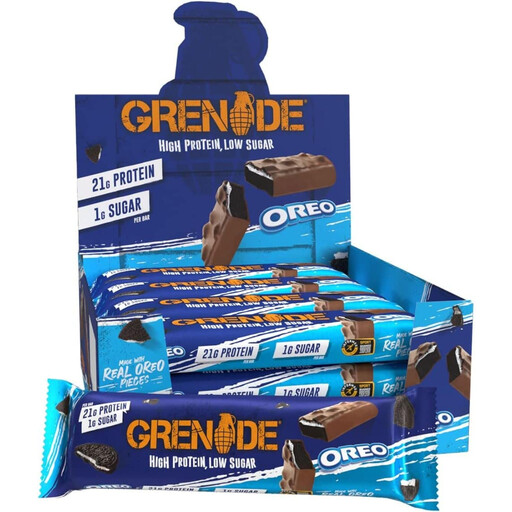 Image unavailable
Grenade Oreo Low Sugar Protein Bars, 12 × 60g
This 12 × 60g pack offers separate bars for a group picnic. Low-sugar wording is not a fat comparison, so read the exact pack’s fat figures per bar and per 100g.
View on Joybuy
 Image unavailable
PhD Smart Chocolate Peanut Butter Bars, 12 × 64g
The 12 × 64g pack is a way to bring individual bars to a picnic. Compare this flavour’s own fat and protein figures before choosing it instead of a lower-fat formulation.
View on Joybuy
 Image unavailable
Grenade Soft Core Double Chocolate Bars, 12 × 50g
This pack contains twelve 50g bars for a picnic group. Check fat per bar, ingredients and storage directions on the Double Chocolate pack before sharing.
View on Joybuy
 Image unavailable
Grenade Soft Core Golden Caramel Bars, 12 × 50g
The 12 × 50g format provides individual bars to pack for an outing. Read this flavour’s fat declaration and allergen statement rather than applying another Grenade bar’s figures or ingredients.
View on Joybuy
Common questions
Does low sugar mean a protein bar is lower in fat?
No. Sugar and fat are separate entries on the nutrition declaration. PhD lists 1.2–2.4g sugars and 8.5–9.2g fat in its checked 64g Smart Bar flavours, while Myprotein UK lists 3.4g fat in a 40g Lean Layered bar. Compare the exact flavours per 100g as well as per bar because the serving sizes differ.
How should I pack protein bars for a warm picnic?
Follow the chosen bar’s storage directions, keep wrappers on until serving and avoid leaving coated bars in direct sunlight. Myprotein UK specifically instructs shoppers to store Lean Layered bars in a cool, dry place away from direct sunlight; an insulated picnic bag can help keep bars shaded in hot conditions.
What allergen information should I check before sharing?
Read the ingredients and precautionary allergen statement on the exact bar being served. For example, Barebells lists milk protein and peanuts in White Salty Peanut, while Quest’s US S’Mores page lists milk, almonds and soy; neither example replaces a check of the UK pack in your hand. Food Standards Agency research explains that precautionary statements indicate possible unintended allergen presence.


