Exercisers wanting a small snack
After a light session, you may want something portable rather than a meal. Compare calories in the bar you will eat, and consider when your next meal is due.


A lower-calorie cereal bar can suit a small snack after a light session, particularly if a meal containing protein is coming soon. If you want the bar itself to contribute more protein, compare that amount alongside calories per bar: Nature Valley lists 10.2g protein and 195 kcal for its 40g Protein Peanut & Chocolate bar, while Kellogg's lists 1.4g protein and 99 kcal for a Frosties Cereal Milk Bar.
After a light session, you may want something portable rather than a meal. Compare calories in the bar you will eat, and consider when your next meal is due.
If you want the snack itself to contribute protein after exercise, compare grams per bar as well as calories. A protein-focused bar may be a larger snack than a light cereal bar.
Compare the nutrition panel and current ingredient declaration rather than relying on a protein, wholegrain or low-calorie impression from the front of the pack.
Decide whether you want a small snack or a bar that contributes more protein, then compare the serving you would eat. University College London Hospitals NHS Foundation Trust describes snacks containing both carbohydrate and protein as an option around exercise; the appropriate snack still depends on the activity and what you plan to eat next.
Consider it: after a light session or before a planned meal containing protein.
Trade-off: Kellogg's Frosties Cereal Milk Bar lists 99 kcal but only 1.4g protein per bar, so it contributes little protein on its own.
Consider it: when you want a portable snack that contributes more protein after exercise.
Trade-off: Nature Valley lists 10.2g protein and 195 kcal per 40g Protein Peanut & Chocolate bar; check whether that serving fits what else you intend to eat.
| Priority | What to check | Your needs |
|---|---|---|
| Serving size and calories | Compare kcal per bar for the portion you will eat, then kcal per 100g across different bar sizes. Check how many bars a multipack serving contains. | I want a small snack after exercise, not a number that looks low simply because the bar is small. |
| Protein and carbohydrate | Read grams per bar for both nutrients. Consider the activity and when your next meal is due rather than judging the snack by calories alone. | If the bar is my main snack after training, I want to know whether it contributes protein; if a meal is coming soon, a lighter bar may serve a different purpose. |
| Sugars and saturated fat | Compare the nutrition panel per bar and per 100g. Read any traffic-light labelling alongside the serving size. | A protein or wholegrain label alone does not tell me the bar's sugars, saturated fat or calorie content. |
| Ingredients and allergens | Read the current ingredients, emphasised allergens and any 'may contain' statement on the specific variant. | I need a bar whose current allergen declaration fits my requirements, even if another flavour or pack looked suitable before. |
Kellogg's lists 99 kcal for a 25g Frosties Cereal Milk Bar, but 397 kcal per 100g. The serving figure and the per-100g figure answer different questions.
Use kcal per bar to assess your snack portion and kcal per 100g to compare bars of different sizes.
Nature Valley lists 10.2g protein and 195 kcal per 40g Protein Peanut & Chocolate bar. A higher protein figure does not make its calorie contribution disappear.
Compare protein and calories for the same serving, then consider what you will eat at your next meal.
Nature Valley lists its Protein Peanut & Chocolate bar as gluten-free, but says it contains peanut, soy and milk and may contain tree nuts.
Check the current declaration for the exact bar, including precautionary 'may contain' wording. The Food Standards Agency explains that such wording communicates possible unintended allergen presence.
In its November 2025 review of 458 snack bars from 10 major UK retailers, Action on Salt & Sugar classified 37% as high in sugars under UK front-of-pack thresholds. That figure describes the products reviewed, not shoppers' preferences.
For a bar you might buy regularly, compare its sugars, saturated fat, protein, calories and serving size on the current pack.
Nature Valley positions its Protein range for snacks between meals and after exercise. Check the nutrition and allergens for the particular bar rather than applying range descriptions to every variant.
Kellogg's lists per-serving nutrition for cereal bars that may suit a smaller snack occasion.
Graze describes its Oat Boost flapjacks in terms of wholegrains and lower sugar, rather than as a specified post-workout protein serving.
These packs represent the protein-focused snack route, not the smaller cereal-bar route. Compare the current per-bar label if calories, protein or allergens will determine your choice.
 No image available
A protein-bar option for a snack after exercise. The pack contains 12 bars of 50g each; check the current per-bar nutrition and allergen declaration when comparing it with a smaller cereal bar.
 No image available
A protein-bar option if you want the bar itself to contribute to a post-exercise snack. This Golden Caramel pack contains 12 bars of 50g each; compare its own label rather than assuming it matches another flavour.
 No image available
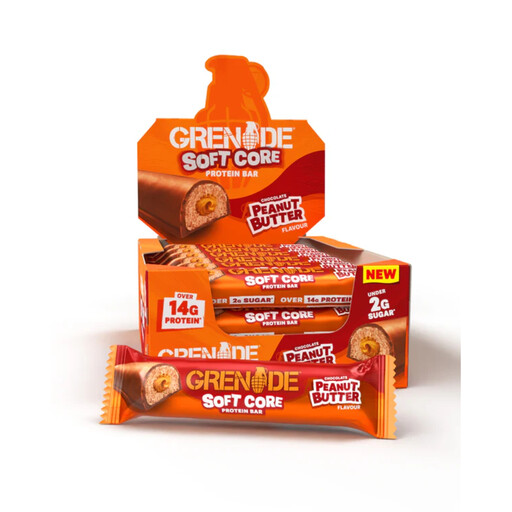
This Peanut Butter variant is a protein-bar option for a snack after exercise, supplied as 12 bars of 50g each. Check its current ingredients and allergen declaration before choosing it.
 No image available
A cereal-bar-format option for comparing a protein-focused snack with a smaller bar. Joybuy lists this four-bar pack at 40g per bar and gives 489 kcal and 25.6g protein per 100g; check the current per-bar declaration for the serving you will eat. Check the pack's peanut, soy, milk and precautionary nut information.
 No image available
Another cereal-bar-format choice for a protein-focused snack, supplied as four 40g bars. Compare this variant's own per-bar nutrition and current allergen declaration with any lighter bar you are considering.
Not on its own. A smaller bar can suit a light session or bridge the time until a meal, but compare its carbohydrate and protein with what you want the snack to contribute. University College London Hospitals NHS Foundation Trust describes snacks containing both carbohydrate and protein as an option around exercise.
No: a serving figure does not establish energy density. Kellogg's lists 99 kcal per 25g Frosties Cereal Milk Bar and 397 kcal per 100g. Use the first figure for the bar you would eat and the second to compare different-sized products.
Use both: per-bar figures describe the serving you plan to eat, while per-100g figures allow comparisons across bar sizes. UK Department of Health and Social Care nutrition-labelling guidance requires nutrition information per 100g or 100ml and energy in both kJ and kcal.
Read the ingredients and any 'may contain' statement on the current pack for the exact variant. Nature Valley says its Protein Peanut & Chocolate bar contains peanut, soy and milk and may contain tree nuts; a gluten-free description does not remove those other allergen considerations.
Do not assume that a bar covers everything you would want from a meal. Treat it as a snack and consider its serving size, carbohydrate and protein alongside the activity and when you will next eat.