What should you check first?
Decide whether the snack needs to be a bar at all. If portability or a deliberate protein goal makes a bar useful, compare complete servings and the exact pack rather than relying on its front-of-pack claim.
Fruit, vegetables and other simple snacks
Choose when: You are planning a child’s usual snacks and can prepare food at home or pack a snack box; the NHS recommends fruit and vegetables as children’s snack choice.
Bear in mind: Washing, cutting or suitable storage may take more planning than carrying a wrapped bar. Prepare food appropriately for younger children to minimise choking risk, as the Department for Education advises.
An occasional protein bar
Choose when: An older teenager or adult wants a portable snack with a deliberate protein goal and the exact product suits their needs.
Bear in mind: A protein or low-sugar claim does not settle the choice: check the serving, other nutrition information, allergens and any polyol warning.
| Priority |
What to check |
When it matters to me |
| Everyday snack choice |
Consider whether fruit, vegetables or another varied snack will work. For younger children, prepare food to minimise choking risk, as the Department for Education advises. |
I am planning regular snacks for a child, rather than choosing a bar just because its pack emphasises protein. The NHS recommends fruit and vegetables as children’s snack choice. |
| Protein and serving |
Read protein and sugars per whole bar, checking the serving size and exact flavour. PhD lists 21g protein and 1.2g sugars per 64g Choc Brownie bar; Myprotein lists 20g and 1.9g per 60g Triple Chocolate Fudge bar. |
For an older teenager or adult deliberately seeking a higher-protein portable snack, I want to know what one bar provides, not just what the front of the pack promises. |
| Full nutrition panel |
Compare energy, saturated fat, sugars, fibre and salt on the same serving basis. A low-sugar or no-added-sugar claim describes only part of the product. |
A sugar claim catches my eye, but I want to compare the whole snack before deciding whether it fits the occasion. |
| Polyols and warnings |
Check the ingredients and any excessive-consumption warning on the exact pack. The cited PhD and Myprotein bars carry a laxative-effect warning. |
On a travel or activity day, I do not want to pack several unfamiliar bars without reading their warnings first. |
| Allergens |
Read the current ingredients and precautionary statements for the precise flavour. Barebells says its bars contain nuts or may contain traces of nuts. |
Before sharing a bar, I need to check it against the intended person’s allergies; another flavour’s label cannot answer that question. |
| Traffic-light labels |
Where shown, use the colour-coded information to compare the nutrients it covers, then read the serving size, ingredients and allergen list separately. |
I find a quick front-of-pack comparison useful, but still need the full label. In the Food Standards Agency and Ipsos Northern Ireland’s 2024 Making Food Better Tracker, 49% of respondents across 611 Northern Ireland interviews said they actively used traffic-light labelling when shopping for food; that measures label use, not protein-bar preference. |
Protein bar brands to compare
These brand references describe particular ranges or flavours, not every bar a brand makes. Check the exact pack before applying a figure or ingredient statement to a different flavour.
PhD
PhD presents its Smart Protein Bar as a portable snack between meals.
- PhD lists 21g protein and 1.2g sugars per 64g Choc Brownie bar.
- That product carries an excessive-consumption laxative-effect warning; its figures should not be applied to other flavours.
Myprotein
The Layered Protein Bar is a layered bar sold in different flavours.
- Myprotein lists 20g protein, 1.9g sugars and 6.6g fibre per 60g Triple Chocolate Fudge bar.
- Myprotein says nutrition varies by flavour. The cited product is not suitable for vegetarians and carries an excessive-consumption laxative-effect warning.
Barebells
Barebells offers confectionery-style protein bars, including Raspberry Cream.
- Barebells states that Raspberry Cream has 20g protein and no added sugar.
- The brand says all its bars contain nuts or may contain traces of nuts, and its non-milkshake products contain lactose or may contain traces of lactose.
Grenade
Carb Killa is Grenade’s protein-bar range, offered in dessert-style flavours and multipacks.
- Grenade describes the range as providing up to 24g protein per bar.
- Grenade says values vary across the range, so check the precise flavour’s nutrition and allergen panel.
Quest
Quest describes protein bars containing sugar alcohols on its US product pages.
- Quest says its OG Protein Bars contain as much as 21g protein.
- Those US range details do not establish the formulation or label of a particular UK pack; check the exact product before comparing it.
Protein bars on Joybuy
These bars are packaged options to consider when a portable snack fits the occasion. They are not substitutes for checking the intended person’s needs and the exact pack, and they do not change the advice on children’s usual snacks.
 No image available
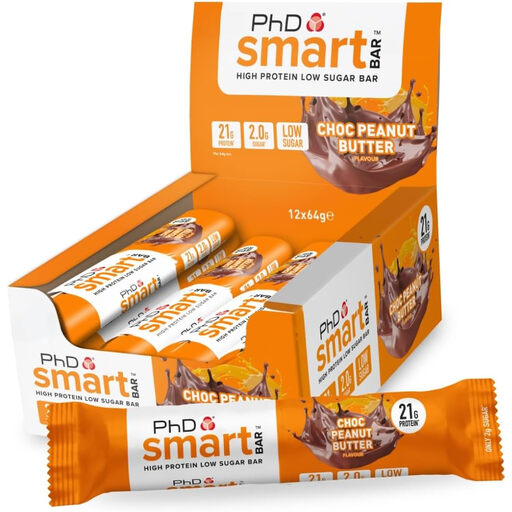
PhD Smart Chocolate Peanut Butter Protein Bars, 12 x 64g
A multipack to consider when an older teenager or adult deliberately wants a portable protein bar. The product information flags milk and soya, possible traces of gluten and egg, and a warning about laxative effects from excessive consumption; check the current pack before sharing it.
View on Joybuy
 No image available
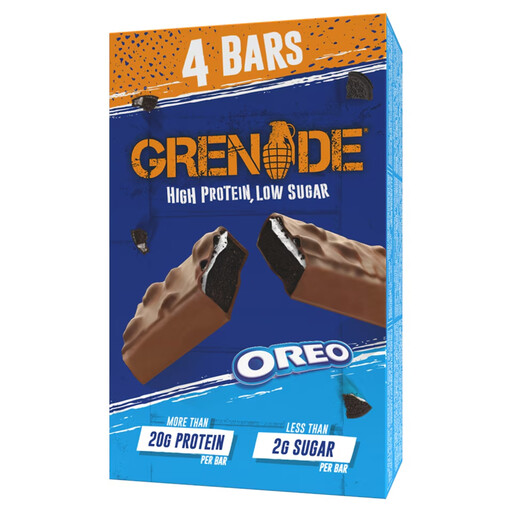
Grenade Oreo Flavour Protein Bars, 4 x 60g
A four-bar pack for occasions when carrying a bar is useful. The product information identifies milk, wheat and soya ingredients and polyols; check the current label for allergens, ingredients and consumption advice rather than assuming it suits every child.
View on Joybuy
 No image available
Nature Valley Protein Peanut & Chocolate Bars, 4 x 40g
A four-bar pack to compare with other portable snacks rather than assuming all protein bars have the same serving size or nutrition. Check the current pack for peanuts, soya, milk and possible other-nut traces before sharing it.
View on Joybuy
Questions about school-holiday snacks
Should a protein bar be a child’s everyday holiday snack?
Not as the default: the NHS recommends fruit and vegetables as children’s snack choice. If a bar is useful on a particular day, consider the child’s age and usual foods, then check the exact product’s ingredients, serving and warnings.
Does low sugar or no added sugar settle the choice?
No. Those claims do not describe the whole bar. Compare energy, saturated fat, sugars, fibre and serving size, as well as ingredients and allergens, before deciding whether it fits the occasion.
Why do some protein bars carry a laxative-effect warning?
Some contain polyols, and excessive consumption may produce laxative effects. The cited PhD and Myprotein bars carry this warning, so read the exact pack rather than assuming several bars can be eaten like an ordinary snack.
What should I check before sharing a bar with someone who has allergies?
Read the current ingredient list and precautionary statements for that exact flavour and pack. Barebells, for example, says all its bars contain nuts or may contain traces of nuts; another bar or flavour needs its own check.
Are traffic-light labels enough to compare packaged snacks?
No. Where present, they help you compare the nutrients shown, but you still need the serving size, ingredients and allergen statements. They cannot tell you whether a snack suits someone with a particular allergy.


