Organic-first snack shoppers
If an organic whole-product claim is essential, check the certification details on the exact bar. An organic ingredient in the list does not, by itself, make the whole bar organic under UK government labelling guidance.


Choose a certified-organic bar if organic ingredients are central to your decision; otherwise, compare conventional bars by the nutrition and ingredients of the portion you will actually eat. UK government guidance says a food labelled organic must meet organic production rules, contain at least 95% organic agricultural ingredients and be certified by an approved control body. For either route, check the exact flavour’s protein, sugars, sweeteners and allergens rather than treating an organic or no-added-sugar claim as a complete nutritional verdict.
If an organic whole-product claim is essential, check the certification details on the exact bar. An organic ingredient in the list does not, by itself, make the whole bar organic under UK government labelling guidance.
If you want a portioned, dessert-style bar, compare protein and sugars per bar across the flavours you are considering. A high-protein or lower-sugar claim does not establish organic status.
If you need to avoid particular allergens or prefer to limit sweeteners or polyols, read the current ingredients, allergen statement and warnings for the precise flavour and pack.
Decide whether organic certification is a requirement, then compare the serving you would eat and screen its ingredients before choosing a flavour or pack.
| Priority | What to check | Your needs |
|---|---|---|
| Organic status | Look for a whole-product organic claim and approved control-body certification on the exact pack. UK government guidance requires at least 95% of agricultural ingredients to be organic for a food labelled organic. | Organic ingredients are central to my choice; a bar that merely lists one organic ingredient would not meet that requirement. |
| Nutrition per bar | Compare serving size, protein, sugars and energy for the precise flavour. Keep per-bar and per-100g figures distinct. | For a snack in front of the television, I want to compare the whole bar I would eat, not just a claim on the front of the wrapper. |
| Sweeteners and polyols | Read the ingredients and any excessive-consumption warning. Barebells lists maltitol and sucralose in Creamy Crisp despite its no-added-sugar claim; PhD gives a laxative-effect warning for Smart Bar. | If I prefer to avoid certain sweeteners or know that polyols do not suit me, the ingredients matter alongside the sugars figure. |
| Allergens and recipe | Check the current pack’s ingredients, emphasised allergens and precautionary statements; do not assume every flavour in a range has the same recipe. | I need to check the particular bar against my milk, nut, gluten or vegan requirements before buying it. |
| Shopping convenience | Use the exact product listing to identify the flavour and pack size, then check the physical pack’s nutrition and ingredient declaration. | If ease of purchase drives my choice, I still want the bar I receive to meet my ingredient and portion preferences. |
UK government labelling guidance distinguishes a food labelled organic from a food that identifies an organic ingredient in its ingredients list.
If organic status is decisive, check the whole-product claim and control-body information on the exact pack, rather than relying on an ingredient or words such as ‘natural’.
The claim does not tell you the bar’s energy, portion size, allergens or whether it contains sweeteners. Barebells lists maltitol and sucralose in Creamy Crisp.
Read the per-bar nutrition panel and ingredients together. Check any polyol-related warning if that affects your choice.
PhD’s displayed Smart Bar flavour declarations vary in protein and sugars per 64 g bar, so a range-level description is not a substitute for the chosen flavour’s label.
Compare the exact flavour and serving size, including its current ingredients and allergen statement.
A category listing helps you find candidates but does not establish that a particular bar is certified organic or meets a dietary requirement.
Check the exact item and its physical pack before relying on an organic, vegan or allergen-related claim.
These ranges illustrate different claims to check; a brand’s presence here does not establish that every flavour has the same recipe or organic status.
An organic, plant-based route for shoppers who prioritise those attributes in an evening bar.
Smart Bar and separate Smart Plant Protein Bar ranges offer different recipes to compare.
A conventional protein-bar range marketed by Grenade UK as high in protein and low in sugar.
A range with different protein-bar formats and flavours.
A confectionery-style option for comparing stated protein and no-added-sugar claims with the ingredient list.
A route for shoppers interested in Quest’s stated protein-and-fibre combination.
These Grenade and PhD multipacks offer conventional, dessert-flavoured protein-bar options for the TV-night snack scenario. If an organic whole-product claim is essential, check the exact pack rather than assuming these options meet it.
 Image unavailable
A chocolate-flavoured conventional option for an individually portioned TV snack. Compare the exact bar’s nutrition, ingredients and allergen statement if sugars or organic certification affect your choice.
 Image unavailable
A caramel-flavoured conventional choice when a single bar suits your evening-snack portion. Check the chosen pack’s sugars, sweeteners and allergens rather than applying another flavour’s figures.
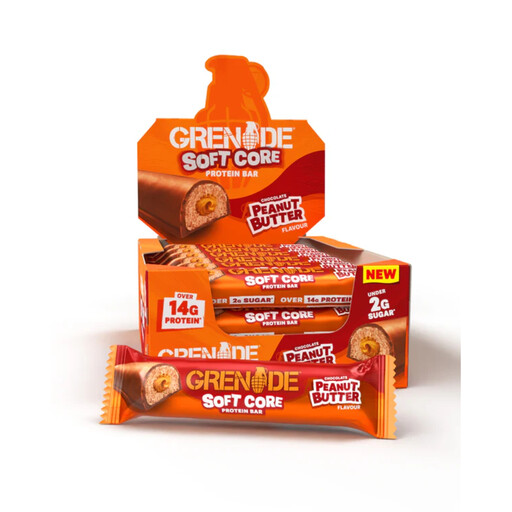 Image unavailable
A peanut-butter-flavoured conventional bar for the TV-night snack choice. If peanuts or other allergens matter, read the exact pack’s ingredient and precautionary statements before buying.
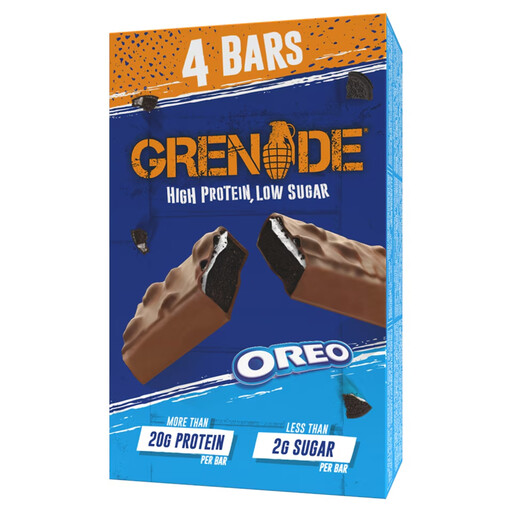 Image unavailable
A biscuit-flavoured conventional option in a four-bar pack. Compare its 60 g bar with other options on the same per-bar basis, and check ingredients if sweeteners or allergens influence your choice.
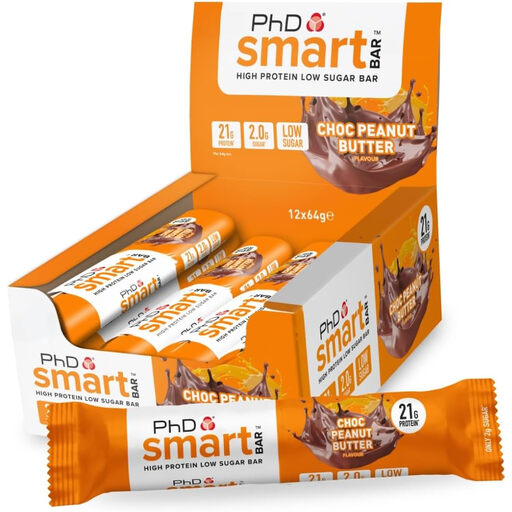 Image unavailable
A chocolate-and-peanut-butter-flavoured conventional option for comparing a 64 g serving with other evening snacks. Check this flavour’s nutrition, allergens and any excessive-consumption warning on the pack.
Under UK government guidance, a food labelled organic must meet organic production rules, have at least 95% organic agricultural ingredients and be certified by an approved organic control body. Check the whole-product claim and certification information on the exact bar; one organic ingredient is not enough to establish that the bar itself is organic.
No. Compare the portion’s nutrition and ingredients as well. Barebells states that Creamy Crisp has no added sugar, while its displayed ingredient list includes the sweeteners maltitol and sucralose.
Read the ingredient list and any excessive-consumption warning on the exact pack. The NHS says that if added polyols make up more than 10% of a food or drink, its label must state that excessive consumption may produce laxative effects; PhD also gives an excessive-consumption warning for Smart Bar.
No. Check the exact flavour’s current ingredients, emphasised allergens and precautionary statements. Barebells says its bars contain nuts or may contain traces of nuts, while its Original and Soft bars contain lactose or may contain traces of lactose.
A high-protein claim alone does not establish that a bar is a complete meal. For a TV-night snack, use its stated serving size and nutrition panel to decide what role that particular bar has in your eating routine.