Shoppers avoiding gluten
You want protein in a portable bar and need an explicit gluten-free claim. Peanuts, oats, milk, soya and other allergen declarations still need a separate check.


Choose a bar by the protein in the portion you will eat, then check its specific gluten-free claim and full allergen declaration. Nature Valley Protein Peanut & Chocolate, TREK Cocoa Oat and Eat Natural Peanuts, Almonds & Cocoa offer different combinations of protein, ingredients and dietary suitability; none should be treated as free from every allergen. If you follow an individually advised higher-protein diet, count a bar as one contribution to your day rather than assuming it meets your target.
You want protein in a portable bar and need an explicit gluten-free claim. Peanuts, oats, milk, soya and other allergen declarations still need a separate check.
You want to exclude animal ingredients without assuming that a vegan bar is gluten-free or suitable for every allergy. Check the ingredients and any precautionary allergen statement independently.
You need to know what one bar contributes to your eating plan. Cambridge University Hospitals notes that protein requirements vary with factors including age, health status and activity, so the per-bar figure needs to be considered alongside your individual advice.
Start with the portion you would actually eat, then check the free-from claim, ingredients and full nutrition panel on that product.
| Priority | What to check | Your needs |
|---|---|---|
| Protein per bar | Compare grams per individual bar and note its weight, rather than relying on a per 100g figure. Nature Valley UK describes around 10g per 40g Peanut & Chocolate bar; TREK lists 9g for Cocoa Oat, and Eat Natural lists 8g per 40g peanut, almond and cocoa bar. | I want to know how much protein my usual snack portion contributes, not just whether the wrapper says ‘protein’. |
| Gluten-free claim | Look for an explicit claim on the exact product. The Food Standards Agency states that food labelled gluten-free must contain no more than 20 mg/kg gluten as sold; gluten-free oats must still be declared as oats. | If I avoid gluten, I need to check the bar itself rather than assume every oat or protein bar qualifies. |
| Other allergens | Read the ingredient list, emphasised allergens and any ‘may contain’ statement on the current pack. A gluten-free claim does not cover peanuts, tree nuts, milk or soya. | My particular allergen matters more than a broad ‘free-from’ impression. I need to check both ingredients and precautionary wording. |
| Vegan suitability | Check the exact bar’s vegan designation and ingredients separately from its gluten-free status. TREK describes Cocoa Oat as vegan; the Eat Natural peanut, almond and cocoa bar contains honey. | I may want a vegan bar, but I still need to check oats, soya and any relevant cross-contact warning. |
| Whole-bar nutrition | Compare protein alongside sugars, energy and portion size on the per-bar panel. Keep any individually advised requirements in view. | Protein is only one part of my snack choice; I want the figures for the whole bar I plan to eat. |
The gluten-free Nature Valley, TREK and Eat Natural products described by their manufacturers still have ingredient allergens or precautionary warnings. The Food Standards Agency also says oats remain an allergen declaration when used in gluten-free food.
Identify the ingredient you must avoid, then read the current pack’s ingredients and ‘may contain’ statement before eating.
A per 100g figure does not tell you what one bar provides. Kellogg’s UK lists 1.1g protein per 20g Coco Pops Snack Bar, while Nature Valley UK describes around 10g per 40g Protein Peanut & Chocolate bar.
Compare nutrition per bar, checking the portion weight as well as the protein figure.
TREK identifies Cocoa Oat as vegan but warns that it may contain peanuts, nuts and milk. Vegan status and allergen declarations answer different questions.
Check vegan suitability, ingredients and precautionary warnings separately.
Bars with a protein claim can have different portion sizes and nutrition profiles. One protein figure cannot establish how a bar fits an individual eating plan.
Read the full per-bar nutrition panel, and use any personal dietary advice you have been given when planning your intake.
Its Protein Peanut & Chocolate bar is a gluten-free option that Nature Valley UK describes as providing around 10g protein per 40g bar.
TREK describes Cocoa Oat as a vegan bar made with gluten-free oats and providing 9g plant protein per bar.
Eat Natural lists its Peanuts, Almonds & Cocoa protein bar as gluten-free, with 8g protein per 40g bar.
An Amazon.co.uk listing describes Cocoa Vanilla Protein Oat Bites as a vegan oat-and-soya snack with 6.3g protein per 30g bar.
Alpen’s No Added Sugar product is a muesli, not a cereal bar, and lists 5g protein per 45g serving.
Kellogg’s UK lists 1.1g protein per 20g Coco Pops Snack Bar.
These Nature Valley and TREK bars offer peanut-and-chocolate, salted caramel and oat-flapjack formats for comparing protein snacks. Check each flavour’s own pack for its gluten-free claim, ingredients and nutrition.
 Image unavailable
For a gluten-free protein-bar shortlist, Nature Valley UK describes around 10g protein in each 40g Peanut & Chocolate bar. It contains peanut, soya and milk ingredients and may contain other tree nuts; check the current pack.
 Image unavailable
If you prefer a salted caramel nut bar, compare this flavour’s per-bar protein and gluten-free claim on its own pack. Check its declaration for almonds, milk, peanuts and soya rather than applying the Peanut & Chocolate bar’s details to this variant.
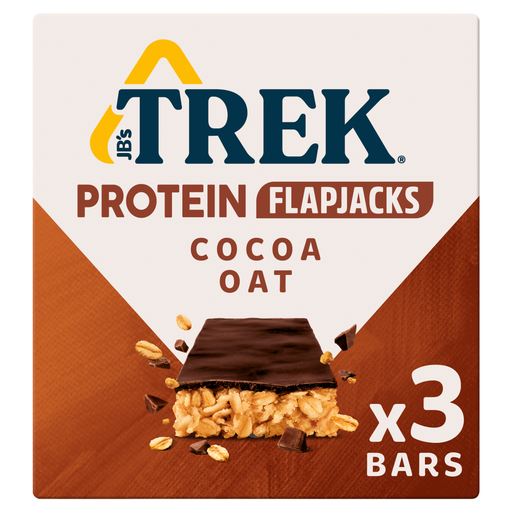 Image unavailable
For a vegan oat-flapjack option, TREK describes Cocoa Oat as made with gluten-free oats and providing 9g plant protein per bar. Check its soya declaration and its precautionary warnings for peanuts, nuts and milk on the pack.
 Image unavailable
If salted caramel is your preferred flapjack flavour, compare this variant’s own per-bar nutrition with Cocoa Oat rather than assuming they match. Check its gluten-free claim, soya declaration and any ‘may contain’ wording on the current pack.
No. The Food Standards Agency states that a gluten-free claim concerns gluten content, with a limit of 20 mg/kg in food as sold. It does not rule out peanuts, tree nuts, milk, soya or oats, so check the individual product’s allergen declaration.
No gluten-free claim establishes that. The Food Standards Agency says oats must still be emphasised as an allergen when used in gluten-free food. Check the oat declaration against the ingredient you need to avoid.
Nature Valley UK describes around 10g protein per 40g Peanut & Chocolate bar, TREK lists 9g for Cocoa Oat, and Eat Natural lists 8g per 40g Peanuts, Almonds & Cocoa bar. Those figures do not settle which bar fits an allergy or dietary exclusion; check each product’s ingredients and warnings too.
Do not assume one bar meets an individual target. Cambridge University Hospitals notes that protein requirements vary with age, health status and activity. Use the per-bar figure to understand the snack’s contribution alongside any advice you have received.
Yes. Use product information to shortlist bars, then check the current pack’s ingredients and precautionary statements before eating. Kellogg’s UK advises checking packs because recipes can change, while the Food Standards Agency explains that ‘may contain’ statements communicate possible unintentional allergen presence.