For a morning tea break, compare protein per whole bar first, then check sugars, saturated fat, salt and energy on the same pack. Nature Valley lists around 10g protein per 40g bar for two Protein variants, while TREK lists 9g plant protein for its Protein Flapjacks. The right choice also depends on the exact bar’s ingredients, allergens and dietary suitability; protein wording alone cannot settle those checks.
Who is choosing a tea-break bar?
Desk-based tea-break snackers
If you want a ready-to-eat bar between breakfast and lunch, compare the protein in the whole bar with its sugars, saturated fat and energy per serving. The NHS advises using nutrition labels to compare foods rather than relying on front-of-pack wording alone.
Vegan or gluten-free shoppers
TREK describes its Protein Flapjacks as a plant-based, gluten-free option with 9g plant protein. Check the exact flavour and pack against your dietary requirements before choosing it.
Shoppers avoiding particular allergens
Check the ingredients and precautionary allergen statement on the exact bar. The Nature Valley and Eat Natural examples discussed here contain peanuts and soya, while their milk and tree-nut information varies by product.
What should you check on the pack?
Start with the amount you would eat at one tea break. Use the per-100g panel alongside the per-bar figures when comparing bars of different sizes.
| Priority | What to check | Your needs |
|---|
| Protein per bar |
Read the grams per whole bar and its weight. Nature Valley lists 10.2g protein for Peanut & Chocolate and 10.4g for Salted Caramel Nut, each per 40g bar; TREK lists 9g per Protein Flapjack. |
I want to know how much protein the bar I actually eat provides, not just whether its name mentions protein. |
| Whole nutrition panel |
Compare sugars, saturated fat, salt and energy per bar, then use per-100g figures for unequal portions. Nature Valley lists 6.8g sugars for its 40g Peanut & Chocolate bar; Eat Natural lists 10.0g sugars and 5.6g saturated fat for its 40g Peanuts & Dark Chocolate bar. |
A protein figure matters to me, but I also want the other values for the portion I plan to eat. |
| Ingredients and allergens |
Read the exact pack’s ingredients and precautionary allergen statement. Check any vegan or gluten-free wording against the variant you are buying. |
My choice needs to fit the ingredients I can eat; a protein claim does not answer that question. |
What is easy to overlook?
-
Taking any mention of protein as a portion guide
Protein wording does not tell you how many grams you will get from one bar.
Check protein per whole bar and the bar’s weight before comparing products.
-
Looking at protein but not the rest of the panel
Protein-positioned bars can have different amounts of sugars, saturated fat and energy per serving, as the Nature Valley and Eat Natural product panels show.
Compare the full panel for the portion you would eat, using per-100g values when bar sizes differ.
-
Using dietary wording as an allergen check
Vegan or gluten-free wording does not tell you whether a bar contains peanuts or other ingredients you need to avoid.
Read the current pack’s ingredients and precautionary allergen statement for the exact variant.
-
Relying on an older bar listing
Alpen identifies several former bar lines as no longer made. An older listing may therefore be a poor basis for choosing a currently sold product.
Confirm the exact product name, pack size and current ingredients and nutrition information before purchase.
Brand ranges to consider
These brand references describe particular bars or ranges, not every product bearing the brand name.
Nature Valley
Nature Valley lists 10.2g protein per 40g Protein Peanut & Chocolate bar and 10.4g per 40g Protein Salted Caramel Nut bar.
- Its UK product panels give per-bar nutrition figures for both variants.
- Both contain peanuts, soya and milk; the Salted Caramel Nut variant also contains almond.
TREK
TREK describes its Protein Flapjacks as plant-based and gluten free, with 9g plant protein per flapjack.
- The range offers a route for shoppers seeking a vegan flapjack.
- Check the chosen flavour’s full nutrition panel and allergen statement.
Eat Natural
Eat Natural’s Peanuts & Dark Chocolate protein bar lists 7.8g protein and 2.4g fibre per 40g bar.
- Its product panel also gives sugars, saturated fat and energy per bar for comparison.
- It contains peanuts and soya and may contain milk and tree nuts.
Kellogg's
Kellogg's has described Special K Protein Cereal Bars made with plant ingredients including soya and seeds.
- Check the nutrition panel and ingredients of the exact bar you are considering rather than applying range-wide wording to a variant.
Alpen
Alpen’s product-availability information names several former bar lines that are no longer made.
- Confirm that an exact bar is currently offered, then check its own protein figure and ingredients.
Graze
For a Graze snack, make the individual product rather than the brand name your point of comparison.
- Check whether the exact product is a cereal bar and read its protein per portion, nutrition panel and allergen statement.
Nature Valley options on Joybuy
These two Nature Valley Protein cereal-bar packs suit a comparison of individually portioned 40g bars for a morning tea break. Check the nutrition and allergen information on the pack you receive, particularly if you are choosing between flavours.
 No image available
Nature Valley Protein Salted Caramel Nut Bar, 4 x 40g
An individually portioned cereal bar for a tea break; Nature Valley lists 10.4g protein and 4.3g fibre per 40g Salted Caramel Nut bar. It contains peanuts, soya, milk and almond, so check the pack if you avoid these ingredients.
View on Joybuy
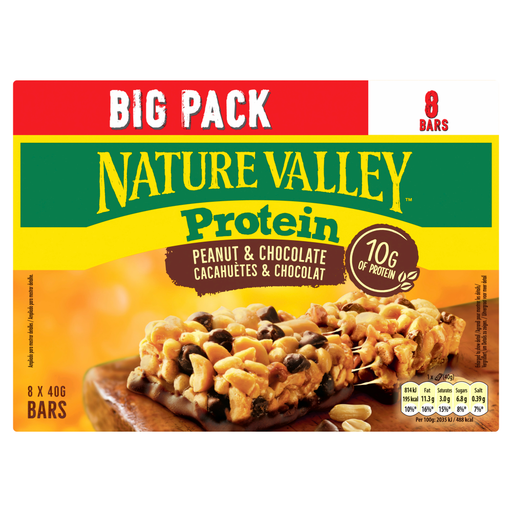 No image available
Nature Valley Protein Peanut & Chocolate Cereal Bars, 8 x 40g
For a single-bar tea break, Nature Valley lists 10.2g protein, 4.3g fibre and 6.8g sugars per 40g Peanut & Chocolate bar. It contains peanuts, soya and milk; check the pack for its full allergen statement.
View on Joybuy
Common questions
Should I compare protein per bar or per 100g?
Use both: protein per bar tells you what one tea-break portion provides, while the per-100g figure helps compare bars of different sizes. The NHS notes that nutrition information is given per 100g and may also be shown per portion.
Can a protein cereal bar also contain substantial sugars or saturated fat?
Yes. Eat Natural lists 10.0g sugars and 5.6g saturated fat per 40g Peanuts & Dark Chocolate protein bar. Read those figures alongside protein on the exact product’s nutrition panel rather than treating its protein wording as a summary of the whole bar.
How do I check allergens in a protein cereal bar?
Read the ingredients and precautionary allergen statement on the exact current pack. The Food Standards Agency says allergens present in UK prepacked food must be emphasised in its ingredients list; the bars discussed here show why checking by variant matters.


