Gym-goers who want a drink without preparation
If you train away from home, a ready-to-drink bottle lets you check a stated protein amount without mixing powder. Check its storage instructions before putting it in a gym bag.


Choose a ready-to-drink protein milkshake if you want a convenient post-gym snack with a stated protein amount; choose a regular flavoured milkshake if flavour matters more than a larger protein serving. Compare nutrition for the whole bottle, not just the claim on the front: a larger protein number does not automatically make a drink a better fit for your appetite, other food or activity.
A bottled shake is worth considering when its portion, ingredients and convenience suit what you plan to eat after training.
If you train away from home, a ready-to-drink bottle lets you check a stated protein amount without mixing powder. Check its storage instructions before putting it in a gym bag.
Protein is only one figure. Bottle size, energy, carbohydrate and sugars help you judge how the drink fits with the rest of your food and your activity.
Read the current pack if you need to avoid milk or cereals containing gluten. A lactose-free shake can still contain milk.
Decide whether you want a conventional flavoured milkshake or a stated protein serving, then compare the complete bottle and its ingredients.
| Priority | What to check | Your needs |
|---|---|---|
| Protein and portion | Read protein per bottle alongside bottle size. Arla Foods UK lists 26g in its 482ml Chocolate shake; Sainsbury’s lists 25g in a 330ml UFIT Chocolate bottle. Tesco lists 50g in the 500ml UFIT Pro50 Strawberry bottle. | I want a stated protein serving I can drink without preparation, but I may prefer a smaller bottle to a 500ml one. If flavour is my main reason for buying, a regular milkshake is another option. |
| Whole-bottle nutrition | Compare energy, carbohydrate and sugars for the amount you will drink, keeping per-100ml and per-bottle figures distinct. Sainsbury’s lists 158kcal and 10.9g sugars for the 330ml UFIT Chocolate bottle. | After a longer or more demanding session, I want to consider the drink alongside my other food and fluids. The British Nutrition Foundation says eating patterns for active people depend on the amount and intensity of activity. |
| Ingredients and allergens | Check the current ingredient list and allergen declaration. Arla Foods UK labels its Chocolate Protein shake lactose free but also lists milk; Sainsbury’s lists milk and oat fibre labelled gluten for UFIT Chocolate 330ml. | I need to know whether the exact drink fits my ingredient requirements. Lactose free does not mean milk free, and a no-added-sugar claim does not mean a drink contains no sugars. |
| Storage | Follow the exact product’s unopened storage directions. Sainsbury’s UFIT Chocolate and ASDA’s MaxiNutrition MaxShake listings both instruct refrigeration after opening and consumption within 24 hours. | If I plan to carry a shake to the gym, I need its unopened storage directions to allow that. Once opened, I will follow the bottle’s refrigeration and consumption instructions. |
Front-of-pack wording alone cannot tell you what a complete drink contains or how to store it.
Yazoo lists 3g protein and 8.7g sugars per 100ml for its Strawberry milkshake, while Arla Foods UK lists 26g protein per complete 482ml Chocolate Protein shake. Those figures use different serving bases and describe different products.
Compare the amount you intend to drink using each pack’s protein, sugars, energy and serving-size information.
Tesco lists 50g protein in 500ml bottles from the UFIT Pro50 and Optimum Nutrition ranges. A 500ml drink is a different portion from a smaller post-gym bottle, and the British Nutrition Foundation notes that activity-related food needs vary with activity amount and intensity.
Choose a bottle size that suits the snack you intend to have, then compare its complete nutrition information with the rest of your food.
Arla Foods UK’s lactose-free Chocolate Protein shake still lists milk as an allergen. Sainsbury’s UFIT Chocolate 330ml listing states no added sugar but reports 10.9g sugars per bottle and lists oat fibre labelled gluten.
If you have an allergy or an ingredient restriction, check the current pack’s full ingredient and allergen declaration.
Sainsbury’s UFIT Chocolate and ASDA’s MaxiNutrition MaxShake listings specify refrigeration after opening and consumption within 24 hours.
Check unopened storage directions before carrying a drink, and follow the stated instructions once you open it.
These examples show how bottle size and labelling differ across particular milkshake and ready-to-drink shake products; a figure for one flavour should not be assumed to apply to a whole range.
Arla Foods UK lists a 482ml Chocolate Flavoured Shake with 26g protein per bottle.
UFIT examples include a 330ml Chocolate shake listed by Sainsbury’s with 25g protein and a 500ml Pro50 Strawberry drink listed by Tesco with 50g.
Tesco lists Optimum Nutrition Chocolate ready-to-drink shakes in a 330ml bottle stating 25g protein and a 500ml bottle stating 50g.
ASDA lists a 330ml MaxiNutrition MaxShake Chocolate milkshake stating 25g protein.
Yazoo Strawberry is a conventional flavoured milkshake. Yazoo lists 3g protein and 8.7g sugars per 100ml, with a recommended 200ml serving.
These ready-to-drink protein shake packs offer different bottle or can sizes for a post-gym snack. Check the nutrition and storage directions on the exact pack before deciding which portion suits you.
 No image available
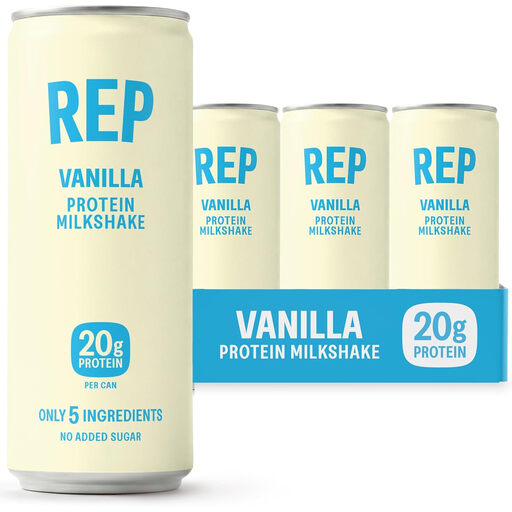
The 250ml can is a compact ready-to-drink option for a post-gym snack. The pack contains eight cans. It contains milk, so check the current allergen declaration; also check the unopened storage directions before carrying a can to the gym.
 No image available
This ready-to-drink 330ml bottle suits a snack occasion when mixing a drink is impractical; the pack contains eight bottles. It contains milk. Check the unopened storage directions if you plan to carry one, and follow the pack’s refrigeration instructions after opening.
 No image available
Consider this ready-to-drink 500ml bottle when you deliberately want a larger single-drink portion; the pack contains eight bottles. Compare the full bottle’s nutrition with your intended snack. It contains milk, and its unopened storage directions should be checked before taking it to the gym.
No single shake is necessary after every session. The British Nutrition Foundation says food choices for active people should fit a varied diet and that individual needs depend on the amount and intensity of activity. Choose a shake when its portion and convenience fit what else you plan to eat and drink.
Not on the basis of a lactose-free claim. Arla Foods UK labels its Chocolate Protein shake lactose free, but its ingredients and allergen declaration still specify milk. Check the exact product’s current allergen declaration.
Read the current pack for milk and any cereals containing gluten, as well as other ingredients you need to avoid. GOV.UK’s allergen guidance identifies milk and cereals containing gluten, including oats, among allergens that must be declared when used as ingredients. Sainsbury’s UFIT Chocolate 330ml listing specifies milk and oat fibre labelled gluten.
Only if that exact product’s unopened storage instructions allow it. Check the pack before carrying it; after opening, follow its refrigeration and consumption directions. Sainsbury’s UFIT Chocolate and ASDA’s MaxiNutrition MaxShake listings both specify refrigeration and consumption within 24 hours of opening.