Busy solo breakfast eaters
For people who want a fixed one-person portion with limited time or equipment. Pots work where hot water is available, while sachets suit a microwave-and-milk setup.


Choose a protein pot when you need a portable breakfast made with hot water alone: Sainsbury's product information lists 13.1g protein per prepared FUEL10K pot and 12g per Quaker Protein Original pot. Choose a protein sachet when you have a microwave and milk, and compare nutrition on the same preparation basis before deciding whether a flavoured or plain option suits your breakfast.
For people who want a fixed one-person portion with limited time or equipment. Pots work where hot water is available, while sachets suit a microwave-and-milk setup.
For people comparing the protein contribution of one breakfast serving and checking whether a figure applies to the dry product or to a portion prepared with milk or water.
For people who need to check added soy or milk protein, oat suitability for their dietary requirements, and differences between flavoured variants.
Start with the protein figure for the serving you will eat, then check whether the preparation method, ingredients and flavour fit your routine.
| Priority | What to check | Your needs |
|---|---|---|
| Protein per serving | Compare protein per sachet or pot, not only per 100g. Check whether the figure is for the dry product, a water-prepared portion or one made with milk. | I want a protein figure that matches the breakfast I will actually eat. Sainsbury's lists 13.1g per prepared FUEL10K pot, while Tesco lists 8.1g per Quaker Protein Original sachet as sold and 15g when made with 190ml semi-skimmed milk. |
| Preparation method | Check whether you need only boiling water or also a bowl, microwave and milk. Confirm the stated heating time and instructions for the exact format. | A hot-water pot suits a desk, commute or place without a microwave. A sachet can suit a home or workplace kitchen where milk and microwave heating are available. |
| Flavour and sugars | Compare the exact flavour's sugars and ingredients before preparation. Do not assume protein-fortified flavours have the same nutrition panel. | I may prefer a sweet flavour, but I want to see what changes with it. Sainsbury's lists 6.8g sugars per Chocolate Brownie sachet and 7.7g per Peanut Butter sachet, compared with less than 0.5g for Quaker Protein Original as sold. |
| Allergen suitability | Read the current ingredients, allergen statement and any suitability wording on the physical pack. Check each variant rather than relying on the product category. | I need to know whether added soy protein, milk powder or stated cereal and nut risks affect my choice. The Food Standards Agency requires food businesses to provide allergen information. |
A sachet prepared with milk can include protein supplied by the milk, while a hot-water pot's stated figure relates to a different preparation. Comparing those figures directly can distort the difference between products.
Compare products either as sold or as prepared with the same liquid and amount, then decide whether that added milk is part of your planned breakfast.
The Quaker Protein Original sachet and flavoured protein sachets have different sugars figures per serving. A front-of-pack protein message does not replace the nutrition panel for the chosen flavour.
Compare the exact flavour's sugars, protein and ingredients before buying.
Protein-fortified oats can contain soy protein or milk powder, and an oat product is not automatically suitable for coeliac disease or for every allergy requirement.
Read the current pack's ingredients, allergen statement and suitability claim before consuming, especially when changing flavour or format.
Flahavan's states that its High Protein Porridge Pot is available only in Tesco Northern Ireland, so it may not be a dependable routine choice elsewhere in the UK.
Check local retailer stock before relying on this pot for regular breakfasts, particularly if consistent replenishment matters.
A relevant range for protein-fortified sachets and a hot-water protein pot, alongside plain portioned sachets for customising breakfast.
A protein-focused convenience-food brand with porridge pots and microwave sachets for one-person breakfasts.
Relevant for individually portioned traditional oat sachets and hot-water porridge pots rather than specifically protein-fortified oats.
An alternative protein single pot for shoppers able to buy within its stated Northern Ireland distribution area.
Joybuy product options for a high-protein, single-serve instant-oat breakfast where a microwave or hob is available.
 No image available
A single-serve protein sachet for breakfasts where a bowl and microwave or hob are available.
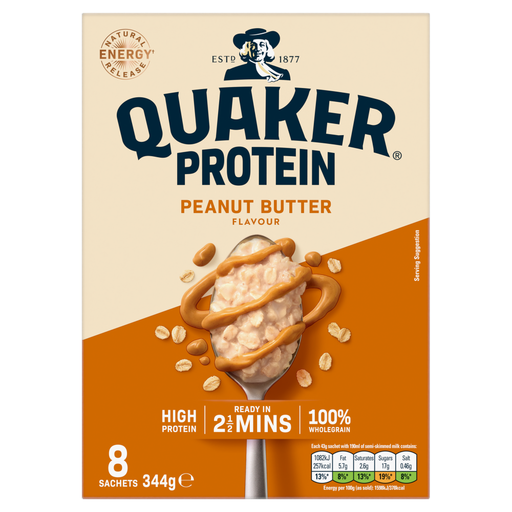
Eight 43g sachets; the product listing states 9g protein per sachet and a 2½-minute microwave method. Preparation can use water or milk, which changes the prepared nutrition.
Contains oats and soy; the listing states it may contain milk, peanuts and nuts. This sweetened flavour is listed with 18g sugars per 100g, equivalent to about 7.7g per sachet.
A pot is the simpler choice when you need hot-water-only preparation, while a sachet can suit a microwave-and-milk routine and a multipack format. Compare nutrition on the same basis: Sainsbury's lists 13.1g protein per prepared FUEL10K pot, while Tesco lists 8.1g per Quaker Protein sachet as sold and 15g after preparation with 190ml semi-skimmed milk.
No. The researched Quaker Protein Original sachet lists less than 0.5g sugars per sachet as sold, while Sainsbury's lists 6.8g for Chocolate Brownie and 7.7g for Peanut Butter protein sachets. Check the exact flavour and whether the panel is for the dry product or a prepared serving.
Follow the instructions for the exact sachet. FUEL10K's chocolate sachet instructions specify milk and microwave heating, and Quaker Protein Original's higher prepared protein figure assumes semi-skimmed milk. Water can change texture and final nutrition, so use the as-sold figure when comparing dry sachets.
Not automatically. Quaker Protein Original sachets contain soy protein, while the Protein Original pot contains skimmed milk powder and soy protein. Check the current pack's ingredients and allergen statement before purchase, as formulations can change.
Do not assume they are. M&S states that its Traditional Porridge sachets are not suitable for coeliacs. Choose only a product whose current package specifically confirms suitability for your dietary requirement and check the allergen statement each time you buy.