Who is choosing?

Families comparing protein per pack

If protein is the reason for buying popcorn, compare the amount in the bag or serving the child will eat. Protein-enriched examples from Myprotein and Khloud contain milk-derived ingredients, so the ingredient list matters too.

Families choosing small snack packs

Individual packs make the serving size clear. Sainsbury’s lists Propercorn Lightly Sea Salted in 10g bags, with 0.9g protein per bag; it is a regular popcorn choice rather than a protein-focused one.

Carers checking allergens and age warnings

Read the exact pack for milk ingredients, precautionary allergen statements and unpopped-kernel warnings. Tesco’s listing for Metcalfe’s Sweet ’N Salt says it is not suitable for children under 4.

What should you check?

Start with the amount in the serving you intend to offer, then check the ingredients and safety information for that particular pack.

Priority What to check Your needs
Protein per serving Compare protein in a whole bag or stated serving, keeping different serving sizes in view. Myprotein states 3.8g per 21g bag; Khloud states 7g per serving. I’m choosing popcorn partly for its protein, so I want to know how much the portion actually provides.
Pack size Check whether it is an individual bag or a sharing pack, and read nutrition values for the amount to be served. Sainsbury’s lists Propercorn in 10g bags. A small, ready-portioned bag suits the way we serve an after-school snack.
Sugar and salt Compare the values for the portion eaten as well as any per-100g figures. Tesco lists 3.6g sugars and 0.26g salt per quarter of an 80g Metcalfe’s Sweet ’N Salt pack. Flavour matters, but I also want to compare what is in the portion, rather than choose by a protein claim alone.
Allergens and kernels Read the current ingredients, milk warnings and age guidance on the exact product. Myprotein lists whey protein isolate containing milk; Tesco warns that Metcalfe’s Sweet ’N Salt may contain unpopped kernels and is not suitable for children under 4. I need a snack whose ingredients and safety warnings are appropriate for the child who will eat it.

What is easy to overlook?

  • Assuming a protein-focused name tells you the serving amount

    The stated protein differs between products and serving sizes: Myprotein lists 3.8g per 21g bag, while Khloud states 7g per serving.

    Compare the protein figure for the amount likely to be eaten, rather than relying on the front-of-pack name.

  • Overlooking milk in protein-enriched popcorn

    Myprotein lists whey protein isolate containing milk, and Khloud says its popcorn contains milk.

    For a child with a milk allergy, check the ingredients and allergen information on the exact flavour and pack before serving it.

  • Treating regular popcorn as a protein-focused snack

    Sainsbury’s lists 0.9g protein per 10g Propercorn pack; Tesco lists 1.6g per quarter of an 80g Metcalfe’s pack and 1.4g per 23g Tyrrells pack.

    If protein is your reason for choosing popcorn, compare these stated portions with a protein-enriched option. If you prefer a regular flavour or smaller bag, choose on those grounds instead.

  • Missing an unpopped-kernel warning

    Tesco says Metcalfe’s Sweet ’N Salt is not suitable for children under 4 because it may contain unpopped kernels. Other popcorn listings also warn about kernels.

    Follow the age and safety statement on the specific pack, and choose a different snack when that product is unsuitable for the child.

Relevant brand examples

Myprotein

Its Sweet and Salty Protein Popcorn provides a stated protein amount in a single 21g bag.

  • Myprotein lists 3.8g protein, 90 kcal and 0.17g salt per bag.
  • The listed ingredients include whey protein isolate containing milk.

Khloud

Its Protein Popcorn Variety Pack is a protein-enriched option described on the brand’s own product page.

  • Khloud states 7g protein per serving.
  • It contains milk; check the exact pack and local listing before buying.

Propercorn

Lightly Sea Salted is a regular popcorn option sold in small bags.

  • Sainsbury’s lists 0.9g protein and 44 kcal per 10g pack in a six-pack.
  • The listing says it is made in a factory that handles milk and warns about occasional unpopped kernels.

Metcalfe’s

Sweet ’N Salt is a regular sweet-and-salty popcorn option.

  • Tesco lists 1.6g protein per quarter of an 80g pack.
  • Tesco’s product warning says it is not suitable for children under 4 because it may contain unpopped kernels.

Tyrrells

Sweet & Salt is a regular popcorn option in a 23g pack.

  • Tesco lists 1.4g protein per pack.
  • The product listing warns that the pack may contain unpopped kernels.

Joybuy popcorn options

For a small regular popcorn pack rather than a protein-enriched one, consider this sea-salted multipack and check whether its ingredients and portion size suit your household.
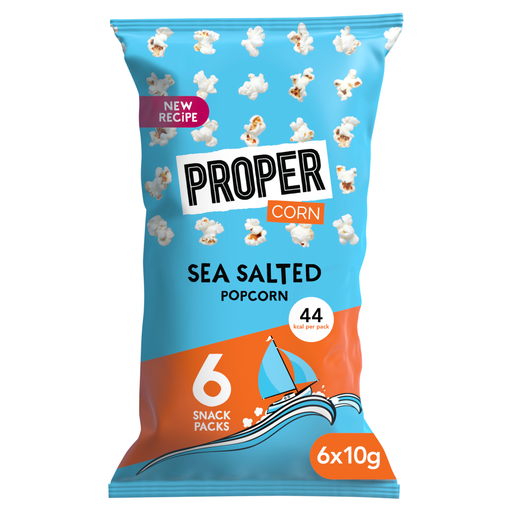
Propercorn Lightly Sea Salted Popcorn 6x10g

Propercorn Lightly Sea Salted Popcorn 6x10g

Six individual 10g bags offer a defined portion for an after-school snack. Sainsbury’s lists 0.9g protein per 10g pack and ingredients of wholegrain corn, rapeseed oil and sea salt; its listing says the product is made in a factory that handles milk and warns about occasional unpopped kernels.

View on Joybuy

Questions about after-school popcorn

Does a “protein popcorn” name tell me how much protein is in the pack?

No. Compare the stated serving amounts: Myprotein lists 3.8g protein per 21g Sweet and Salty bag, while Khloud states 7g per serving. Check how much popcorn the child would actually eat.

Can a child with a milk allergy have protein-enriched popcorn?

Do not assume it is suitable. Myprotein lists whey protein isolate containing milk, and Khloud says its popcorn contains milk. Read the ingredients and allergen statement on the exact pack before serving it.

What should I check before giving popcorn to a child under 4?

Follow the specific pack’s age and safety warning. Tesco’s listing says Metcalfe’s Sweet ’N Salt is not suitable for children under 4 because it may contain unpopped kernels; other popcorn products also warn about kernels.

What matters besides the protein figure?

Check the portion’s sugar and salt values, ingredients, allergen information and any front-of-pack traffic-light label. NHS Healthier Families advises looking at traffic-light colours when comparing packaged snacks for children, rather than relying on one nutrient claim.