Who might consider a shake?
A ready-to-drink bottle is most useful when its serving and storage instructions fit what happens after your session.
People training for longer than an hour
If eating soon afterwards is difficult, compare the protein in a whole bottle with the food you plan to have later. The British Heart Foundation discusses an additional protein serving after sessions lasting more than an hour; it does not make a shake necessary after every workout.
People training again soon
Protein is only one part of the choice. The British Dietetic Association highlights carbohydrate-rich food and fluids when quick recovery is needed between bouts of training.
Buyers looking for lactose-free dairy
Check the lactose declaration on the specific shake. Lactose-free dairy still contains milk, so it is not an alternative for someone with a milk allergy.
What should you compare?
Start with whether you need a separate drink at all, then compare the portion you would actually consume rather than figures for different bottle sizes.
High-protein ready-to-drink shake
Consider when: A portable protein serving would be useful after a longer session and a meal is not close at hand.
Bear in mind: Protein on its own does not tell you whether the drink meets your carbohydrate and fluid needs.
Standard flavoured milkshake
Consider when: You want a flavoured dairy drink, with protein coming mainly from a meal or snack.
Bear in mind: Check protein per portion rather than assuming it matches a product labelled high-protein.
Food and a drink
Consider when: You can eat after training and do not need a separate bottled serving.
Bear in mind: Food may need planning or preparation when you are away from home.
| Priority | What to check | Your needs |
|---|
| Protein serving |
Read protein per bottle or per portion you will drink. For context, the British Association of Sport and Exercise Sciences describes roughly 20–30 g of high-quality protein per meal for an approximately 80 kg healthy athlete, not a personal target for everyone. |
If I am relying on the drink for protein after training, I want to know what the whole serving contributes alongside my meals. |
| Carbohydrate and fluid |
Compare carbohydrate per consumed portion and the drink volume. The British Dietetic Association highlights carbohydrate-rich food and fluids when another training bout follows soon. |
When I need to prepare for another session, protein alone is not enough information to choose my food and drink. |
| Storage and portion size |
Check whether the unopened pack permits cupboard storage, then read its refrigeration and consumption instructions after opening. A carton may contain several portions. |
I may need an unopened drink to take with me, but I must be able to refrigerate anything left after opening. |
| Ingredients and allergens |
Check the exact pack for milk and other allergens, a lactose declaration if relevant, and any sweeteners you prefer to avoid. |
For lactose intolerance, I need a suitable lactose declaration; for a milk allergy, a lactose-free dairy shake is still unsuitable. |
Relevant brand references
These examples show why the exact flavour, size and nutrition panel matter; a brand name alone does not establish the contents of every variant.
Üfit
Tesco lists a UHT-treated Chocolate high-protein milkshake in a 330 ml bottle.
- The listed bottle contains 25 g protein and 11.6 g carbohydrate.
- Tesco instructs buyers to refrigerate it after opening and drink it within 24 hours.
For Goodness Shakes
Tesco lists UHT milk-based Chocolate shakes in 330 ml and 471 ml bottles.
- The listed bottles contain 35 g and 50 g protein respectively and are described as lactose-free.
- They are still milk-based; consider whether the larger serving fits with the rest of what you eat.
Müller x Myprotein
Tesco lists a long-life Chocolate milk drink in a 385 ml bottle.
- The listed bottle contains 25 g protein and 19 g carbohydrate.
- It is a milk drink, so check the exact pack if milk is an allergen for you.
Arla Protein
Tesco lists a Chocolate milk shake in a multi-serving 1 L carton.
- The listing gives 19 g protein per 330 ml serving and permits cupboard storage while unopened.
- The carton is unsuitable for a milk allergy; refrigerate after opening and follow its three-day consumption instruction.
Yazoo
Strawberry is a standard flavoured milkshake to compare by the portion consumed.
- Yazoo lists 3 g protein per 100 ml.
- Its label lists 8.7 g sugars per 100 ml; check both figures for your intended portion.
Mars
Tesco lists a UHT Chocolate Flavoured Milk Drink rather than a dedicated high-protein shake.
- The listed drink provides 7 g protein per 200 ml serving.
- Tesco identifies milk and barley as allergens for this product.
Joybuy shake options
These are bottled protein-shake options for comparing a post-workout portion. If unopened cupboard storage matters, check each pack’s instructions before treating it as a long-life choice.
 No image available
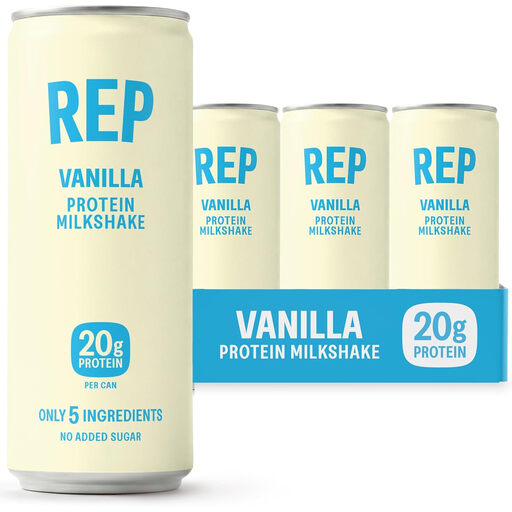
REP Protein Shakes Vanilla Flavour, 8 × 250 ml
The 250 ml can format may suit taking one portion after training. Compare its current protein and carbohydrate label with your planned meal, and check unopened storage and instructions after opening.
Joybuy
 No image available
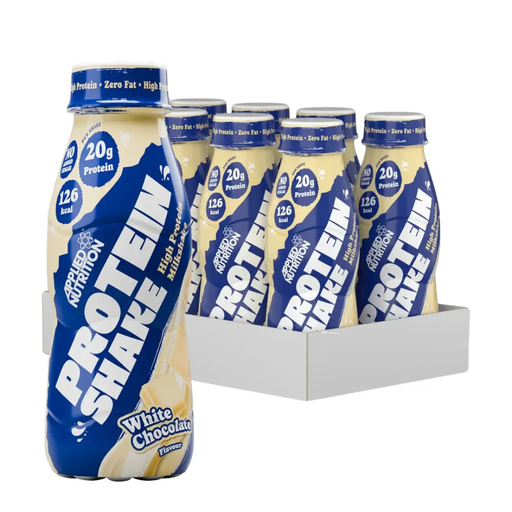
Applied Nutrition Protein Nutrition Shake White Chocolate Flavour, 8 × 330 ml
The 330 ml bottle gives you a defined portion to compare with your post-workout food. Read its current nutrition and allergen labels, and confirm storage conditions if you intend to keep bottles unrefrigerated.
Joybuy
 No image available
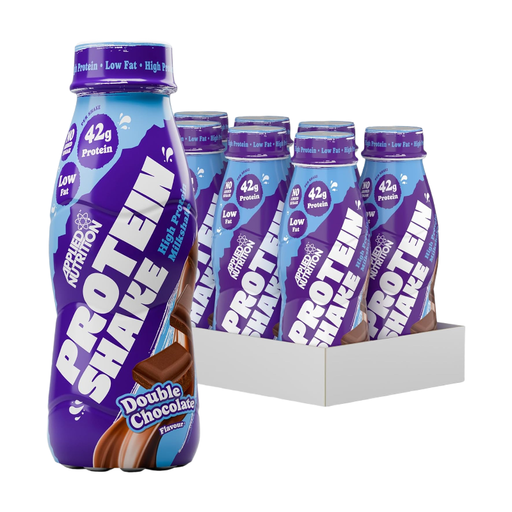
Applied Nutrition Protein Nutrition Shake Double Chocolate Flavour, 8 × 500 ml
The 500 ml bottle is a larger portion than the other two options shown here. Decide how much you would drink, compare the nutrition panel for that amount, and check the pack’s storage directions.
Joybuy
Questions about post-workout shakes
Do I need a protein milkshake after every workout?
No. For exercise lasting less than an hour, the British Heart Foundation places the emphasis on regular meals containing protein over the day. A bottle is a convenience choice, not an automatic addition to every session.
How should I compare protein per bottle?
Use the amount you will actually drink, rather than comparing per-100 ml figures with whole bottles. The British Association of Sport and Exercise Sciences describes roughly 20–30 g of high-quality protein per meal for an approximately 80 kg healthy athlete; that is context for comparison, not a personalised requirement.
Is a lactose-free dairy shake suitable for a milk allergy?
No. Lactose-free does not mean milk-free. Tesco’s Arla Protein Chocolate listing explicitly says it is unsuitable for people with a milk allergy; check the exact pack’s ingredients and allergen statement.
Can I leave a long-life shake in a cupboard or gym bag?
Only while unopened and where the specific label permits that storage. Tesco says the Arla Protein Chocolate carton can be kept in a cupboard unopened, but must be refrigerated after opening and consumed within three days.
Does ‘no added sugar’ mean a shake has no carbohydrate?
No. A no-added-sugar description is not a carbohydrate figure: Tesco lists 11.6 g carbohydrate per 330 ml bottle of Üfit Chocolate. Read the nutrition panel for the portion you plan to drink.


