What should you check?
Start with the amount in one bar and when you expect to eat next. Then compare the rest of the nutrition panel and ingredients for the exact variety.
| Priority | What to check | Your needs |
|---|
| Protein per bar |
Read grams per bar, not just per 100g or per multipack. For exercise lasting more than an hour, the British Heart Foundation cites 15–30g of protein afterwards; TREK states 15g for its High Protein range but 9g for its Protein Flapjacks. |
If my next meal is some way off, I want to know how much protein one bar contributes and whether I will have another protein-containing food. |
| The rest of the snack |
Consider the carbohydrate in the bar and what you plan to eat and drink after training. A protein figure alone does not describe a complete meal. |
After a longer session, I need to think beyond the bar rather than assume it covers everything I intend to have afterwards. |
| Nutrition per serving |
Compare sugars, saturates and energy for the bar you will eat. Check the serving size: the Eat Natural Peanuts & Dark Chocolate bar lists 10g sugars per 40g bar, while the nākd. Cocoa Hazelnut bar lists 13g per 45g bar despite having no added sugar. |
For a snack I might buy often, I want the full per-bar figures, not just a front-of-pack description. |
| Dietary fit |
Read the current ingredients and ‘may contain’ statements for the exact flavour. Vegan or gluten-free wording does not establish that a bar is free from nuts, soya or milk cross-contact. |
If an ingredient or possible cross-contact matters to me, I need to check the pack each time, including when I change flavours. |
Brands and product ranges
These range references help distinguish particular bars and labels; they do not describe every product made by each brand.
TREK
TREK states 15g plant protein per bar for its vegan High Protein range and 9g for its vegan Protein Flapjacks.
- The two ranges offer different protein amounts for different snack plans.
- Check the exact recipe and allergen wording; the 15g figure does not apply to the flapjacks.
Nature Valley
Its Protein Peanut & Chocolate and Chocolate & Coffee bars are described by Nature Valley as providing around 10g protein per 40g bar.
- The cited bars are described as gluten-free and suitable for vegetarians.
- The Chocolate & Coffee variety contains peanut, soya and milk ingredients and may contain tree nuts; check each variety separately.
Eat Natural
The Peanuts & Dark Chocolate bar provides 7.8g protein and 10g sugars per 40g bar, according to Eat Natural.
- The stated protein amount makes its contribution to a planned snack clear.
- It contains peanuts and soya; read the current pack for other allergen warnings.
nākd.
The Cocoa Hazelnut Protein bar is listed as vegan, with 7.2g protein and 13g sugars per 45g bar despite its no-added-sugar description.
- Its per-bar protein and sugars figures allow a serving-level comparison.
- It is a nut-containing variety; the listing also warns that it may contain soya and other nuts.
Graze
Graze describes its Oat Boost flapjacks as wholegrain oat, high-fibre products.
- The range offers an oat-based snack to compare by its individual label.
- For a post-workout protein choice, check the protein per flapjack rather than assuming the range meets a particular amount.
Alpen
Alpen’s UK product information describes its muesli range. An older Protein Berries & Yoghurt bar listing is a different product reference.
- Use the name and serving information of the specific Alpen product you are considering.
- Do not apply an older bar listing’s nutrition figures to another Alpen product.
Joybuy protein bar options
These Grenade multipacks offer protein-bar options for a post-workout snack. Compare the protein per bar on the current pack with your plans for a meal, and check each flavour’s ingredients before choosing.
 No image available
Grenade Oreo Flavour Protein Bars, 4 × 60g
For a post-workout snack when a meal will follow later, compare the protein in one 60g bar with what else you plan to eat. This pack contains four Oreo-flavour bars; check the current ingredients if milk, soya, wheat or sweeteners affect your choice.
 No image available
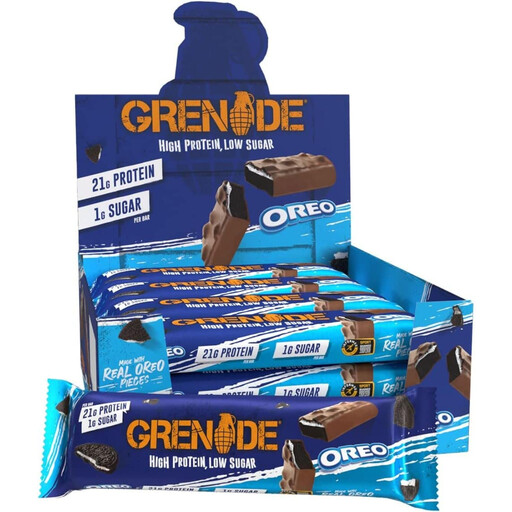
Grenade Oreo Flavour Protein Bars, 12 × 60g
If you want a multipack for planned post-training snacks, check the protein and full nutrition information for each 60g bar, not the pack as a whole. This Oreo-flavour pack contains twelve bars; review the current ingredients for milk, soya, wheat and sweeteners.
 No image available
Grenade Soft Core Double Chocolate, 12 × 50g
Compare the protein in one bar with your intended post-workout snack and next meal. This Double Chocolate pack contains twelve 50g bars; check the current ingredients for milk, soya and sweeteners if relevant.
 No image available
Grenade Soft Core Golden Caramel, 12 × 50g
For a protein top-up after training, read the amount per 50g bar and consider what you will eat afterwards. The pack contains twelve Golden Caramel bars; check the ingredients for milk, soya and sweeteners.
 No image available
Grenade Soft Core Peanut Butter, 12 × 50g
Check the protein per bar against your post-workout plans rather than treating the multipack figure as a serving. This pack contains twelve 50g Peanut Butter bars; review the current ingredients for peanuts, milk, soya and sweeteners.
Questions about post-workout bars
Does a snack bar replace a post-workout meal?
Not automatically. The British Heart Foundation advises focusing on regular meals containing protein after exercise lasting less than an hour; for sessions longer than an hour, it cites 15–30g protein afterwards. If you use a bar, consider its protein amount, carbohydrate and when you will next eat a meal.
Can a vegan bar provide protein after training?
Yes, a vegan bar can contribute protein to your post-workout food. TREK states 15g plant protein per bar for its High Protein range, while the nākd. Cocoa Hazelnut listing gives 7.2g per 45g bar. Compare the exact serving and check the ingredients for your dietary needs.
Which allergens should I check on a protein bar?
Check the ingredients and any ‘may contain’ statement on the current pack for the substances that matter to you. Varieties discussed here include peanut, soya and milk ingredients or nut warnings; vegan or gluten-free wording does not settle a separate allergen question.
Can I rely on nutrition figures from an older listing?
Use the current pack for the flavour and serving size you are buying. Recipes and product information can change, so recheck protein, sugars and ingredients when a particular figure or allergen matters to your decision.


