Shoppers comparing calories
If you want a small sweet addition to supper, compare the energy in the amount you expect to eat. A 30g comparison is more useful than comparing packs of different sizes.


For a lower-calorie dried-fruit portion with supper, compare products at the same 30g amount: ASDA Groceries lists its prunes at about 49 kcal per 30g, while its listing for Whitworths Phenomenal Prunes gives about 51 kcal and Sainsbury's lists 73 kcal for its prunes. Those figures apply to the named products, not to every prune pack. The NHS advises eating dried fruit at mealtimes rather than between meals; if supper is over and you want a snack immediately before bed, choose something other than dried fruit.
The first distinction is whether dried fruit will be part of supper or a separate snack after it.
If you want a small sweet addition to supper, compare the energy in the amount you expect to eat. A 30g comparison is more useful than comparing packs of different sizes.
If dried fruit is part of supper, measure out the portion rather than eating from an open pack. The NHS counts 30g of dried fruit as one 5 A Day portion and advises eating it at mealtimes.
If you have already eaten supper, the timing changes the decision. The NHS advises keeping dried fruit to mealtimes, while Lancashire and South Cumbria NHS Foundation Trust advises avoiding sugary foods at bedtime because saliva flow is lower.
Decide when you will eat the fruit, then compare equal portions and read the label for the exact pack you choose.
| Priority | What to check | Your needs |
|---|---|---|
| Calories per portion | Compare kcal per 100g or calculate each product at 30g. ASDA Groceries lists ASDA Prunes at 162 kcal per 100g, or about 49 kcal per 30g; Sainsbury's lists 73 kcal per 30g for its 500g prune pack. | I want to know what a small serving adds to supper, rather than choosing by fruit name or pack size alone. |
| Pack and serving size | Check whether the nutrition figure refers to 100g, a stated serving or the whole pack. Sainsbury's lists 97 kcal for its entire 40g prune pack, compared with 73 kcal for a 30g serving of its 500g prune product. | A single pack might be convenient, but I still want to know how much fruit it contains before treating it as one portion. |
| Ingredients and nutrition | Read energy and sugars values alongside any no-added-sugar wording. Sainsbury's lists BEAR dried pineapple at 303 kcal and 57g sugars per 100g despite its no-added-sugar label; Tesco lists glucose syrup and sugar in the candied peel of its mixed dried fruit. | I like a sweet flavour, but a no-added-sugar statement does not answer my calorie question. |
| Eating occasion | Check whether the fruit will be eaten with supper or afterwards. The NHS advises eating dried fruit at mealtimes rather than between meals to reduce tooth-decay risk; Lancashire and South Cumbria NHS Foundation Trust advises avoiding sugary foods at bedtime. | If supper is a meal, I can include a measured portion with it. If I am looking for a separate bedtime snack, I would choose something other than dried fruit. |
| Pack warnings | Check the current ingredients, allergen declaration, stone warnings and storage instructions. ASDA Groceries lists sulphites and possible nut or peanut presence for its dried mango; warnings differ between products. | I need the particular pack I buy to meet my ingredient requirements, and I want to know about any stones or instructions after opening. |
Eating occasion matters as well as portion size. The NHS advises having dried fruit at mealtimes to reduce tooth-decay risk, and Lancashire and South Cumbria NHS Foundation Trust advises avoiding sugary foods at bedtime.
If you want dried fruit, have a measured amount with supper as a meal rather than returning to the pack afterwards. For a separate snack immediately before sleep, choose something other than dried fruit.
A no-added-sugar label does not state the product's energy content. Sainsbury's lists BEAR dried pineapple at 303 kcal per 100g, or about 91 kcal per 30g.
Compare kcal for the same weight before deciding. If ingredients also matter to you, read the ingredients list separately.
Pack sizes can obscure the amount you will actually eat. Sainsbury's lists 97 kcal for its 40g prune pack and 73 kcal per 30g for its separate 500g prune product.
Use the per-100g figures to compare products at 30g, then measure that amount from a larger bag if it suits your supper.
Ingredients and warnings are product-specific. For example, ASDA Groceries declares sulphites and possible nuts and peanuts for ASDA Dried Mango; a prune pack may carry a warning about occasional stones.
Check the pack you receive for ingredients, allergens, stone warnings and storage instructions before eating it.
These examples show why the exact product label matters more than a brand name when comparing calories.
ASDA Groceries lists both partly rehydrated prunes and dried mango, with different energy values.
ASDA Groceries lists Whitworths Phenomenal Prunes as a partially rehydrated prune product.
Sainsbury's Groceries lists prunes in both a 500g pack and a separate 40g pack.
Tesco Groceries lists several dried-fruit types, including prunes, raisins, mango and mixed fruit.
Marks & Spencer lists fruit snacks including prunes, dates, apricots, mango and mixed dried fruit.
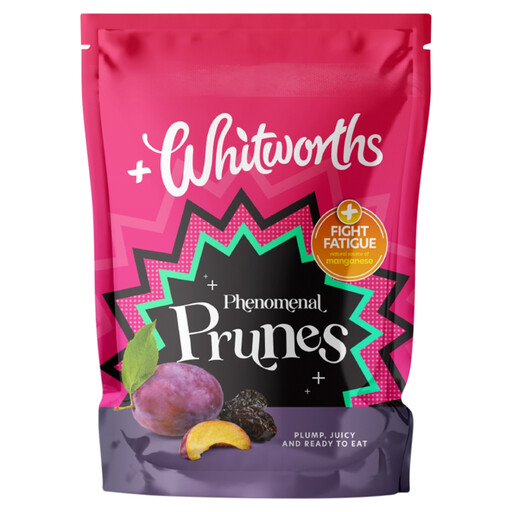
These Joybuy listings are prune products to consider if you want dried fruit with supper as a meal. Compare each pack's nutrition at the same portion size; figures for similarly named prunes elsewhere in this article do not establish the values for these products.
 No image available
If you plan to add these prunes to supper, check the pack's energy value for a measured 30g portion. This is a 190g pack; read its current ingredients and allergen information before eating.
 No image available
For a portion with supper, compare the pack's energy value at 30g and check how much fruit is in each wrapper. The product name identifies pitted Chilean prunes in a 500g pack; read the ingredients and nutrition panel rather than relying on a sugar-related claim.
 No image available
If you want a measured addition to supper, check the weight of an individual wrapper against a 30g portion. This is a 400g dried-prune product; check its ingredients and energy value on the pack before comparing it with other prunes.
 No image available
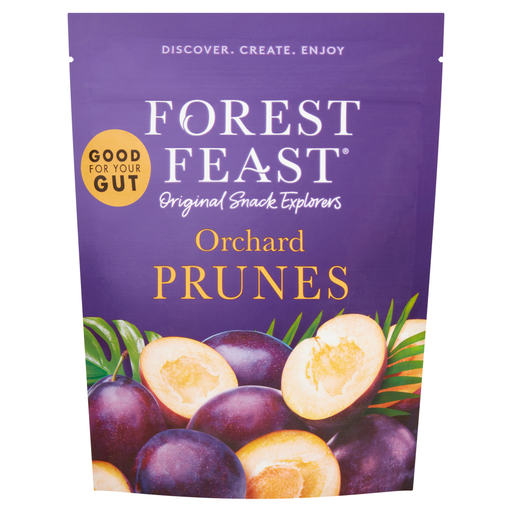
Measure out the amount you want with supper rather than comparing the full 200g pack with a single serving. Check the nutrition panel for its 30g energy equivalent and read the current pack warnings.
 No image available
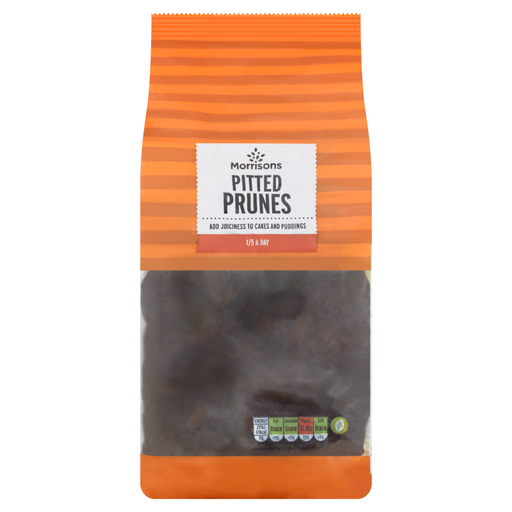
For a prune portion with supper, measure from this 500g pack and compare its kcal per 30g with other products. The name identifies pitted prunes; check the pack's warning about possible stone pieces before eating.
Use 30g as a common comparison amount. The NHS counts 30g of dried fruit as one 5 A Day portion; comparing products at that weight also avoids confusing different pack and serving sizes.
Choose something other than dried fruit for a separate bedtime snack. The NHS advises eating dried fruit at mealtimes rather than between meals to reduce tooth-decay risk, and Lancashire and South Cumbria NHS Foundation Trust advises avoiding sugary foods at bedtime because saliva flow is lower.
No. Sainsbury's lists BEAR dried pineapple as no added sugar but gives it 303 kcal per 100g, equivalent to about 91 kcal per 30g. Check the energy value for the amount you intend to eat.
Read the ingredients and allergen declaration on the pack you receive. For example, ASDA Groceries lists sulphites for ASDA Dried Mango and warns that it may contain nuts and peanuts; that warning applies to the named mango product, not automatically to other dried fruit.
Yes, a pitted-prune pack may warn that occasional stones or pieces remain. Check its warning before eating and follow its storage instructions after opening.