
24/7 Customer Support

Free returns

Same-day & Next-day Delivery

Quality Guaranteed

Unlock Your Welcome Offers: FREE Delivery | Up to 80% OFF | Free 30-day JoyPlus trial
Download the APP
A tidy garden is a source of pride, but achieving it with the wrong tools can lead to frustration, hand strain and even damaged plants. A blunt or poorly designed pair of pruning shears can crush stems instead of cutting them, leaving your prized roses or shrubs vulnerable. As a Joybuy Product Recommendation Officer, my role is to help you navigate the options and find a tool that makes your gardening tasks easier and more effective. This guide will walk you through the key features to consider and present some of our top recommendations for 2026 to help you make a confident choice.
Selecting the right pair of hand pruners depends entirely on the jobs you need to do. Before you decide, consider these three key factors.
The type of cutting action is the most important distinction between different gardening secateurs.
The quality of the blade determines the sharpness, longevity and overall performance of your shears.
Comfort and safety are paramount, especially during longer gardening sessions. Look for ergonomic handles with non-slip grips that fit comfortably in your hand. The weight of the tool is also important; lightweight materials like aluminium can reduce fatigue. Finally, a reliable safety lock is essential to keep the blades securely closed when not in use, preventing accidents and protecting the blades during storage.
Based on their features, materials and suitability for common UK gardening tasks, here are our standout recommendations.

Why It Stands Out: The defining feature of these garden shears is the ratchet mechanism. It multiplies your cutting power, allowing you to tackle branches up to 20 mm in diameter with surprisingly little effort. The combination of an anvil design and a sharp, Teflon-coated SK5 steel blade makes it a formidable tool for clearing tougher growth.
Pros:
Who is it for? Gardeners who need to prune thick, woody shrubs or small tree trimmers. It's also an excellent choice for anyone with reduced hand strength or who experiences fatigue during prolonged pruning tasks.

Why It Stands Out: These micro-tip snips are all about precision. The fine, pointed blades are made from polished stainless steel, allowing you to get into tight spaces for delicate tasks like deadheading flowers, harvesting herbs or shaping small houseplants without disturbing nearby foliage.
Pros:
Who is it for? Flower gardeners, herb growers and houseplant enthusiasts. If your primary tasks involve deadheading, light trimming and harvesting, these plant shears offer the control and accuracy you need.
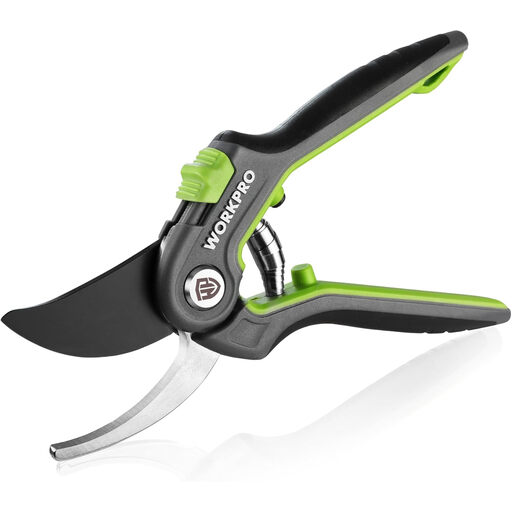
Why It Stands Out: These bypass pruners are a classic, versatile workhorse for any garden. The high-carbon SK5 steel blade is designed to make clean, healthy cuts on living plants, while the spring-loaded, non-slip handles reduce hand fatigue. It’s a reliable tool for the most common pruning jobs.
Pros:
Who is it for? This is an excellent all-rounder for almost any gardener. It's particularly effective for maintaining roses, shrubs and other live plants where a clean cut is essential for plant health.
Every garden has unique needs, and you may be looking for different types of tree trimmers, loppers or specialised garden shears. If the recommendations above aren't quite what you're after, you can browse a wider selection of tools to find the perfect fit for your toolkit.
Explore our full range of Watering & Garden Tools
1. What is the main difference between bypass and anvil pruners? Bypass pruners have two blades that slide past each other like scissors, making them ideal for clean cuts on live, green wood. Anvil pruners have a single blade that closes onto a flat surface, which provides more power for cutting through tough, dead wood but can crush softer stems.
2. How should I maintain my gardening secateurs? To keep your pruning shears in good condition, wipe the blades clean of sap and debris after each use. Dry them thoroughly to prevent rust. It's also good practice to occasionally apply a light oil to the pivot point and blades to ensure smooth operation and protect the metal. Sharpen the blade as needed to maintain clean cutting performance.
3. What are ratchet pruners best for? Ratchet pruners are designed to make cutting thick branches easier. The mechanism allows you to cut in stages, reducing the amount of force required with each squeeze. This makes them an excellent choice for heavy-duty pruning or for gardeners who may have less hand strength.