
24/7 Customer Support

Free returns

Same-day & Next-day Delivery

Quality Guaranteed

Unlock Your Welcome Offers: FREE Delivery | Up to 80% OFF | Free 30-day JoyPlus trial
Download the APP
Building upper-body strength at home is a fantastic goal, and a pull up bar is one of the most effective pieces of kit you can own. However, the market is filled with options that look great online but fail to deliver in practice. Before you make a purchase, it's crucial to understand the common pitfalls that lead to wasted money and, more importantly, potential safety risks.
Many buyers fall into two main traps. The first is opting for a cheap doorway bar with an unreliable mounting system. These often rely on simple pressure, which can lead to slippage, damaged door frames and a sudden end to your workout. The second pitfall is the "one-size-fits-all" myth. A basic bar might seem sufficient initially, but many people find they quickly outgrow its limited functionality, wishing they had invested in a more versatile piece of strength training equipment.
This guide, from your Joybuy Product Recommendation Officer, will help you navigate these issues and select the right equipment for your space, goals and budget.
To make a smart choice, you need to look past the marketing hype and focus on a few core parameters. These non-negotiable specifications will determine the safety, longevity and usefulness of your home gym equipment.
The most critical decision is how the bar will be secured. Your choice directly impacts stability and the types of exercises you can perform.
freestanding pull up bar, often called a power tower, is a superior option for stability. These units stand on their own, eliminating any risk to your walls or doorways. Their wider base and heavy-duty construction provide a solid platform for dynamic movements, and they often include a dip station and grips for other exercises.The materials and build quality are paramount for safety. Don't be swayed by impressive-looking numbers without understanding what they mean.
Consider your long-term fitness goals. Will a simple chin up bar be enough, or will you want to incorporate more movements later on?
A basic bar is excellent for pull-ups and chin-ups. However, a multi-function power tower can transform a corner of your room into a comprehensive workout zone. Features like adjustable height, multiple grip positions (wide, narrow, neutral) and integrated stations for dips and leg raises allow for a complete upper-body and core workout. This versatility ensures the equipment remains challenging and useful as your strength improves.
To help you match the right product to your needs, we've profiled three distinct user types and identified a suitable piece of exercise equipment for home for each.
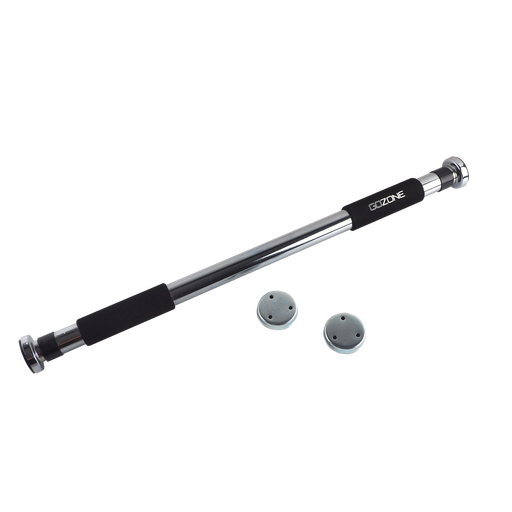
Why This Fits Their Persona: This is an excellent starting point for anyone living in a flat or house with limited space. It offers a low-commitment way to begin upper-body strength training without needing a dedicated gym area. Its portability is perfect for the UK renter.
It features an adjustable width with a secure locking system, which provides greater stability and reduces the risk of slipping compared to basic, pressure-only bars. This directly addresses the primary safety concern with doorway models.
No screws or drilling are required for installation, protecting your door frame. It is portable and can be easily stored away when not in use.
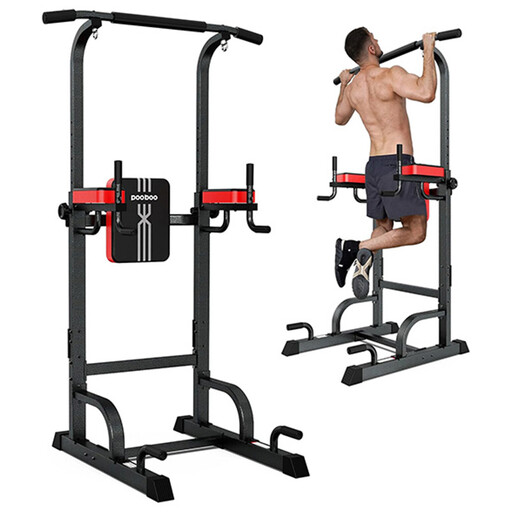
Why This Fits Their Persona: For the individual with a dedicated workout space in a garage or spare room, this power tower offers a stable and versatile foundation for serious strength training. It's a significant step up from a simple doorway bar.
Its freestanding design completely removes any risk to door frames and provides far superior stability for more intense exercises. The high weight capacity (440 lbs) is realistic for users performing dynamic movements.
Offers multi-functionality with stations for pull-ups, dips and leg raises. The height is adjustable, making it suitable for different users and exercises.
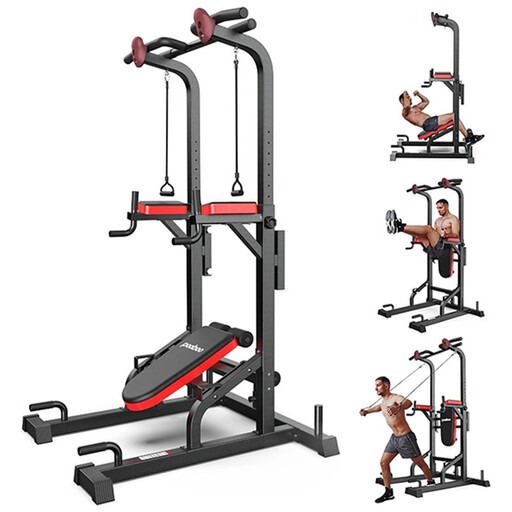
Why This Fits Their Persona: This is for the user who wants a complete home gym solution in a single footprint. It's ideal for someone committed to a varied strength training routine that goes beyond just bodyweight exercises.
It directly counters the "one-size-fits-all" trap by providing immense versatility. With an integrated bench, dip station and even rock-climbing grips, it offers a huge range of exercises, ensuring it won't be outgrown quickly.
The inclusion of a foldable workout bench allows for exercises like bench presses and dumbbell rows, making it a true all-in-one piece of equipment. The high 480 lbs weight capacity supports heavy use.
We have compiled a complete, real-time list of products that fully satisfy these strict selection criteria and UK safety regulations.
This is a common and valid concern. Modern, well-designed doorway bars that use leverage are much safer for your woodwork than older, tension-only models. They distribute the user's weight across the top and sides of the frame. To minimise risk, always ensure the bar has soft foam or rubber padding at all contact points and check that your door frame is structurally sound before the first use.
A typical power tower requires a floor footprint of around 1.1 metres square (approx. 42 x 42 inches). However, the most important measurement is height. You need enough vertical clearance above the bar to perform a full pull-up without hitting the ceiling. Measure your ceiling height and compare it to the tower's maximum height plus your own height from the shoulders up.
The main difference is your grip. For a pull-up, you use an overhand grip (palms facing away from you), which primarily targets the latissimus dorsi muscles in your back. For a chin-up, you use an underhand grip (palms facing towards you), which places more emphasis on your biceps as well as your back. Most multi-grip bars allow you to perform both.