Small-batch seed choppers
If you mainly prepare modest portions for toppings, baking or sauces, consider a compact bowl and controls that let you inspect the seeds as you go. Check the exact model’s guidance for dry ingredients and small quantities.


For occasional small portions of pumpkin seeds, start with a compact chopper whose controls let you stop and inspect the texture between short bursts. Choose a full food processor if seed chopping is part of wider meal preparation and you will use its larger bowl or additional attachments. Neither bowl size nor a manufacturer’s claim about chopping nuts establishes how a particular model will handle a small quantity of pumpkin seeds, so check its manual before buying.
If you mainly prepare modest portions for toppings, baking or sauces, consider a compact bowl and controls that let you inspect the seeds as you go. Check the exact model’s guidance for dry ingredients and small quantities.
If seeds are only one part of your meal preparation, a full processor may make sense when you will also use its slicing, grating, puréeing or dough attachments. Compare the included accessories with the tasks you actually do.
If washing and storing the appliance will determine how often you use it, look at the number of parts, their care instructions and where the blade and accessories will go between uses.
Decide whether pumpkin seeds are a small, occasional task or one part of broader cooking. Then compare the controls and bowl guidance for the quantity you intend to chop.
Choose it when: You mainly prepare small portions and want an appliance that takes up less storage space.
Trade-off: It offers less room for larger recipes and fewer preparation attachments than a full processor; short-burst control cannot guarantee a particular seed texture.
Choose it when: You will also use functions such as slicing or grating in regular meal preparation.
Trade-off: Extra components need storage and washing, and the stated bowl capacity does not tell you the minimum seed quantity it can process.
Choose it when: You prepare larger recipes and would use separate bowl sizes for different tasks.
Trade-off: More bowls and accessories take up space; a larger main bowl is not, by itself, a reason to expect good results from a small seed load.
| Concern | What to check | Who this matters to |
|---|---|---|
| Seed texture | Look for controllable short bursts and a chopping blade; check the manual’s dry-ingredient instructions. | If I want pieces for a topping rather than a much finer result, I need to pause and inspect the seeds. Around 40% of consumers put texture control first. |
| Small batches and space | Compare the bowl and storage footprint, then check guidance for your intended quantity. | For an occasional spoonful or two in a recipe, I do not want a large appliance to assemble and put away. Roughly 30% of consumers prioritise compact, small-batch use. |
| Wider meal preparation | Check the included blade, discs and bowls against the other tasks you plan to do. | If I also slice vegetables or prepare dough, the appliance needs to earn its place beyond chopping seeds. Around 20% of consumers make broader meal preparation their primary concern. |
| Cleaning and storage | Read the care instructions for each removable part and consider how blades and accessories are stored. | When washing several sharp parts would put me off using the machine, simpler clean-up matters most. Roughly 10% of consumers primarily weigh cleaning and storage. |
Continuous processing makes it harder to stop at the coarseness you want. Kenwood describes pulse control as a way to apply short bursts of power.
Use brief bursts and inspect the seeds between them, following the exact appliance’s instructions.
A larger processor can serve wider cooking tasks, but its stated bowl capacity does not establish the smallest quantity its blade will process as intended.
Compare compact choppers for occasional portions; choose a full processor when you will use its additional capacity or functions. Check the manual for quantity guidance.
Additional bowls and attachments also need storage and washing.
Cuisinart and KitchenAid describe particular choppers as suitable for nuts, but that does not establish the permitted quantity or resulting texture for pumpkin seeds.
Check the manual for the exact model and intended dry-ingredient use before trying a small batch.
Its compact Mini Prep Pro and larger Easy Prep Pro illustrate different approaches to bowl size and preparation tasks.
Its range includes small-quantity choppers and compact processors for additional cooking tasks.
Its 1.19 L chopper and 2.1 L processor suit different levels of meal preparation.
Its food-processor range is relevant when seed chopping is one task within regular batch preparation.
These choppers offer different bowl sizes for food preparation. Choose by the portions and other tasks you have in mind, then check the exact model’s instructions before using it for dry pumpkin seeds.
 No image available
Consider this smaller-bowl option for modest portions when storage space matters. Its title specifies 300 W, two speeds and a dishwasher-safe bowl. Check the CH180B manual for dry-seed use, minimum quantity and operating instructions.
 No image available
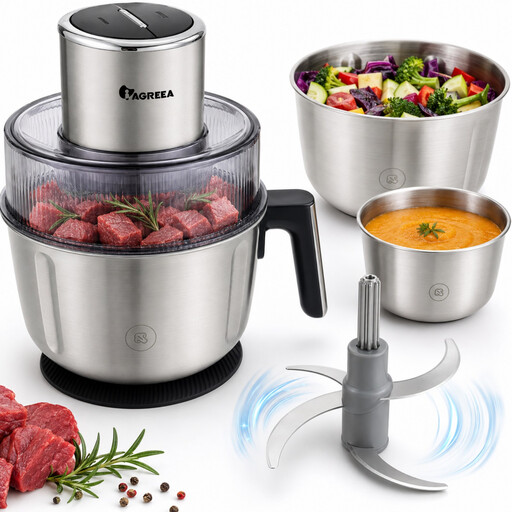
Consider this option if you also prepare larger portions of other foods and want bowls that nest for storage. The title specifies 350 W, two speeds and 304 stainless-steel bowls of 2.5 L, 2.2 L and 1.8 L. Check the exact manual for dry pumpkin seeds and minimum quantities, and observe the stated 30-second pulse-cycle limit.
 No image available
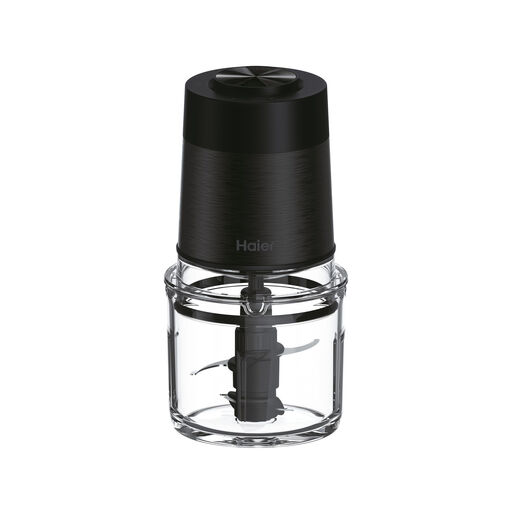
Consider this chopper if its glass jar and washing instructions suit your routine. Its title specifies 550 W, two speeds, double-stacked blades and a dishwasher-safe bowl. Check the HCH5B1 manual for bowl capacity, short-burst control and permitted dry-seed quantities.
Yes, pulse control lets you apply short bursts and inspect the texture between them. Kenwood describes pulse as short bursts of power, but the control alone does not establish what texture a particular model will produce with pumpkin seeds.
A mini chopper may suit a small portion if its instructions permit the intended dry-ingredient use and quantity. A full processor is worth considering when you will also use its slicing, grating or other preparation functions; a larger bowl alone does not settle the seed-chopping question.
No. A bowl’s stated capacity describes its size, not the minimum quantity its blade can process as intended. Check the manual for the exact model and the amount of pumpkin seeds you plan to use.