
24/7 Customer Support

Free returns

Same-day & Next-day Delivery

Quality Guaranteed

Unlock Your Welcome Offers: FREE Delivery | Up to 80% OFF | Free 30-day JoyPlus trial
Download the APP
Choosing puppy dry dog food can be harder than it appears. Bags often highlight meat percentages, “natural” ingredients, grain-free recipes or added oils, but these phrases do not always tell you whether the food suits your puppy’s age, adult size or digestion.
As the Joybuy Product Recommendation Officer, I focus on practical details that help UK dog owners compare products without relying on marketing language alone.
“Chicken puppy food” may contain chicken alongside other meat meals, cereals and vegetable ingredients. Check the full composition and look for the declared percentage of the named ingredient. For example, some recipes list meat and animal derivatives with a smaller stated chicken proportion, while others provide a clearly defined chicken or turkey content.
A higher meat figure is not automatically the right choice. The complete recipe, protein level, mineral balance and feeding guide matter more than one front-of-pack figure.
Grain-free puppy food can suit owners who specifically want to avoid cereals, but grain-free does not automatically mean more digestible or nutritionally superior. Recipes may replace grains with potato, peas or other carbohydrate sources.
If your puppy has repeated digestive problems, itching or loose stools, do not keep switching foods based only on packaging claims. Speak to a vet, particularly before choosing a restricted or hypoallergenic puppy food.
A 10kg puppy food bag may offer convenience for a larger or fast-growing dog, but it can lose freshness if it remains open for too long. A 2kg puppy food pack is often more practical during weaning, when testing a new recipe or when your puppy eats small portions.
Keep dry food sealed in a cool, dry place and follow the manufacturer’s use instructions after opening.
Look for wording such as “complete pet food for puppies” and check the recommended age range. Puppies have different nutritional requirements from adult dogs, so adult dog food should not be used as their main diet unless advised by a vet.
The suitable transition point varies by breed and maturity. Some small dogs move to adult food earlier, while larger breeds may remain on a puppy or junior formula for longer. Follow the product label and your vet’s advice.
Puppy food for small breeds and puppy food for medium breeds may differ in kibble size, feeding quantities and energy density. Smaller pieces can be easier for toy and small-breed puppies to pick up and chew.
For larger puppies, do not simply feed more of a small-breed recipe. Choose a formula whose feeding guide covers your puppy’s expected adult weight. Overfeeding can contribute to excessive weight gain, so adjust portions according to body condition and activity.
The guaranteed analysis normally shows protein, fat, fibre and ash, with some products also listing calcium, phosphorus, omega fatty acids and DHA.
Ingredient quality and nutritional balance should be assessed together. A recipe with a long list of added ingredients is not automatically more suitable.
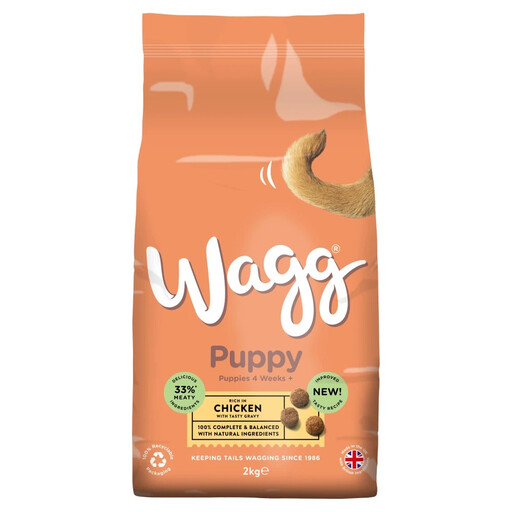
Why This Fits Their Persona: A manageable 2kg pack suits first-time puppy owners who want to introduce a complete chicken-based recipe without committing to a large bag.
The product is identified as complete puppy food and provides a feeding direction for gradual introduction and portion adjustment.
2kg quantity; includes prebiotic chicory root, omega-3 and omega-6 fatty acids, calcium and vitamin D.
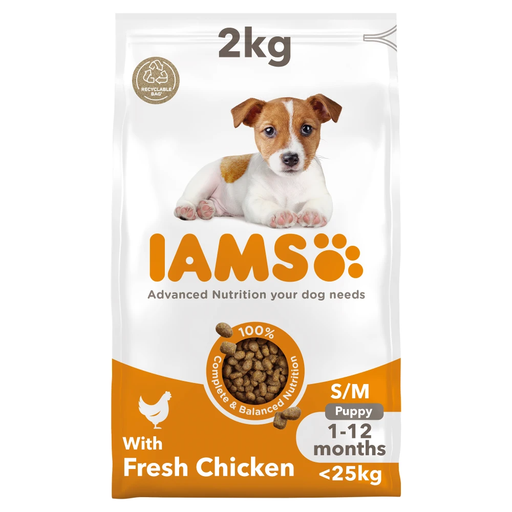
Why This Fits Their Persona: Designed for small and medium puppies under 25kg, it gives owners a clearly specified recipe for the first year.
Its product information states a wheat-free recipe, a defined age and size range, and a gradual 7–10 day transition guide.
Lists 28% protein, 17% fat, calcium, phosphorus and 0.18% DHA; the 2kg pack has resealable packaging.
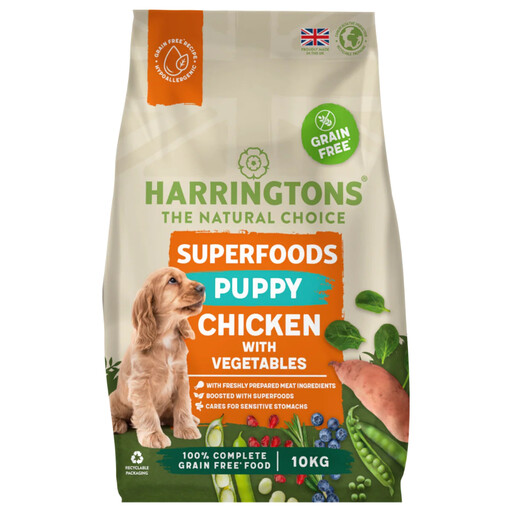
Why This Fits Their Persona: A 10kg bag is practical for owners feeding a puppy regularly, particularly when a grain-free recipe is an intentional dietary preference.
The composition clearly identifies chicken, sweet potato, potato and other ingredients rather than relying only on a grain-free front-label claim.
30% protein, 14% fat, smaller kibble and added FOS; the recipe is free from grain, dairy and soya according to the supplied product information.
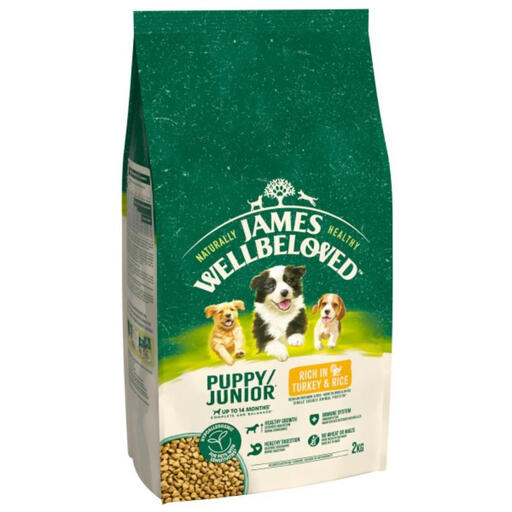
Why This Fits Their Persona: Owners considering hypoallergenic puppy food may prefer a turkey-and-rice recipe with a short stated list of excluded ingredients.
It avoids several commonly excluded ingredients, but food intolerance should still be assessed with veterinary guidance rather than assumed from the label.
Turkey is the stated animal protein; the 2kg pack and small kibble are practical for trial feeding and smaller mouths.
We have compiled a complete, real-time list of products that fully satisfy these strict selection criteria and UK safety regulations.
Introduce new puppy dry dog food gradually over 7–10 days, unless the product label gives different instructions. Puppies commonly need several small meals each day when young, with meal frequency reducing as they mature.
Soaking kibble with warm water can help during weaning, but reduce the added liquid gradually. Always provide fresh drinking water, weigh portions where possible and monitor body condition rather than feeding unlimited amounts.
Look for a complete recipe with clearly listed ingredients and a protein source your puppy already tolerates. Wheat-free, grain-free or turkey puppy food may suit some households, but none should be treated as a guaranteed solution. Persistent diarrhoea, vomiting or itching requires veterinary advice.
It depends on the puppy’s expected adult weight, age and activity. A small puppy may use a 2kg bag over several weeks, while a medium puppy may finish it sooner. Use the feeding table on the packaging rather than estimating from the bag size.
Small breeds may mature earlier, while medium and larger breeds can need puppy or junior food for longer. Check the manufacturer’s age guidance and discuss the change with your vet. Transition gradually to reduce the chance of digestive upset.