
24/7 Customer Support

Free returns

Same-day & Next-day Delivery

Quality Guaranteed

Unlock Your Welcome Offers: FREE Delivery | Up to 80% OFF | Free 30-day JoyPlus trial
Download the APP
Bringing home a puppy often means buying a long list of supplies at once. The difficulty is separating genuinely useful puppy essentials from products that look impressive but do not suit your dog’s age, size or daily routine.
Three common buying traps are worth avoiding:
The most important wording on puppy food is “complete pet food” or “complete and balanced” for puppies. This indicates that the food is intended to provide the required nutrients when fed according to its instructions. Complementary foods, treats and toppers should not replace a complete diet.
When comparing puppy food, check:
Both wet puppy food and dry puppy food can be practical. Wet food offers a soft texture and high moisture content, while dry food is easier to portion and store. If changing diets, follow the product’s suggested 7–10-day gradual transition to reduce the chance of digestive upset. Fresh water should always be available.
For small dogs, kibble size matters. A small-breed puppy product should be easy to pick up and chew, but feeding amounts still need to be based on body condition and guidance rather than the size of the bowl.
A puppy collar should be adjustable and checked frequently. You should be able to place two fingers between the collar and your puppy’s neck, without the collar slipping over the head. Inspect the stitching, D-ring and lead clips regularly, particularly after wet UK walks.
For toys and teething toys for puppies, consider:
Even products described as durable can be damaged by determined chewers. Supervise initial use and remove any toy showing cracks, tears, sharp edges or detached parts. A toy can encourage play and chewing, but it should not be described as a guaranteed dental treatment.
Puppy shampoo should be formulated for dogs rather than adapted from human products. Look for clear directions, external-use warnings and instructions to avoid the eyes. A gentle formula with ingredients such as aloe or oatmeal may be suitable for some puppies, but stop use if irritation occurs.
For puppy dental care, introduce handling gradually. A puppy oral kit with a finger brush or soft brush can help establish a routine. Use pet-safe products only: human toothpaste is not suitable for dogs. If your puppy has persistent mouth discomfort, bleeding or difficulty eating, ask a vet for advice rather than relying on a retail product.
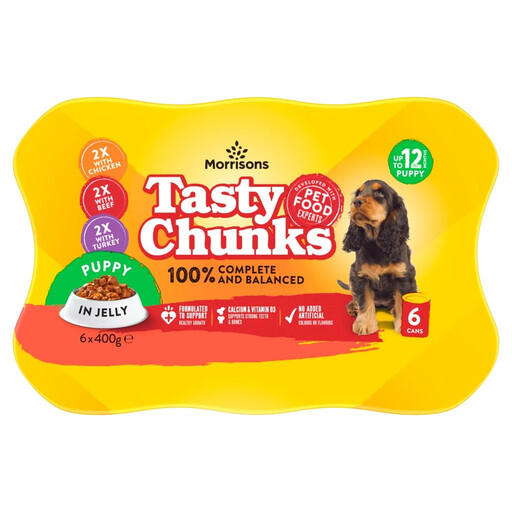
Why This Fits Their Persona: A straightforward wet puppy food option for owners starting a feeding routine and wanting portionable cans for home use.
The product is labelled as 100% complete and balanced for puppies up to 12 months, with feeding guidance based on age, size and activity.
Jelly texture, meaty chunks and a six-can format; no added artificial colours or flavours according to the product details.
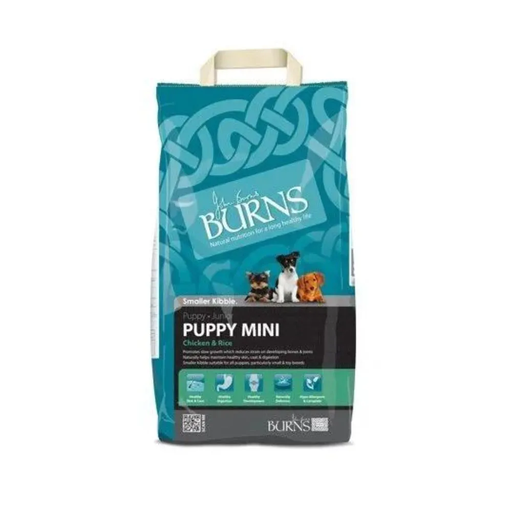
Why This Fits Their Persona: Designed for small and toy-breed puppies, making it relevant where standard kibble may be awkward to manage.
The description identifies it as a complete diet for small and toy breeds and specifies smaller kibble for tiny mouths.
2kg pack; listed ingredients include chicken meal, fish meal, brown rice, white rice and oats, with 21% crude protein.

Why This Fits Their Persona: A practical choice for puppies that need an engaging chew activity during quiet time, training or supervised indoor play.
It is specifically described for puppies and moderate chewers, with clear instructions to inspect and remove the toy when worn or broken.
Bamboo fibre and nylon construction; fish shape designed for paw control and a textured surface for chewing.
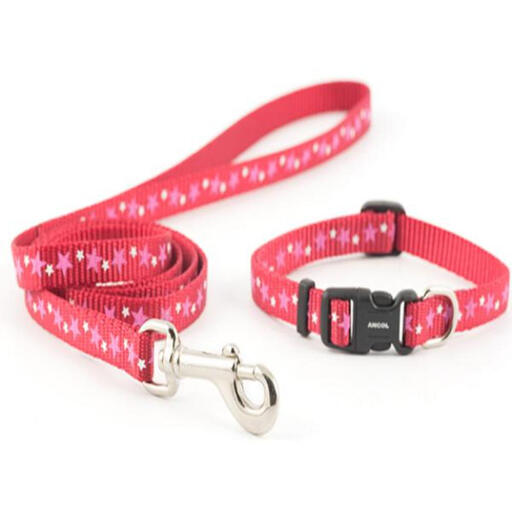
Why This Fits Their Persona: Suitable for owners preparing a puppy or small dog for early lead training and everyday UK outings.
The collar is adjustable, and the instructions specify a two-finger fit plus regular checks as the puppy grows.
Soft-weave fabric, weather-proof nylon weave and recyclable packaging; designed for puppies and small dogs.
We have compiled a complete, real-time list of products that fully satisfy these strict selection criteria and UK safety regulations.
Before ordering, confirm that you have:
The initial cost depends on whether you choose wet or dry food, how quickly your puppy grows and how many accessories you buy at once. A sensible approach is to start with one complete food, one correctly fitted collar and lead, two or three supervised toys and basic grooming and dental products. Replace damaged items rather than buying large quantities in advance.
There is no fixed lifespan. Check toys before every use and collars whenever they have been exposed to rain, mud or pulling. Replace any item that is frayed, cracked, torn or has loose pieces. Collars may also need replacing simply because your puppy has outgrown them.
They can be combined only when the overall feeding plan remains appropriate and both products are suitable for your puppy. Reduce the quantity of each food rather than adding wet food on top of a full dry-food portion. Follow the label guidance and ask a vet for individual advice if your puppy has ongoing digestive or weight concerns.