
24/7 Customer Support

Free returns

Same-day & Next-day Delivery

Quality Guaranteed

Unlock Your Welcome Offers: FREE Delivery | Up to 80% OFF | Free 30-day JoyPlus trial
Download the APP
Bringing a new puppy home is an exciting time, but navigating the world of puppy nutrition can feel overwhelming. The shelves are packed with bags and tins, all making bold claims. As a new owner, you want to provide the very best, but it's easy to fall into common traps that are costly for you and not always ideal for your pup.
My name is Joy, and as the Joybuy Product Recommendation Officer, my role is to help you cut through the marketing clutter. Let's look at the most common pitfalls when buying puppy food and how to avoid them.
To make an informed choice, focus on these three key parameters. They are the foundation of a good diet and will help you select a food that genuinely supports your puppy's health.
In the UK, ingredients must be listed in descending order by weight. The first three to five ingredients make up the bulk of the food.
There is no single right answer here; the choice often depends on your puppy's preference, your lifestyle and your budget.
Many owners find a combination of both works well, offering dry kibble for main meals and adding a little wet food as a topper to increase enjoyment and hydration.
Puppies are not just small dogs; their nutritional needs are unique. A food labelled as "puppy" or "junior dog food" is specifically formulated to support this rapid growth phase. These formulas contain precise levels of:
Based on these practical criteria, here are a few options that align with different needs and priorities for UK puppy owners.
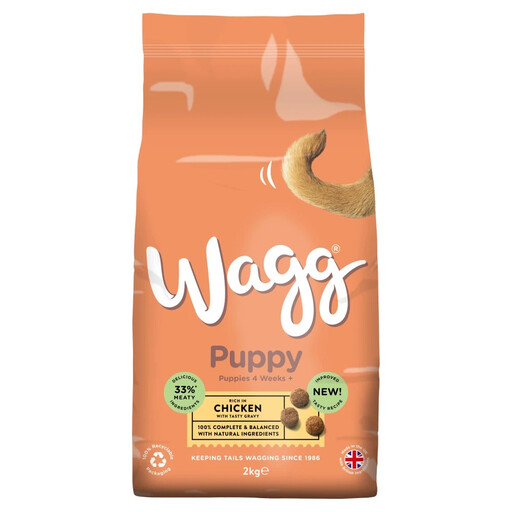
Why This Fits Their Persona: For new owners managing the initial costs of a puppy starter kit, this food provides a complete and balanced diet without a premium price tag. It's a reliable, no-fuss option made in the UK.
It avoids vague labelling by specifying "33% meaty ingredients" and is formulated specifically for puppies from 4 weeks, steering clear of the "one-size-fits-all" trap.
Contains prebiotics from chicory root to support digestion and has balanced calcium and vitamin D for healthy bone development, offering solid nutritional value for its price point.
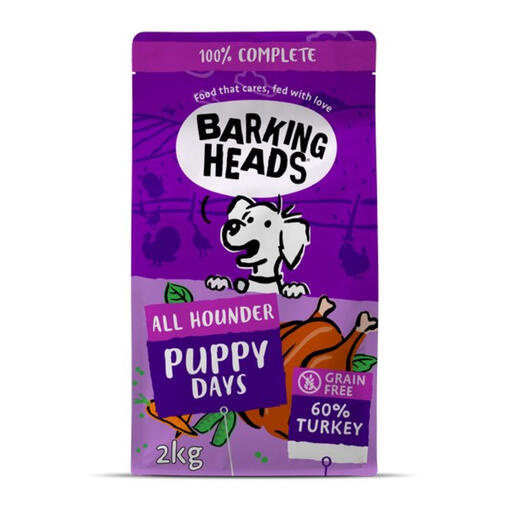
Why This Fits Their Persona: Ideal for owners who prioritise natural, high-quality ingredients and are willing to invest more in their puppy's diet. The focus on free-run turkey and added supplements appeals to those seeking premium nutrition.
This food sidesteps the vague meat trap with a clear "60% Turkey" declaration, including "Freshly Prepared Free-Run Turkey." Its grain-free formula is backed by other quality ingredients, not just marketing.
Includes salmon oil for DHA (brain development) plus glucosamine and chondroitin for joint support, which is particularly beneficial for larger breeds. It is also vet-approved.
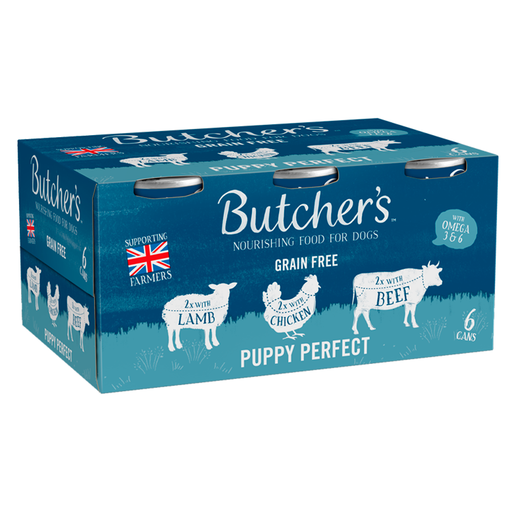
Why This Fits Their Persona: Perfect for owners of picky puppies or those who value the convenience of pre-portioned wet food. The high moisture and meaty aroma are excellent for encouraging reluctant eaters.
This food uses its grain-free recipe to cater to sensitive stomachs, not just as a marketing gimmick. It clearly states its protein sources are from British & Irish farms, avoiding ambiguity.
The multi-pack offers flavour variety to keep your puppy interested. It's enriched with Omega-3 & 6 and prebiotics to support skin, coat and digestive health in a highly palatable format.
Of course, food is just one part of the equation. A happy puppy also needs a comfortable bed, a sturdy puppy collar and lead for walks and safe puppy chew toys to help with teething and prevent destructive behaviour.
We have compiled a complete, real-time list of products that fully satisfy these strict selection criteria and UK safety regulations.
The correct amount varies based on your puppy's age, breed and activity level. Always start by following the feeding guide on the packaging, which provides a daily amount. Divide this total into 3-4 smaller meals for young puppies (under 6 months) and 2 meals for older puppies. Monitor your puppy's body condition and adjust the amount as needed.
The transition to adult food depends on breed size.
Not necessarily. A grain free puppy food is an excellent choice for puppies with a diagnosed grain allergy or sensitivity, which can manifest as skin irritation or digestive upset. However, for most puppies, high-quality, whole grains are a valuable source of energy and nutrients. The quality of the overall formula is more important than the simple presence or absence of grains. If you suspect an allergy, it is always best to consult your vet.