
24/7 Customer Support

Free returns

Same-day & Next-day Delivery

Quality Guaranteed

Unlock Your Welcome Offers: FREE Delivery | Up to 80% OFF | Free 30-day JoyPlus trial
Download the APP
Bringing a new puppy home is an exciting time, but navigating the world of puppy food can feel overwhelming. The shelves are packed with options, all making bold claims. As a new or experienced owner, your goal is simple: to provide nutritious, safe and appropriate food for your growing companion. However, marketing hype can often lead to confusion and costly mistakes.
My role as Joybuy's Product Recommendation Officer is to help you see past the clutter. Let's look at a few common pitfalls UK puppy owners encounter and how to sidestep them to make a confident choice for your furry friend.
grain-free puppy food has led many to believe it's automatically the healthier option. While essential for puppies with a diagnosed grain allergy or sensitivity, it's not a universal requirement. Many high-quality foods use digestible grains like rice and oats to provide essential energy and fibre. Don't feel pressured to go grain-free unless there's a specific health reason to do so.small breed puppy food are very different from those for a future Great Dane. Always choose a food specifically labelled for "puppy" or "junior" stages.To ensure you're buying a suitable product, focus on these key parameters on the packaging.
The ingredients are listed by weight, so the first few items make up the bulk of the food. Look for a high-quality, named protein source like "fresh chicken," "dried turkey" or "salmon meal" at the top of the list. Vague terms like "meat and animal derivatives" can be less transparent about the protein source. A clear list of ingredients gives you a better understanding of what you are feeding your puppy.
This phrase is your assurance that the food meets the nutritional standards set by UK and European guidelines (FEDIAF). A complete puppy food will contain the correct balance of protein, fat, carbohydrates, vitamins and minerals—including calcium and phosphorus for bone development—to support healthy growth from weaning up to around 12 months.
There is no single right answer here; the choice often comes down to your puppy's preference and your lifestyle.
puppy food multipack.Many owners find success with mixed feeding, offering a combination of both wet and dry food.
Based on the principles of clear labelling, complete nutrition and suitability for specific needs, here are a few options that align with different puppy owner profiles.
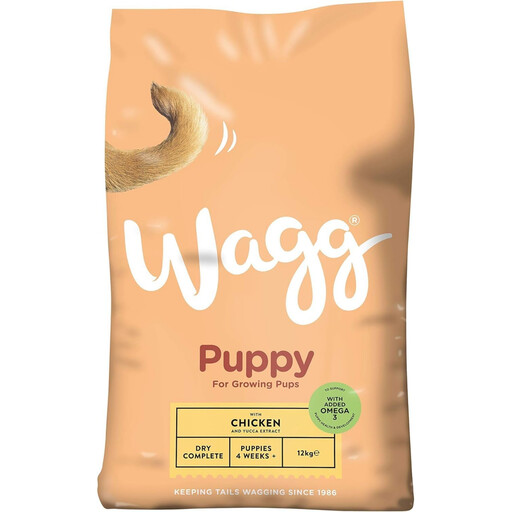
Why This Fits Their Persona: For new owners seeking a reliable and affordable option, this large 12kg bag offers excellent value. It's a straightforward, UK-made dry food that covers all the nutritional bases without a premium price tag.
It is clearly labelled as a complete puppy food, ensuring your puppy gets a balanced diet. It demonstrates that a nutritious, grain-inclusive formula can be a perfectly sound choice, avoiding the unnecessary cost of the "grain-free" trend.
Excellent value in a large 12kg format. Contains prebiotic chicory root to support healthy digestion and balanced calcium for strong bone development.
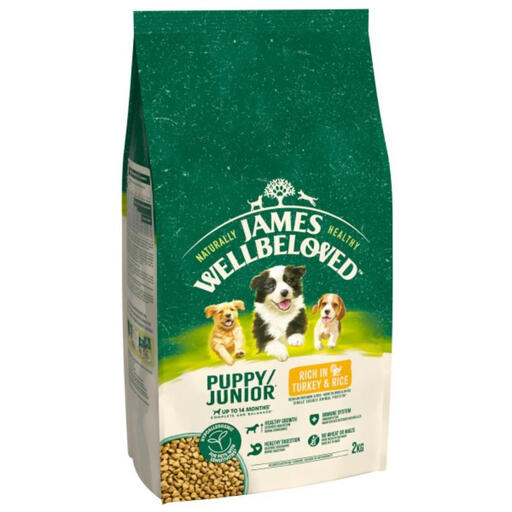
Why This Fits Their Persona: Ideal for owners concerned about digestive issues or skin sensitivities. This hypoallergenic puppy food is formulated to minimise the risk of intolerance, making it a reassuring choice for a puppy with a sensitive stomach.
Instead of just being "grain-free," it uses a more targeted approach. It's built around a single animal protein source (turkey) and avoids common allergens like beef, pork and dairy, directly addressing the root cause of many food intolerances.
Hypoallergenic recipe with gentle, digestible ingredients like turkey and rice. Contains omega fatty acids for skin and coat health, plus natural prebiotics.
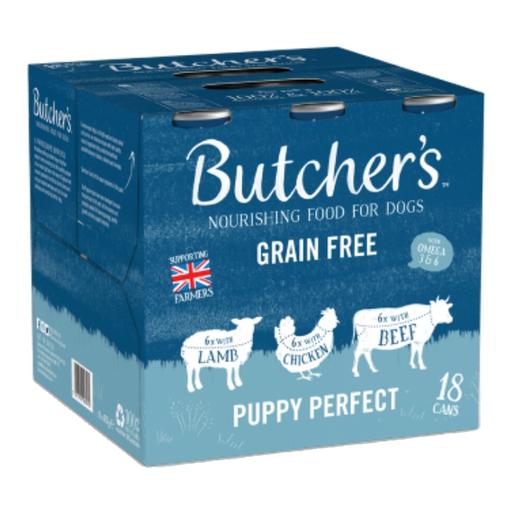
Why This Fits Their Persona: Perfect for those who prioritise easy portioning and palatability. This puppy food multipack of wet food tins takes the guesswork out of mealtimes and the variety of flavours can tempt even fussy eaters.
Each tin is a complete meal, preventing the common mistake of feeding an unbalanced diet. The grain-free formula is also gentle on developing digestive systems, making it a safe and simple choice.
Bulk pack of 18 tins offers convenience and value. Features three different flavours (Chicken, Beef, Lamb) to keep meals interesting. Enriched with salmon oil (Omega-3 & 6) and prebiotics.
We have compiled a complete, real-time list of products that fully satisfy these strict selection criteria and UK safety regulations.
Most dogs are ready to transition from puppy to adult food between 10 and 18 months of age. Small breeds mature faster and can often switch around 10-12 months. Medium breeds are typically ready at 12 months, while large and giant breeds may benefit from a junior dog food until they are 18-24 months old to support their longer growth period. Always transition gradually over 7-10 days by mixing the new food with the old.
Feeding amounts vary significantly based on the puppy's age, breed, activity level and the specific food's calorie density. Always start by following the feeding guide on the packaging, which provides a daily recommendation based on your puppy's current and expected adult weight. Divide the daily amount into 3-4 small meals for very young puppies, reducing to two meals a day as they get older. Adjust portions as needed to maintain a lean, healthy body condition.
Both wet puppy food and dry puppy food can provide excellent, complete nutrition. Dry food is convenient and beneficial for dental health, while wet food is great for hydration and fussy eaters. The choice is personal. Some owners prefer to mix them, which can offer the benefits of both. The most important factor is that the food is complete, balanced and specifically formulated for puppies.