Bringing a new puppy home is an exciting time, filled with new experiences and a lot of learning. One of the first and most important decisions you'll make is what to feed them. The shelves are packed with options, and navigating the labels can be confusing. This guide is designed to help you understand the key considerations when choosing a puppy food, ensuring your new companion gets the nutritional support they need for a healthy, happy start in life.
We'll walk through the different types of food available, what to look for in an ingredients list and offer some practical recommendations to help you make an informed choice.
How to Choose the Right Puppy Food: A Practical Guide
Before you pick a bag or can off the shelf, it's helpful to understand a few key factors. A puppy's nutritional needs are very different from an adult dog's, requiring more protein, fat and specific nutrients to support rapid growth and development.
1. Wet vs. Dry Puppy Food
One of the most common questions is whether to choose wet or dry food. Both have their merits and the right choice often depends on your puppy's preferences and your lifestyle.
- Dry Puppy Food (Kibble): This is a popular choice for its convenience, longer shelf life and cost-effectiveness. The crunchy texture can also help with dental hygiene by reducing plaque build-up. Look for kibble that is specifically sized for small puppy mouths to ensure it's easy to chew.
- Wet Puppy Food: Often more palatable for picky eaters, wet food has a high moisture content which helps keep your puppy hydrated. It's a great option for very young puppies who are transitioning from their mother's milk. Many owners use a mix of both wet and dry food to provide variety and combine the benefits of each.
2. Understanding Special Dietary Formulations
You will often see terms like 'grain-free' or 'hypoallergenic' on packaging. Understanding what they mean can help you find a suitable option, especially if your puppy shows signs of a sensitive stomach.
- Grain-Free Puppy Food: These recipes replace common grains like wheat, corn and barley with alternatives such as sweet potato, peas or lentils. This can be a good choice for puppies with known grain sensitivities or allergies.
- Hypoallergenic Puppy Food: This term usually indicates a formula made with a limited number of ingredients or novel proteins (like duck or venison) to minimise the risk of an allergic reaction. These are often recommended for a puppy food for sensitive stomachs.
- Natural Puppy Food UK: Many UK brands focus on using natural ingredients, avoiding artificial colours, flavours and preservatives. A high-quality natural puppy food UK will typically list a recognisable protein source, like chicken or lamb, as the first ingredient.
3. The Role of Puppy Training Treats
Treats are an essential part of training and bonding with your new puppy. However, they should be used responsibly. Look for puppy training treats that are low in calories and made from natural ingredients. Treats should make up no more than 10% of your puppy's daily calorie intake to ensure their main meals provide balanced nutrition.
Our Top Product Recommendations
Here are a few recommendations from our catalogue that align with the principles of quality puppy nutrition.
Harringtons Grain-Free Superfoods Dry Puppy Food
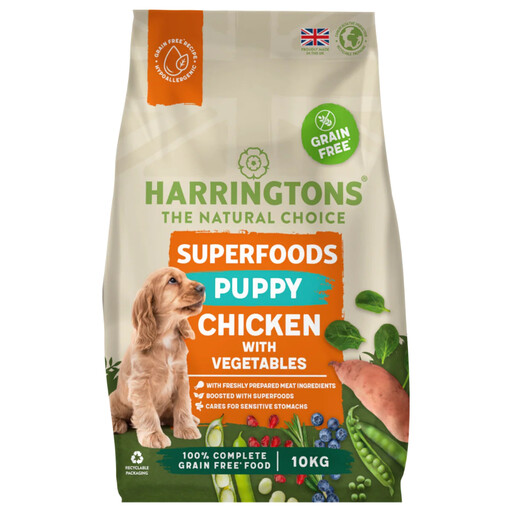
- Why It Stands Out: This dry puppy food from Harringtons puts meat first, with chicken as the number one ingredient to provide the high-quality protein growing puppies need. Its grain-free recipe is designed to be gentle on digestion.
- Pros:
- Formulated with freshly prepared chicken for healthy growth.
- Hypoallergenic and grain-free, making it suitable for puppies with sensitive tummies.
- Enriched with a blend of superfoods, including spinach and blueberries, plus Omega 3 and 6 oils for coat and immune health.
- The kibble is a smaller size, perfect for young puppies.
- Who is it for?: This is a considered choice for owners looking for a complete, grain-free puppy food that supports all-round development, particularly for puppies who may have dietary sensitivities.
Butcher's Puppy Perfect Recipes in Jelly
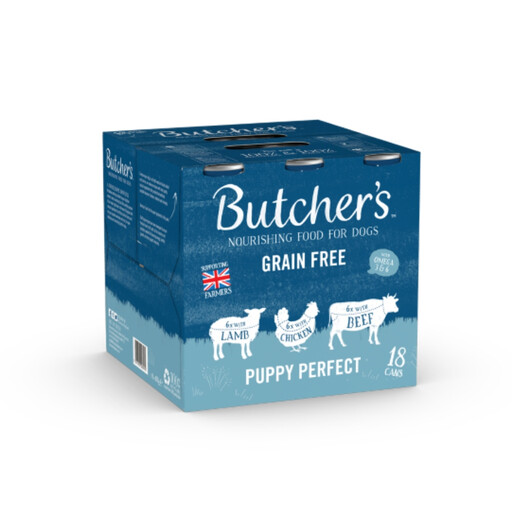
- Why It Stands Out: This variety pack of wet puppy food offers three different flavours to keep mealtimes interesting. The grain-free recipes are specifically formulated for puppies up to one year old.
- Pros:
- Includes Chicken, Beef and Lamb recipes in a palatable jelly.
- Grain-free and naturally gluten-free, making it another good option for sensitive digestion.
- Fortified with DHA from salmon oil to support brain development and prebiotics for a healthy gut.
- High moisture content helps with hydration.
- Who is it for?: Ideal for owners who prefer to feed wet puppy food or use it as a topper for kibble. The multi-pack is convenient for those wanting to provide flavour variety while sticking to a consistent, puppy-specific nutritional profile.
Forthglade Natural Soft Bite Training Treats
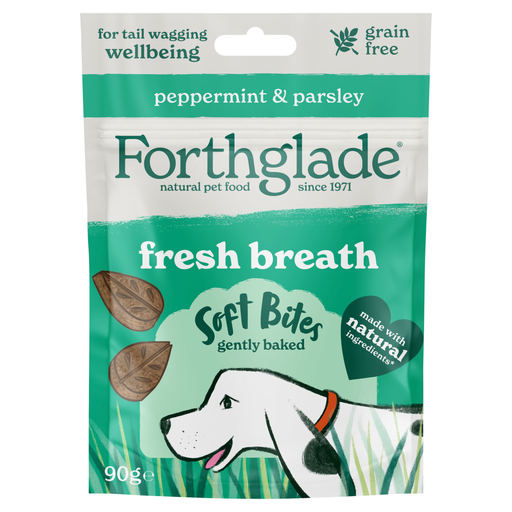
- Why It Stands Out: These are not a complete meal, but functional puppy training treats designed with extra benefits. The soft-bite texture is easy for puppies to eat and the natural ingredients support their well-being.
- Pros:
- Made with natural ingredients, including chicken, parsley and peppermint oil to help with fresh breath.
- Soft texture makes them an excellent reward during training sessions.
- Suitable for puppies from 2 months of age.
- Comes in a resealable pouch to maintain freshness.
- Who is it for?: A great addition for any puppy owner who is actively training their new pet. They serve as a high-value reward without compromising on a natural ingredient philosophy.
Looking for a Chicken-Free Alternative?
Many high-quality puppy foods use chicken as a primary protein source. However, if you know your puppy has a sensitivity to poultry or you simply wish to explore other options, there are many alternatives available.
For a wider selection of recipes based on proteins like lamb, fish or beef, you can explore our full range of chicken-free dog food.
Frequently Asked Questions
1. How much food should I feed my puppy? The correct amount varies based on your puppy's age, breed and expected adult weight. Always start by following the feeding guide on the product packaging. These are a good starting point, but you may need to adjust the amount based on your puppy's activity level and body condition. When in doubt, a chat with your vet can provide personalised advice.
2. When should I switch from puppy food to adult dog food? The transition typically depends on the breed size. Small breeds may mature by 9-12 months, while medium breeds mature around 12-15 months. Large and giant breeds can continue growing for up to 24 months and should remain on a puppy or junior formula for longer to support their joint and bone development.
3. Is grain-free food always the better choice for a puppy? Not necessarily. A grain-free puppy food is an excellent choice for puppies that have a diagnosed grain allergy or sensitivity. For most puppies, high-quality, whole grains can be a valuable source of energy and nutrients. The most important factor is the overall quality and balance of the ingredients in the food, whether it contains grains or not.


