
24/7 Customer Support

Free returns

Same-day & Next-day Delivery

Quality Guaranteed

Unlock Your Welcome Offers: FREE Delivery | Up to 80% OFF | Free 30-day JoyPlus trial
Download the APP
Bringing a new puppy home is an exciting time, but navigating the world of puppy food can be overwhelming. The shelves are filled with bags and tins all promising the perfect start in life. As a new owner, it's easy to fall into common marketing traps that can be costly for your wallet and unhelpful for your pup's development. Let's cut through the clutter and focus on what truly matters.
Before you make a choice, be aware of these common pitfalls:
grain free puppy food has become a powerful marketing buzzword. While essential for puppies with specific grain allergies or sensitivities, it is not a universal requirement for a healthy diet. Many puppies digest high-quality grains like rice and oats perfectly well. The trap is paying a premium for a grain-free formula when your puppy may not need it, diverting your budget from other important nutritional aspects.complete puppy food is formulated to provide all the nutrients your growing dog needs in a single product. "Complementary" foods, on the other hand, are designed to be served alongside a complete meal, like a topper or a treat. Mistaking a complementary food for a complete diet can lead to serious nutritional deficiencies.To ensure you're providing a balanced diet, focus on these core parameters when comparing options.
A puppy's nutritional needs are different from an adult dog's. They require more protein for muscle development and more fat for energy and a healthy coat.
The choice between wet puppy food and dry puppy food often comes down to your puppy's preference, your lifestyle and your budget.
puppy kibble can also help with dental hygiene by reducing plaque build-up. You can also soften it with warm water for younger pups.If your puppy has a delicate digestive system, a puppy food for sensitive stomachs can make a significant difference. These formulas often use a single, easily digestible protein source and may be grain-free or use gentle grains like rice. Look for added prebiotics (like FOS or MOS) which help support healthy gut bacteria.
Instead of a one-size-fits-all approach, we've matched some suitable options to different owner needs and priorities.
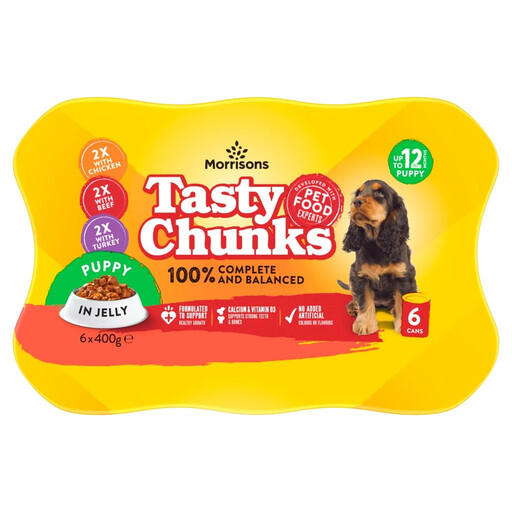
Why This Fits Their Persona: For new owners in the UK who need a reliable and affordable starting point, this food provides a complete nutritional base without a high price tag. It's a practical choice for getting started on the right foot.
It is clearly labelled as 100% Complete and Balanced, ensuring new owners don't accidentally under-nourish their puppy with a complementary food. It focuses on core nutrition rather than expensive, potentially unnecessary, marketing features.
Fortified with Calcium & Vitamin D? to support strong teeth and bones. Developed with pet food experts to provide tailored nutrition for puppies up to 12 months.
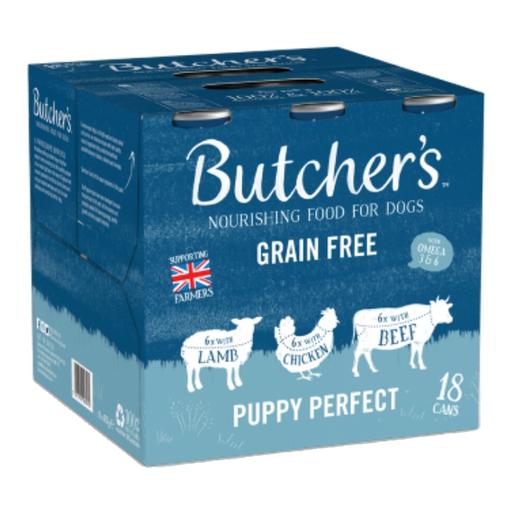
Why This Fits Their Persona: This is for the UK owner who is cautious about their puppy's digestion. If you've noticed a sensitive tummy or simply want to start with a gentle, natural option, this food is formulated to be easy on their system.
This is a prime example of when a grain-free formula is a benefit, not just hype. It's specifically designed for puppies with sensitive stomachs, avoiding common irritants and focusing on gentle, natural ingredients.
Enriched with prebiotics (MOS) to support healthy gut flora and salmon oil for Omega-3 & 6. The variety pack with Chicken, Beef and Lamb flavours keeps mealtime interesting.
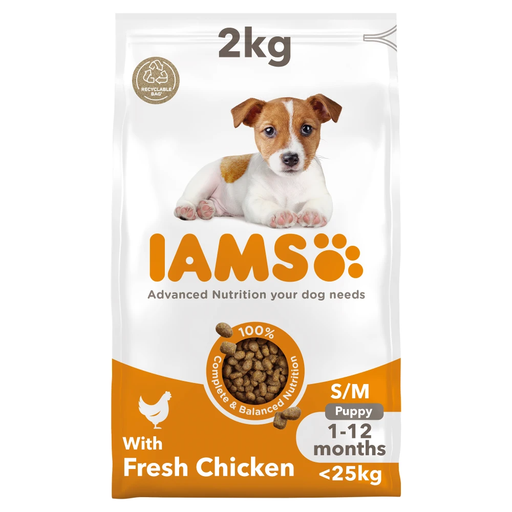
Why This Fits Their Persona: This is for the owner who prioritises high-quality protein and scientifically formulated nutrition in a convenient dry kibble. They want to support muscle growth, brain development and overall vitality with a high-specification diet.
This food avoids the vague "meat" trap by clearly stating its protein sources: 30% dried chicken and turkey, with 10% fresh chicken. This transparency allows owners to see exactly what they are paying for.
Contains DHA to support brain development and cognitive function. The wheat-free recipe with prebiotics and beet pulp is also formulated to promote healthy digestion.
We have compiled a complete, real-time list of products that fully satisfy these strict selection criteria and UK safety regulations.
The correct portion size depends on your puppy's age, breed (and expected adult weight) and activity level. Always check the feeding guide on the packaging, which provides a recommended daily amount. It's best to divide this amount into 3-4 smaller meals per day for young puppies. Monitor your puppy's body condition and adjust the amount as needed to maintain a lean, healthy shape.
The transition to adult food typically happens when a puppy reaches about 80-90% of their expected adult size. For small breeds, this can be around 9-12 months. For medium breeds, it's closer to 12-14 months, while large and giant breeds may continue on a puppy or junior formula for up to 18-24 months to support their longer growth period. When you do switch, do so gradually over 7-10 days to avoid digestive upset.
The term natural puppy food generally means the food is free from artificial colours, flavours and preservatives. Many owners prefer this for peace of mind. However, the most important factor is that the food is a complete and balanced diet formulated for a puppy's growth stage. A "natural" food that isn't nutritionally complete is not a good choice. Always check the label to ensure it meets all of your puppy's dietary requirements.