
24/7 Customer Support

Free returns

Same-day & Next-day Delivery

Quality Guaranteed

Unlock Your Welcome Offers: FREE Delivery | Up to 80% OFF | Free 30-day JoyPlus trial
Download the APP
Bringing a new puppy home is an exciting time, filled with cuddles, training and a lot of play. But a walk down any pet aisle reveals a dizzying array of puppy toys, all claiming to be the perfect choice. As a new owner, it's easy to fall into common purchasing traps that lead to wasted money and, more importantly, potential risks for your new companion.
Many UK dog owners find themselves with a collection of barely-used or quickly-destroyed toys. This often happens by falling for a few common marketing claims and design flaws:
This guide will help you navigate these issues, focusing on the key factors that truly matter when selecting safe and engaging puppy toys.
The material of a toy dictates its durability, safety and suitability for your puppy. Instead of focusing on marketing buzzwords, pay attention to the actual composition.
A successful toy collection offers variety to meet your puppy's different needs throughout the day. Think about the function you want the toy to serve.
Based on material safety, functional design and suitability for specific needs, here are a few recommendations for different types of puppy owners.

Why This Fits Their Persona: This is ideal for the owner of an intelligent puppy that gets bored easily. It transforms feeding or treat time into a rewarding mental challenge, helping to prevent destructive chewing by keeping their mind engaged.
It avoids the material hazard trap by being made from BPA-free, food-safe natural rubber. Its purpose is clearly defined as a treat dispenser, not an "indestructible" chew toy for unsupervised power chewers.
The interactive treat-dispensing function provides essential mental stimulation. Its textured surface also helps soothe gums during teething.
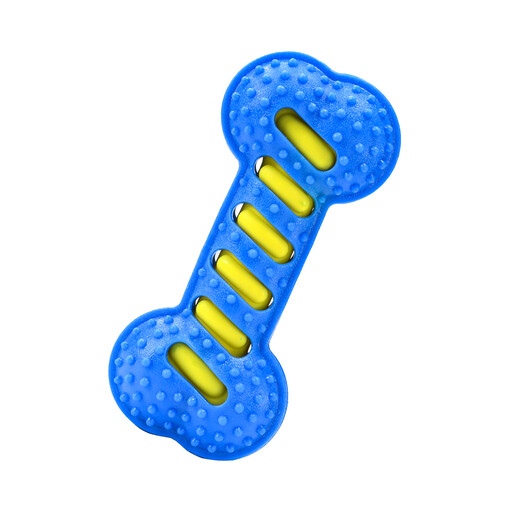
Why This Fits Their Persona: Perfect for the owner of a playful puppy or small dog that loves sound and a game of fetch. The squeak provides instant feedback that keeps them engaged and encourages active, energetic play sessions.
This toy avoids the "indestructible" myth by being positioned for small to medium breeds. The durable TPR material is more resilient than cheap plastics but is correctly recommended for supervised play, not for aggressive chewers.
The built-in squeaker stimulates a dog's natural instincts for engaging play. Its flexible yet tough material is gentle on the mouth and easy to clean.
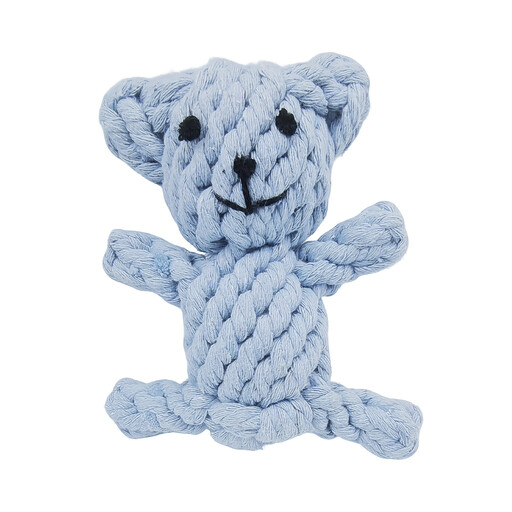
Why This Fits Their Persona: This is a perfect companion for a young puppy adjusting to a new home. It provides a sense of security and comfort, making it an excellent tool for crate training, reducing separation anxiety and encouraging calm behaviour.
It avoids the "wrong tool for the job" pitfall. It is clearly a soft puppy toy for cuddling and gentle play, not a chew toy. This manages expectations and ensures it's used safely for its intended comforting purpose.
The soft, huggable design can help soothe anxious puppies. It is lightweight and easy for small mouths to carry and it's filled with eco-friendly recycled cotton.
We have compiled a complete, real-time list of products that fully satisfy these strict selection criteria and UK safety regulations.
Variety is more important than sheer quantity. A good approach is to have a rotation of 4-5 different types of toys available: one for chewing, one for comfort, one for puzzle-solving and one for interactive play like fetch. Rotating them every few days can also keep your puppy from getting bored.
There is no fixed schedule. The most important habit is to inspect all your puppy's toys daily. Look for cracks, tears, loose threads or any parts that have been chewed off. You should discard and replace a toy immediately if it shows significant signs of damage to prevent the risk of your puppy swallowing a broken piece.
Not at all. For many dogs, squeaky dog toys are highly motivating and make playtime more exciting by tapping into their natural instincts. The key is supervision. Always watch your puppy during play to ensure they don't become obsessed with destroying the toy to remove the squeaker, as it can be a choking hazard if ingested.