
24/7 Customer Support

Free returns

Same-day & Next-day Delivery

Quality Guaranteed

Unlock Your Welcome Offers: FREE Delivery | Up to 80% OFF | Free 30-day JoyPlus trial
Download the APP
Welcoming a new puppy into your home is a joyous occasion, but the house-training phase can be a significant challenge. Unexpected puddles and the constant clean-up can be stressful for both you and your new companion. Similarly, caring for a senior dog with incontinence requires a reliable way to manage accidents and maintain a clean living space.
Puppy training pads offer a practical and hygienic solution to protect your floors and simplify the training process. However, with so many options available, choosing the right one can feel overwhelming. As the Joybuy Product Recommendation Officer, my role is to help you navigate these choices. This guide breaks down the essential features to look for and presents our top recommendations to help you find an effective solution for your home.
To make an informed decision, it helps to understand the key features that separate a standard pad from a truly effective one. Consider these factors before making a purchase.
The primary function of a house training pad is to absorb liquid and prevent it from reaching your floors. Look for pads with a multi-layer design. A quilted top layer helps to wick moisture away from the surface quickly, while a super-absorbent polymer core turns liquid into a gel, trapping it inside. A waterproof plastic backing is essential for creating a final barrier, ensuring you have leak proof puppy pads you can rely on. The more layers and the higher the quality of the polymer, the more effective the pad will be.
Pads come in various sizes, and choosing the correct one is crucial. For small breeds or young puppies, a standard-sized pad may be sufficient. However, for larger breeds like Labradors or German Shepherds, or if you have multiple puppies, extra large puppy pads provide a bigger target area, reducing the chance of misses. A larger pad is also a good choice if you need to leave your dog unattended for several hours, as it can hold more liquid.
A pile of used pads can quickly create unpleasant smells. High-quality odour control dog pads often incorporate materials like activated carbon or baking soda within their layers to neutralise ammonia odours and keep your home smelling fresh. Additionally, many puppy pads with attractant are treated with a special scent that is detectable by dogs but not humans. This pheromone-based scent encourages your puppy to use the pad, which can significantly speed up the house-training process.
Based on features that address common pet owner needs like absorbency, odour control and ease of use, here are our recommendations.
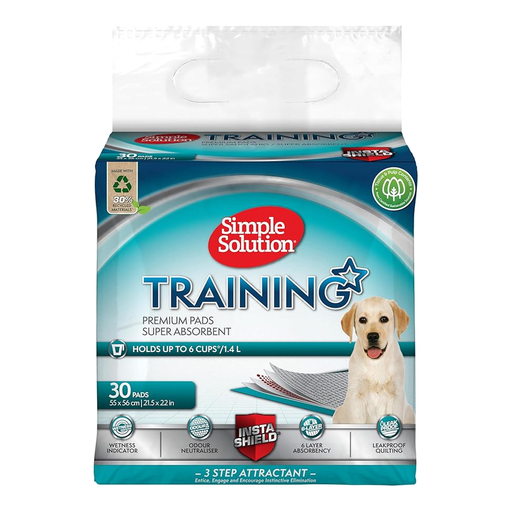
Why It Stands Out: These pads are engineered with a comprehensive 6-layer construction and InstaShield technology, offering impressive absorbency and leak protection. A standout feature is the wetness indicator, which turns teal to let you know when it's time for a change, removing any guesswork.
Pros:
Who is it for? This is an excellent all-around choice for new puppy owners who want a reliable, feature-rich pad to make the house-training journey as smooth as possible.
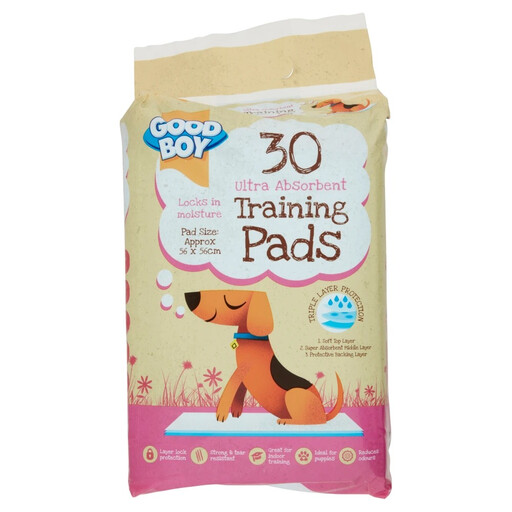
Why It Stands Out: The Good Boy pads focus on two key areas: high absorbency and cleanliness. The ultra-absorbent core locks moisture in quickly, while the quick-drying surface is specifically designed to reduce the chance of your dog tracking wet paw prints through the house.
Pros:
Who is it for? Ideal for pet owners in flats or homes with delicate flooring, where preventing tracking and controlling odours are top priorities. It's also a great option for senior dogs.
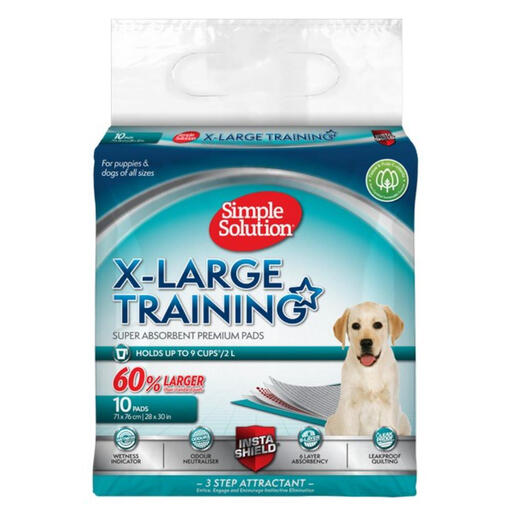
Why It Stands Out: Size is the main advantage here. At 71cm x 76cm, these pads are 60% larger than standard ones, providing ample space for larger breeds or for lining a crate. Despite their size, they don't compromise on performance, featuring the same Insta-Shield technology and high absorbency as their smaller counterparts.
Pros:
Who is it for? A must-have for owners of large breeds, households with multiple dogs or anyone who needs to protect a larger floor area.
While absorbent pee pads are a fantastic tool for home use, there are situations where a different solution might be more appropriate. For travel, managing female dogs in heat or post-operative care, a wearable option may offer more security and convenience.
If you're looking for more portable or wearable options, we invite you to explore our full range of dog diaper solutions.
1. How often should I change a puppy training pad? For hygiene reasons, it is best to change the pad after every use. A soiled pad is less likely to be used again by your puppy and can become a source of odour. Pads with a wetness indicator can help by showing you at a glance when they are saturated.
2. Can I use puppy training pads for my senior dog? Yes, absolutely. Dog training pads are an excellent aid for senior dogs experiencing incontinence. They provide a designated, comfortable spot for them, which helps manage accidents with dignity while keeping your home clean. Extra large puppy pads are often a good choice for older, larger dogs.
3. How do I get my puppy to use the training pad? Consistency is the most important part of training. Place the pad in a specific, easily accessible location. Guide your puppy to the pad first thing in the morning, after meals and after naps. When they use it successfully, offer enthusiastic praise or a small treat. Using puppy pads with an attractant can also make the process easier by naturally drawing your dog to the correct spot.