
24/7 全天候客户支持

免费退货

当日/次日达

品质保障

开启新人专享福利: 全场免邮 | 低至 2 折 | 免费试用 30 天 JoyPlus 会员
下载 Joybuy
Running domestic mains equipment from a 12V leisure or vehicle battery requires a well-matched power inverter. Whether you need to keep a laptop charged on long motorway drives, run power tools off-grid, or keep essential home appliances running during a power cut, selecting the right unit prevents blown fuses, damaged electronics, and flat starter batteries. The UK market offers a broad spread of options, ranging from pocket-sized plug-in adaptors to heavy-duty units that clamp straight to your battery terminals.
The primary consideration when choosing an inverter is matching continuous wattage to your expected load while paying close attention to the waveform. Pure sine wave units mirror standard UK domestic mains electricity, making them safe for sensitive microprocessors, variable-speed motors, and delicate chargers. In this guide, we break down essential buying criteria and highlight top options tailored for portable vehicle use, high-output power demands, and compact everyday charging.
Always calculate the total wattage of all devices you intend to plug in at the same time, giving priority to continuous rated power rather than short-term peak ratings.
The output waveform dictates which appliances will operate cleanly and quietly without generating excessive internal heat.
How you connect the inverter to your 12V DC power source determines the maximum wattage you can safely pull.
These selected inverters provide dependable DC-to-AC conversion across a range of output ratings, form factors, and vehicle setups.
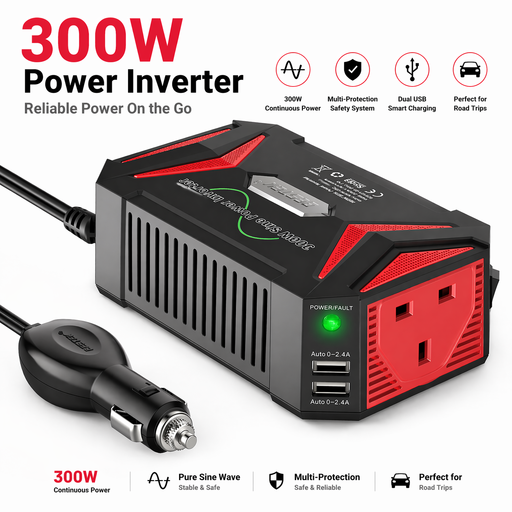
Why It Stands Out: This compact 300W inverter features pure sine wave power conversion, outputting smooth 220V to 240V AC for delicate gadgets. It is equipped with one standard mains AC socket along with dual USB ports delivering up to 4.8A combined. Designed strictly for 12V vehicle systems, it easily powers mobile workstations and cameras, utilising battery clamps whenever power demands exceed 150W.
Pros:
Who is it for? Motorists, field workers, and campers needing clean mains power on the move for laptops, camera gear, and mobile devices.
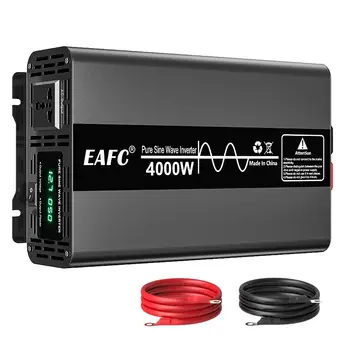
Why It Stands Out: Built for substantial power demands, the EAFC NBF4000 supplies 2000W of continuous power from a 12V battery, alongside a 4000W peak surge output. It incorporates amorphous silicon technology and pure sine wave delivery from 12V DC to 220V AC. Dual turbine cooling fans, silent operation, and a multi-protection safety system keep heavy loads stable in motorhomes, campervans, and emergency situations.
Pros:
Who is it for? Campervan owners, tradespeople, and households needing substantial continuous wattage for larger mains appliances or workshop tools.
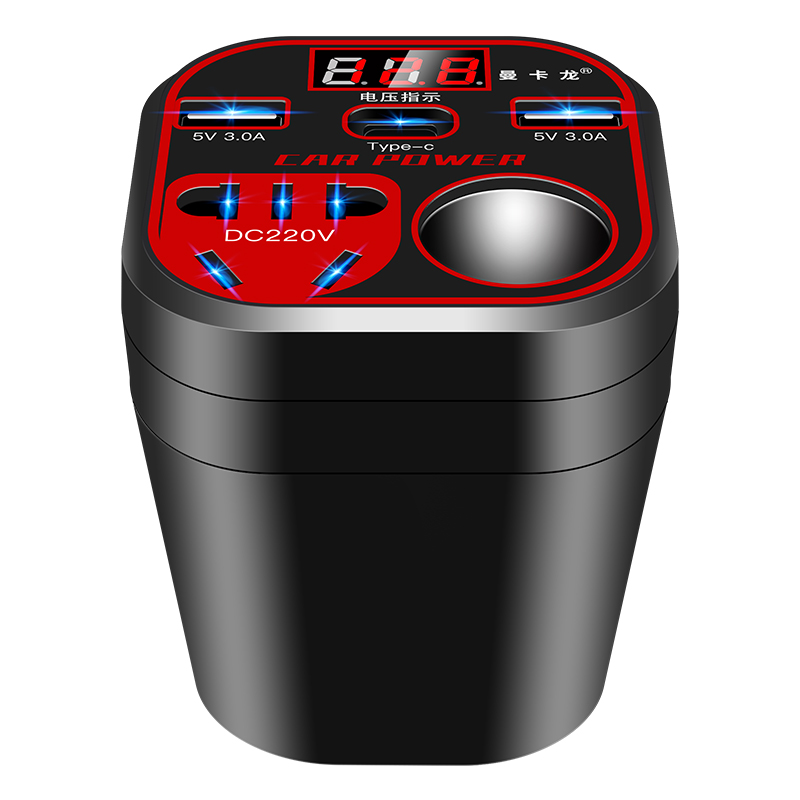
Why It Stands Out: The JVOR N1 is a neat, black 150W DC car inverter tailored specifically for immediate in-vehicle convenience. Its built-in digital display offers quick visual feedback on operating parameters while driving. Operating safely within standard 12V accessory socket thresholds, it eliminates the need to route thick cables directly to the engine bay.
Pros:
Who is it for? Commuters and drivers seeking a compact, clutter-free inverter to power small everyday electronics without fuss.
Yes, provided the total wattage of the appliance stays well within the inverter continuous rating and the battery has adequate amp-hour capacity. For high-draw domestic equipment like kettles, hair dryers, or microwaves, the inverter must be connected directly to the battery terminals, and the vehicle engine should generally be kept running to avoid flattening the starter battery.
An alarm or automatic shut-off usually indicates that the input DC voltage has dropped below the safe threshold, or that the appliance initial startup surge exceeded the inverter peak capacity. Ensure your battery is fully charged, inspect terminal connections for corrosion, and verify that the startup surge rating of your device matches the inverter capabilities.
A pure sine wave inverter produces a smooth, continuous wave that precisely replicates the alternating current from UK wall sockets. A modified sine wave unit produces a stepped, blocky electrical wave. While modified sine wave inverters can run simple resistive loads such as filament lamps, pure sine wave models prevent electrical hum, reduce heat buildup, and protect microprocessors in laptops, medical devices, and modern power tools.