
24/7 Customer Support

Free returns

Same-day & Next-day Delivery

Quality Guaranteed

Unlock Your Welcome Offers: FREE Delivery | Up to 80% OFF | Free 30-day JoyPlus trial
Download the APP
Choosing Purina ONE cat food is not simply a matter of selecting the largest bag or the flavour your cat prefers. UK shoppers also need to check life stage, nutritional purpose, ingredients and feeding guidance. A suitable dry food should match your cat’s age, activity level and individual tolerance rather than relying on broad marketing claims.
Chicken, salmon and turkey can make a recipe appealing, but the named meat is only one part of the composition. For example, the adult chicken recipe lists chicken at 17%, followed by dried poultry protein, wheat, corn and other ingredients. Salmon recipes also include poultry protein and grains.
Read the full ingredient list instead of assuming that “cat food with chicken” or “cat food with salmon” contains only that protein source.
Adult cat food is not automatically suitable for kittens or older cats. A kitten’s food needs to support growth, while a senior recipe is formulated for cats aged 11 years and over. Check the statutory description and feeding instructions on the pack.
Purina ONE Kitten Chicken & Rice is described as a complete food for kittens from weaning to 12 months, as well as pregnant or lactating cats. By contrast, the adult salmon recipe is intended for cats aged one year and above and is not suitable for kittens.
Terms such as “sensitive”, “indoor”, “light” and “hairball” describe the intended use of a formula, not a diagnosis or treatment. A sensitive recipe may suit a cat with a delicate appetite, but it is not the same as a veterinary elimination diet.
Likewise, claims about tartar, stool odour or hairballs should be understood as product-positioning information. If your cat has continuing vomiting, diarrhoea, appetite loss, weight change or urinary symptoms, speak to a vet before changing its diet.
For everyday feeding, look for wording such as complete dry pet food and confirm that the product is intended for your cat’s life stage. This means the food is designed to provide the required nutrients when fed according to the manufacturer’s guidance.
Some Purina ONE products are explicitly described as complete and balanced, including the kitten recipe, adult salmon recipe and Bifensis Sensitive 750g product. Always check the current packaging because formulations and labelling can change.
Analytical constituents provide a more useful comparison than front-of-pack imagery.
Examples from the listed products include:
These figures do not make one formula universally suitable. They help you understand the intended nutritional profile and compare options for an active, indoor, growing or older cat.
Cats with delicate digestion may need a gradual food transition and careful ingredient checking. Purina ONE Sensitive Rich Turkey and Rice contains turkey, rice, corn, pea protein, soya meal and fish oil, and is described as having no added wheat. It may therefore be worth considering for owners specifically avoiding added wheat, but it is not suitable for cats with a known allergy to one of its listed ingredients.
For indoor cats, fibre content may be relevant when hairball concerns or lower activity are part of the shopping decision. The Indoor Formula and Coat & Hairball recipes both include vegetable fibres and dried chicory root. These ingredients should be viewed as formulation features rather than guaranteed outcomes.
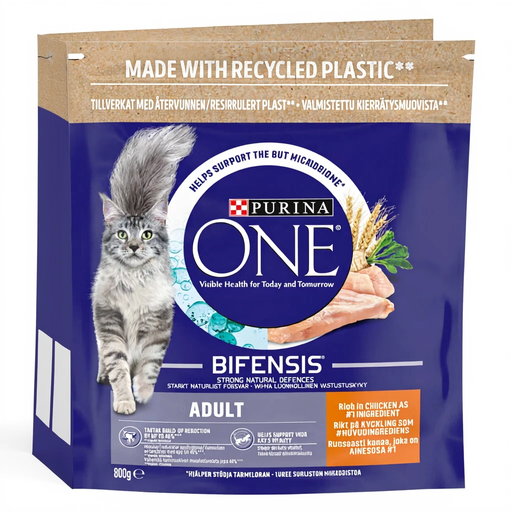
Why This Fits Their Persona: The 800g pack offers a practical starting size for a single adult cat or for owners who want to check acceptance before committing to a larger bag.
It makes it easier to assess flavour preference and tolerance without buying a multi-kilogram bag first. Check the label before feeding.
Chicken is listed at 17%; the recipe also includes whole grains and Bifensis ingredients including chicory and heat-treated Lactobacillus.
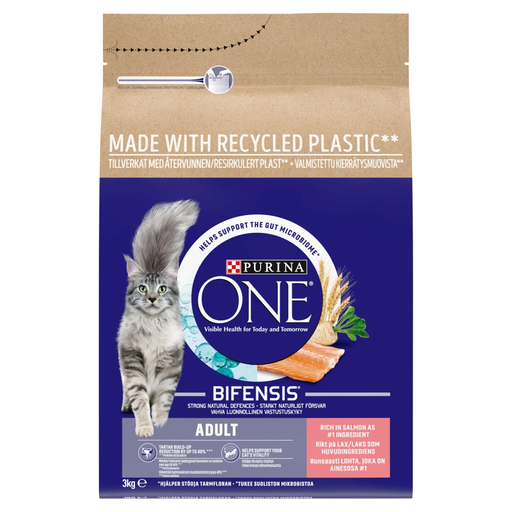
Why This Fits Their Persona: A 3kg option suits owners who already know their adult cat accepts salmon-based dry food and want a larger household supply.
The ingredient list shows salmon at 17%, followed by poultry protein and grains, so shoppers can judge the recipe realistically rather than relying on the front image.
It is listed as complete dry food for adult cats aged one year and above, with 34% protein, 14% fat and 0.5% omega-3 fatty acids.

Why This Fits Their Persona: This is aimed at owners of indoor cats who want an adapted recipe with fibre content and a protein-to-fat balance suited to a less active routine.
Rather than choosing a standard adult recipe for every lifestyle, owners can compare the stated fibre and fat figures with their cat’s activity and body condition.
The formula lists 36% protein, 13% fat and 5.5% crude fibre, with turkey at 17% and dried chicory root at 2%.
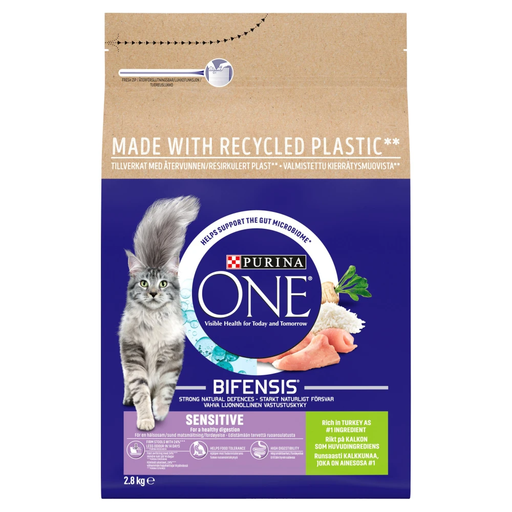
Why This Fits Their Persona: The larger pack is convenient for households that have already found a suitable turkey-and-rice recipe for an adult cat with a delicate digestion.
It is labelled with no added wheat, but it still contains corn, soya and fish oil. Checking the complete ingredients helps avoid unsuitable purchases.
Turkey is listed at 18%, rice at 15%, and the food provides 36% protein with 2.5% omega-6 fatty acids.
We have compiled a complete, real-time list of products that fully satisfy these strict selection criteria and UK safety regulations.
Introduce a new food gradually over around seven days, particularly if your cat has a sensitive digestion. Follow the pack’s daily serving guide and adjust portions according to weight, activity and body condition. Do not assume that a larger serving is appropriate because a cat appears hungry.
Keep dry food sealed in a cool, dry place away from direct sunlight and moisture. Provide fresh drinking water at all times. For multi-cat homes, monitor each cat’s intake so that one animal does not consistently consume another’s portion.
Select a recipe specifically labelled for kittens. Purina ONE Kitten Chicken & Rice is described as complete food for kittens from weaning to 12 months and for pregnant or lactating cats. Adult recipes labelled for cats aged one year and above should not be used as kitten food.
Purina ONE Bifensis Indoor Formula is specifically positioned for indoor cats and lists 5.5% crude fibre, 36% protein and 13% fat. Compare these figures with your cat’s body condition and activity level, and follow the feeding guide rather than feeding freely.
The answer depends on your cat’s weight, daily portion, activity and whether other food is served. An 800g bag may be convenient for trialling a recipe, while 2.8kg and 3kg packs can reduce repeat shopping for established diets. Store larger bags carefully and keep them tightly sealed to preserve freshness.