Shoppers seeking a single cup of brewed coffee
A ground-coffee bag suits someone who wants to brew in a mug without measuring loose grounds or using a cafetière. Unlike instant coffee, the bag needs time to steep and must then be removed.


Choose pyramid coffee bags if you want to offer a single cup of brewed ground coffee without a machine or loose grounds to measure, and customers or staff can allow time for steeping and bag removal. Keep instant coffee as a separate option when adding water and stirring is more convenient, and consider a clearly labelled decaf choice alongside caffeinated coffee. Pyramid coffee bags are not instant coffee.
A ground-coffee bag suits someone who wants to brew in a mug without measuring loose grounds or using a cafetière. Unlike instant coffee, the bag needs time to steep and must then be removed.
Individually portioned coffee bags can simplify cup-by-cup preparation and stock handling. Staff still need to distinguish brewing instructions from those for instant coffee.
Decaf is available as both a brewed coffee bag and instant coffee, so customers can choose the preparation format as well as the coffee. Keep its labelling clear rather than assuming one choice suits everyone.
Decide whether the cup should be brewed from a bag or made from instant coffee, then check the preparation and pack details for the products you intend to stock.
Choose when: You want a single-cup ground-coffee option and can allow for steeping; Raw Bean specifies 3–4 minutes for its Bean Bags.
Bear in mind: The bag needs removing after brewing, and pyramid construction must be confirmed for the exact product.
Choose when: Brewing ground coffee in a mug matters more than the shape of the bag.
Bear in mind: A standard coffee bag is not necessarily pyramid-shaped and still needs brewing; Tesco gives a four-minute brew for Taylors Flying Start.
Choose when: Adding water and stirring is more practical than waiting for a coffee bag to brew.
Bear in mind: Instant coffee is a different format from brewed ground-coffee bags; ready-mixed sachets may also contain other ingredients.
| Priority | What to check | Your needs |
|---|---|---|
| Preparation | Check whether the product must steep or dissolves when stirred. Follow the exact pack’s instructions for water, brewing and bag removal. | I want a cup that staff or customers can prepare with a mug and hot water, without a grinder or coffee machine. |
| Bag format | Confirm whether the exact bag is pyramid-shaped and whether portions are individually wrapped. Do not assume either feature from the words “coffee bags”. | A brewed single-cup option appeals to me, but I only need pyramid bags if their shape is part of the offer I intend to describe. |
| Decaf choice | Check that decaf is clearly identified on the pack and whether it comes as a coffee bag or instant coffee. | Some customers may prefer decaf, while others still want caffeinated coffee; I want them to be able to tell the choices apart. |
| Food information | Read the current physical pack for ingredients, allergens, preparation, storage and date information. Check ready-mixed sachets separately from plain coffee. | If the shop stocks or serves drinks, I need the information for the actual product being offered, especially when choosing between plain coffee and a ready-mixed sachet. |
Raw Bean’s pyramid bags brew ground coffee in hot water, while Nescafé describes its instant coffee as prepared by adding water and stirring. Calling both instant obscures the different preparation steps.
Label brewed coffee bags and instant coffee as separate formats on shelves and serving instructions.
Taylors and Wheatleys offer coffee bags, but a coffee-bag description alone does not establish pyramid construction.
Use “pyramid” in product descriptions only when the exact pack confirms the shape.
Customers may have different preferences. The NHS notes that caffeine in coffee can make people feel more awake, but that is not a basis for making assumptions about an individual shopper.
Where the range allows, label decaf clearly alongside caffeinated choices without making health claims.
Ingredients and instructions can change. Ready-mixed instant sachets also differ from plain coffee: Nescafé describes its 3-in-1 product as containing coffee, milk and sugar.
Check the physical pack before stocking or serving. Food Standards Agency guidance also says businesses should consider hazards relevant to elderly consumers and how the product is intended to be used.
These brand examples show how pyramid bags, standard coffee bags and instant coffee differ; they do not imply that every product from a brand has the same format.
Raw Bean describes its Bean Bags as pyramid-shaped ground-coffee bags and offers individually enveloped cases for food-service customers.
Taylors Flying Start is a roast-and-ground coffee-bag option for brewing in a mug.
Out of Eden offers Wheatleys coffee bags for hospitality settings, including a decaf option.
Nescafé offers instant coffee for preparation by adding water and stirring.
Kenco’s range includes instant coffee and an instant decaf option.
These options cover Taylors coffee bags for a brewed cup and Nescafé and Kenco instant decaf for a different preparation route. Check the exact pack before describing any of the coffee bags as pyramid-shaped.
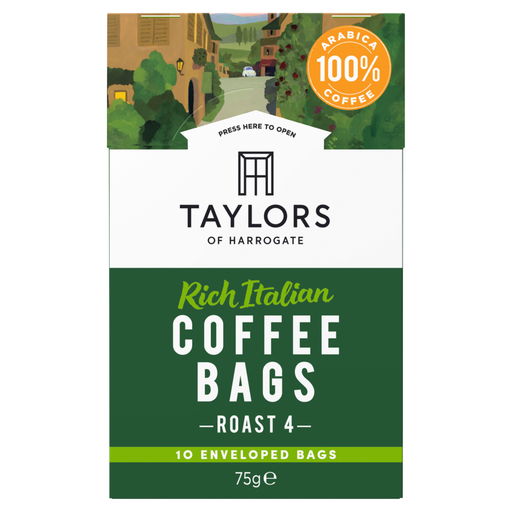 No image available
An individually wrapped coffee-bag option for brewing a cup without measuring loose grounds.
The product description identifies 100% Arabica ground coffee. Check the current pack for brewing directions and whether the bags are pyramid-shaped.
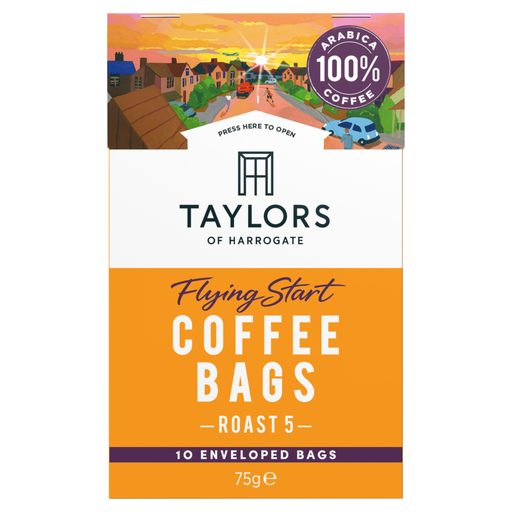 No image available
Individually wrapped bags offer a brewed, single-cup alternative to instant coffee.
The product description identifies Arabica coffee. Tesco gives a four-minute brew for Flying Start; follow the directions on the pack purchased and confirm its bag shape before calling it pyramid-shaped.
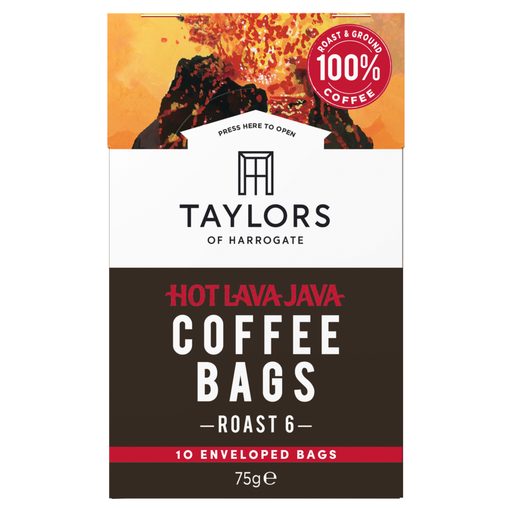 No image available
A coffee-bag choice for a brewed cup without measuring loose grounds.
Check the current pack for preparation time, whether bags are individually wrapped and whether their shape is pyramid-style before using those details in shop signage.
 No image available
Decaffeinated soluble coffee provides an instant alternative for customers who do not want a brewed coffee bag.
It is prepared by adding hot water and stirring. This is not a pyramid bag or an individually portioned sachet.
 No image available
This instant decaf option suits cup-by-cup preparation without brewing and removing a coffee bag.
The product description gives an instruction of 1–2 teaspoons with hot water and stirring. It is a jar rather than an individually wrapped coffee-bag portion.
No. Raw Bean describes its pyramid Bean Bags as ground coffee that steeps in hot water for 3–4 minutes. Instant coffee is prepared by adding water and stirring, without brewing and removing a bag.
A clearly labelled decaf option gives customers another choice if the range and space allow; it need not replace caffeinated coffee. Decaf is available in both coffee-bag and instant formats, so choose the preparation method that suits the shop as well.
The coffee-bag examples use a mug and hot water, followed by brewing and bag removal. Tesco gives a four-minute brew for Taylors Flying Start, while Raw Bean specifies 3–4 minutes for its Bean Bags; follow the instructions on the exact pack purchased.
Preparing drinks introduces handling and serving steps that differ from reselling sealed manufacturer packs. Check the current product information and assess the shop’s actual preparation process; Food Standards Agency guidance says food businesses should consider hazards relevant to elderly consumers and the product’s intended use.
Not as a like-for-like product. Nescafé describes its 3-in-1 sachets as containing coffee, milk and sugar, whereas the coffee bags discussed here contain ground coffee that must brew. Choose a ready-mixed sachet only if that drink format is intended, and check the current pack information.