Regular tea drinkers
If your household gets through one tea steadily, a larger pouch may reduce how often you need to restock. Twinings lists 40-bag non-enveloped pyramid pouches; check that you have a cool, dry place for the opened pack.


For a tea used regularly at home, a larger non-enveloped pyramid-bag pouch can make sense if you can store the opened pack in a cool, dry place; Twinings lists 40-bag options in this format. If you rotate several teas or use them more slowly, compare smaller packs and check whether the bags are individually wrapped. Pyramid shape alone does not establish how a tea will taste or whether its pack suits your pantry.
If your household gets through one tea steadily, a larger pouch may reduce how often you need to restock. Twinings lists 40-bag non-enveloped pyramid pouches; check that you have a cool, dry place for the opened pack.
Black tea, decaf, green tea and infusions need not share the same pack size. Twinings, Clipper and teapigs list pyramid-bag options across different tea styles, so you can choose quantities to match how often each one is used.
If an organic or Fairtrade label, bag material or disposal method matters to you, read the claim on the exact pack. Packaging instructions can differ between products, and local waste collections may accept different materials.
Start with how quickly each tea will be used, then compare the tea type, wrapping and pack instructions.
| Priority | What to check | Your needs |
|---|---|---|
| Pack format | Check the bag count and whether each bag is wrapped. Twinings states that its 40-bag Full English loose-pyramid pouch is not individually wrapped. | One tea gets used frequently in my household; for slower use or several open varieties, I would check the wrapping before choosing a larger pouch. |
| Tea type | Read the exact tea name and ingredients rather than relying on the pyramid shape. Check for an explicit decaf label if that is the variety you want. | I am stocking different teas for different tastes, rather than buying a larger quantity of a type we rarely drink. |
| Labels and disposal | Check organic or Fairtrade wording on the chosen product and follow its bag and packaging disposal instructions. Confirm what your local collection accepts. | Product-specific sourcing labels matter to me, and I want to know where the used bags and packaging can go. |
| Storage | Follow the pack instructions, check its best-before date and keep tea away from damp storage conditions. Typhoo, for example, instructs shoppers to store its tea bags in a cool, dry place. | There is room in my pantry for the packs, and I can store opened tea as its packaging directs. |
Wrapping affects how conveniently you can take single bags out of the home or keep several varieties open. Twinings states that its 40-bag Full English loose-pyramid pouch has no individual wrappers.
Check both the bag count and wrapping description on the exact pack.
Twinings and teapigs describe their pyramid formats in terms of loose or whole leaves, but those brand descriptions do not establish a taste comparison between products.
Choose the tea type and flavour you want, then compare pack size and format.
Tetley says some plant-based bags can be industrially composted through food-waste collections where available; Yorkshire Tea also directs shoppers to check the appropriate waste route for its bags. Neither statement applies automatically to every pyramid bag.
Follow the exact pack’s disposal instructions and check what your local authority collects.
Standard black tea and explicitly labelled decaf tea are different products. A mild-sounding name does not establish that a tea is decaffeinated.
If you want decaf in the pantry, select a pack clearly labelled decaf.
These brand ranges illustrate different pack and tea choices; check the individual product before applying a range-wide claim to a particular bag.
Twinings lists loose-leaf pyramid teas, including 40-bag non-enveloped pouches.
Clipper’s pyramid range includes 20-bag Organic and Fairtrade English Breakfast and Pure Green listings.
teapigs calls its pyramid bags Tea Temples and offers black, green, herbal and flavoured teas.
Typhoo lists larger conventional tea-bag packs and a separately labelled decaf product for comparison with pyramid formats.
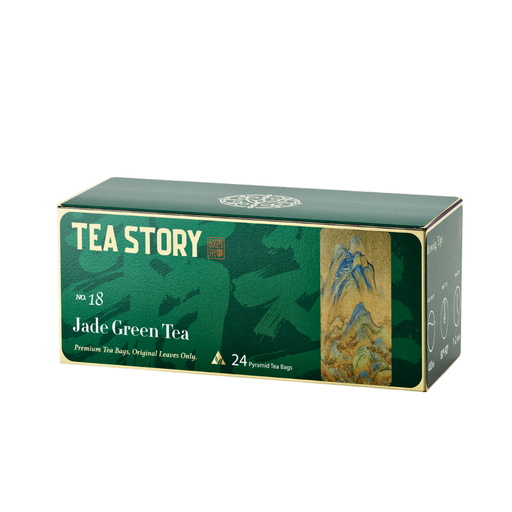
This green-tea option suits a pantry that includes pyramid bags alongside other tea varieties. Check its pack format if individual wrapping matters to you.
 No image available
For a pantry that includes green tea, this pack contains 24 pyramid bags labelled 2 g each. Check the exact pack for individual wrapping if you expect to use the bags gradually, and check its certification label if that affects your choice.
No. For pantry stocking, compare the tea type, number of bags, wrapping, best-before date and storage instructions. Twinings and teapigs describe their pyramid offerings using loose- or whole-leaf language, but pyramid shape does not establish that every such tea will taste better.
Consider one when your household uses that tea regularly and can store the opened pouch as directed. Twinings states that its 40-bag Full English loose-pyramid pouch is not individually wrapped, so check for a wrapped format if single-bag portability matters.
Follow the instructions on the exact pack and keep it away from damp conditions. Typhoo instructs shoppers to store its tea bags in a cool, dry place; check the packaging for any product-specific directions.
A best-before date relates to quality rather than being an automatic instruction to discard food on that day. GOV.UK advises assessing food by sight, taste or smell after its best-before date; do not use tea that is damp, mouldy or contaminated, and follow its storage instructions.
That depends on the exact bag and the collection available to you. Tetley says some plant-based bags can be industrially composted through food-waste schemes where available, while Yorkshire Tea gives disposal guidance for its own bags. Read your pack and check your local authority’s accepted materials before using a food- or garden-waste bin.