Map-detail strategists
If much of your session is spent reading campaign maps, unit cards and tooltips, usable screen space may matter more to you than the highest refresh-rate mode.


A 27-inch QHD monitor is a sensible starting point for historical war games if you want room for maps and interface panels without choosing 4K as your default gaming resolution. Consider 4K when fine detail matters most and your PC can run the game at settings you find acceptable; consider curved, high-refresh QHD when battle-camera motion matters more. For long sessions, check how the screen will fit your desk and take breaks rather than relying on display features alone.
If much of your session is spent reading campaign maps, unit cards and tooltips, usable screen space may matter more to you than the highest refresh-rate mode.
If you play for extended periods, consider whether the stand and your desk let you position the screen appropriately. The Health and Safety Executive also advises short, frequent breaks from display-screen use.
If you spend more time following real-time battles and moving the camera, compare refresh modes and adaptive-sync features alongside what your PC and connection can use.
Choose the resolution and screen format around the part of the game you watch most closely, then check the refresh mode and whether the monitor can be positioned at your desk.
Consider it: When campaign-map detail and a conventional flat screen matter alongside gaming refresh rates.
Trade-off: QHD has fewer pixels than 4K; a monitor's optional overclocked refresh mode may also have specific connection requirements.
Consider it: When you prefer a curved presentation and place particular value on motion during real-time battles.
Trade-off: A higher refresh ceiling does not make the PC produce more frames, and curvature is a matter of preference.
Consider it: When fine map and interface detail takes priority, but you also want a separate mode for faster games.
Trade-off: Your PC must cope with your chosen 4K game settings; on the Alienware AW2725QF, the 360Hz alternative is Full HD, not 4K, according to Dell UK.
| Concern | What to check | Who this matters to |
|---|---|---|
| Map and interface detail | Check native resolution, screen size and whether your games offer usable interface scaling. | If reading unit information and scanning a campaign map takes up much of a session, I want space for those details without losing legibility. Around 31% of consumers put readable tactical detail first. |
| Long-session setup | Check stand adjustment or mounting options and whether the screen will fit your desk position. | When I settle in for an extended session, I need to position the screen without adapting my posture to a fixed stand. Comfortable physical setup comes first for around 31% of consumers. |
| Battle motion | Check refresh rate at the intended resolution and adaptive-sync compatibility with your graphics card. | If I follow moving units and pan across real-time battles, smooth camera motion matters more to me than extra pixels. Around 23% of consumers prioritise battle motion. |
| PC and connection fit | Match the intended resolution and refresh mode to your graphics-card output, monitor input and cable. | I do not want to choose a display mode that my PC and connection cannot use as intended. For around 15% of consumers, compatibility is the primary concern. |
LG UK specifies 180Hz native refresh for the 27GS75QN-B and says its optional 200Hz mode requires a DisplayPort 1.4-capable graphics card and cable.
Check the exact monitor mode, PC output and cable before making that higher rate part of your decision.
A display feature does not position the screen or replace breaks. The Health and Safety Executive's display-screen guidance addresses placement and work routines.
Check stand or mounting adjustment, lighting and screen placement, and plan short, frequent breaks during long sessions.
Dell UK specifies separate modes for the Alienware AW2725QF: 4K at 180Hz and Full HD at 360Hz.
Decide which resolution you expect to use for historical war games, then compare refresh rates at that resolution.
A specification page can remain visible when a model is unavailable; Dell UK's G2724D listing identifies it as unavailable.
Before ordering an exact model, check the current seller, listing details, warranty and return terms.
The flat, 27-inch QHD 27GS75QN-B is one reference point for combining map detail with a high-refresh gaming specification.
The curved, 27-inch QHD G65B is a reference point if battle motion and a curved screen appeal to you.
The 27-inch AW2725QF is a reference point for choosing between a detail-focused 4K mode and a separate faster mode.
These monitors cover QHD gaming, an ultrawide map workspace, a 4K dual-mode option and a QHD desktop-focused alternative. Compare each one with your desk space, preferred game mode and PC connection.
 No image available
Consider this if you want a 27-inch QHD OLED screen and place particular value on the listed 240Hz gaming mode.
The product name specifies a 0.03ms response time. Check whether your PC, game and connection can use the refresh mode you intend to select.
 No image available
Consider this format if a wider map and interface workspace suits your desk.
The product name specifies 3440 × 1440 resolution, 175Hz over DisplayPort and 100Hz over HDMI, with height, swivel and tilt adjustment. Check desk space and which connection you will use.
 No image available
Consider its 4K mode if fine map and interface detail is your priority and your PC can run the game at settings you find acceptable.
The product name lists 240Hz/480Hz dual-mode operation; the higher-refresh alternative is 1080p, not 4K. Check the connection and mode you plan to use.
 No image available
Consider this if you want QHD map detail alongside a listed high-refresh mode.
The product name specifies 2560 × 1440 resolution and 220Hz. If screen height matters at your desk, confirm the stand adjustment; also check that your PC and connection support your intended mode.
 No image available
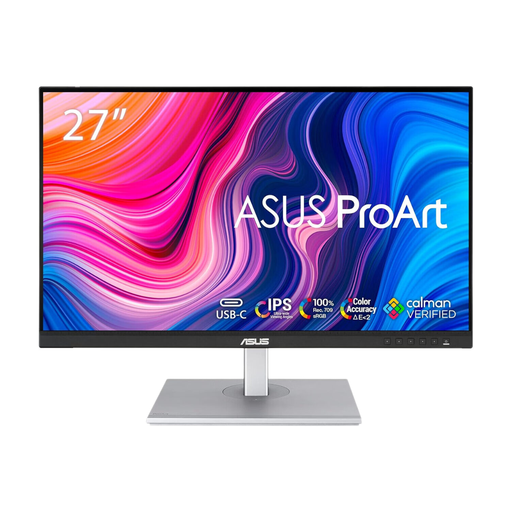
Consider this QHD desktop-focused option if screen positioning and map detail matter more to you than the higher refresh rates listed for the gaming-focused models here.
The product name specifies 100Hz. Check whether that rate suits your battles, and confirm adaptive-sync compatibility if you need it.
Yes, if you want more native display area than Full HD without making 4K your default gaming resolution. Check interface scaling in the games you play and choose a stand or mount that lets you position the screen at your desk; move towards 4K if fine detail is your priority and your PC can handle your chosen settings.
Not necessarily: those modes are most relevant when battle and camera motion are a priority and your PC can produce and deliver frames at the intended mode. Check refresh rate at your chosen resolution and the required connection; LG UK says the 27GS75QN-B needs a DisplayPort 1.4-capable graphics card and cable for its optional 200Hz mode.
Use a stand or mount that lets you place the screen suitably for your desk and seated position. The Health and Safety Executive advises placing the top of a display at eye level, keeping it about an arm's length away and taking short, frequent breaks in its display-screen guidance.
The Health and Safety Executive's Display Screen Equipment guidance concerns employers and workers using screens as a significant part of normal work; it is not a product-certification rule for private leisure gaming. Its advice on screen placement and breaks can still inform how you arrange a long home session.