Build-and-code teaching teams
If students need to assemble, calibrate and program a physical quadruped as part of a taught project, check the exact kit contents and the available coding and teaching materials.


For assessed build-and-code work, choose a compact construction kit; for projects that add computing or sensors, consider a modular platform. A sensor-equipped research quadruped is more relevant when its documented interfaces and sensing match a defined experiment. In every case, check the exact variant, software support, included equipment and lab arrangements before students use it.
If students need to assemble, calibrate and program a physical quadruped as part of a taught project, check the exact kit contents and the available coding and teaching materials.
For projects that add computing or sensing, confirm access to the controller and movement interfaces, and allow for component integration.
When an experiment needs a sensor-carrying platform and documented development access, match the chosen configuration to the experiment and plan for staff-supported operation and maintenance.
For a university teaching or prototyping project, compare the platform with the learning task, experiment and practical arrangements it needs to support.
| Concern | What to check when buying | Who this matters to |
|---|---|---|
| Development access | Check supported languages, API scope, teaching materials and simulator support for the exact configuration. | If assessed work depends on students building and programming the robot, I would prioritise tools they can use with the chosen hardware. About 40% of consumers put teachable development access first. |
| Sensors and experiments | Match the required camera, LiDAR, computing and data access to the ordered configuration. | When a project depends on sensing data for an experiment, I would check both the sensor and how students can access its data. About 30% of consumers put experiment-specific sensing first. |
| Shared lab operation | Review model-specific battery and charger instructions, maintenance, supervision and the institution’s risk assessment. | If a robot will be shared across student sessions, I would want a workable plan for safe, repeatable use and maintenance. About 20% of consumers put manageable lab operation first. |
| Complete package and timing | Confirm included components, required accessories, delivery commitments and documentation with the supplier. | For a project with a fixed teaching schedule, I would check that the required equipment can be assembled and delivered in time. About 10% of consumers put package completeness and procurement timing first. |
Unitree documents several Go2 configurations. A requirement for an EDU model does not mean that an Air or Pro configuration provides the same hardware or software access.
Specify the full variant and required SDK, sensor and payload access in the quotation.
Waveshare describes the Raspberry Pi as optional for PIPPY and says the specified 18650 batteries are not included.
Confirm the controller, power components and any required sensors for the intended project before comparing configurations.
Hiwonder’s ROSPug documentation specifies ROS Melodic. The ROS project ended official ROS 1 support on 31 May 2025.
Before building coursework around ROSPug, ask for a supported route to the software stack the department plans to maintain.
Bittle X V2 construction and pre-assembled configurations provide different starting points for coding and assembly coursework.
PIPPY is a Raspberry Pi-based platform for component-led Python prototyping.
Go2 configurations offer a route to a larger quadruped for projects with a defined development or sensing requirement.
ROSPug is described by Hiwonder as a ROS teaching quadruped.
Spot is a separate supplier-engagement option for departments with a defined advanced research requirement.
These Joybuy choices relate to quadruped robots for university projects. Check each model’s development access and operating requirements against the intended coursework or experiment.
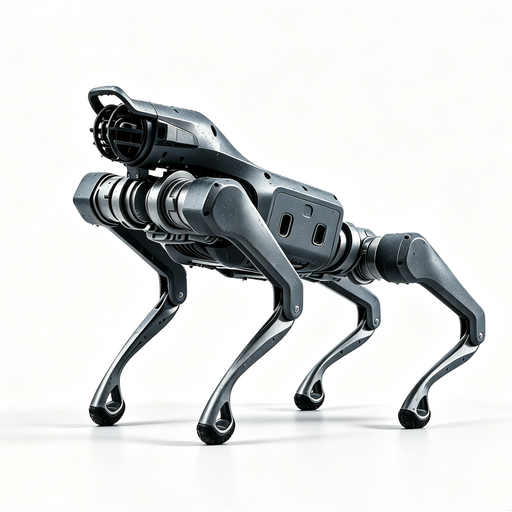 No image available
The listed functions may suit a project involving follow or obstacle-avoidance demonstrations; check that the project does not depend on unlisted development access.
The product description calls for an open, clutter-free area of at least 6 m × 6 m during use and warns against touching the robot while it is moving. It also prohibits unauthorised modification, disassembly and irregular repair.
 No image available
The product description lists an HD camera and inspection and mapping uses, which may be relevant to a mobile-robot project; confirm the required data access for the exact configuration.
The product warning calls for a 2 m safety distance during high-speed manoeuvres or autonomous testing, and a trained operator during initial deployment in public or unmapped spaces.
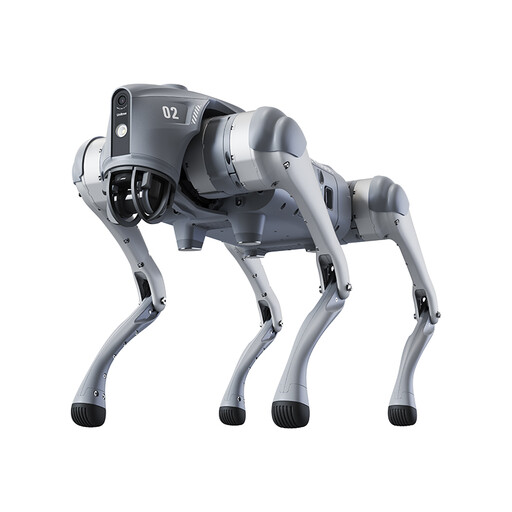 No image available
The listed camera and 4D LiDAR may suit a project focused on onboard sensing, but the product description says this model does not support secondary development.
The product instructions specify setup on a level surface and say it is not suitable for people under 14.
Not if the assessment requires behaviour on a physical robot. Use simulation within its documented scope, then plan supervised tests with the exact hardware and interface configuration. Petoi describes a browser-based simulator, while Unitree describes a MuJoCo simulator that integrates its development packages.
Follow the exact model’s battery and charger instructions, and include charging, electrical condition, storage and supervision in the institution’s assessment. Hiwonder instructs ROSPug users to use its dedicated charger; do not apply one model’s instructions to another robot.
No. Ask the supplier to confirm the required quantity, included components and delivery commitment before setting a project schedule; a product page alone does not establish that a particular order can meet the department’s timetable.
The Health and Safety Executive says PUWER places duties on organisations whose employees use work equipment, including activities such as programming, modifying and maintaining it. If a university supplies or uses a robot as work equipment, it should assess suitability, maintenance, information and training for the proposed use; the institution must assess how the guidance applies to its particular student arrangement.
No. UK Government guidance says Great Britain continues to recognise CE marking alongside or in place of UKCA marking where the applicable product rules allow it. Northern Ireland has a separate CE or CE-and-UKNI regime. Check the destination and applicable product rules; a listing alone does not establish conformity for a particular robot or charger.