Noise-conscious shared-bedroom players
If someone else is nearby while you play, check click and scroll noise directly rather than treating gaming-switch descriptions as proof of quiet operation.


Start with the shared-room constraint: wireless connectivity and low weight do not tell you how loud a mouse will be. A compact wireless model makes sense when desk space and cable-free use matter most; consider more buttons only if you have repeated actions to assign to them. Check clicks, side buttons and scrolling in the room, and check the retailer’s return terms before relying on an at-home trial.
If someone else is nearby while you play, check click and scroll noise directly rather than treating gaming-switch descriptions as proof of quiet operation.
Wireless use can suit a cramped setup or a mouse moved between desks. Weight and the way the mouse is powered are useful additional checks.
If you plan to remap game actions, consider whether the buttons are comfortable to reach without accidental presses. A larger button count is useful only when you have a purpose for it.
For deck-building games in a shared bedroom, check disturbance first, then decide whether desk convenience or mapped controls matter more to you. Manufacturer battery claims made under different conditions are not a direct endurance comparison.
| Concern | What to check | Who this matters to |
|---|---|---|
| Click and scroll noise | Check for product-specific quiet-click evidence. If the retailer’s terms permit a trial, listen to primary clicks, side buttons and scrolling where you play. | I need to play without unnecessarily disturbing someone nearby, so the sound of every control matters. Around 42% of consumers put low disturbance first. |
| Wireless convenience | Check the connection modes and whether the mouse uses replaceable batteries or needs recharging; read the conditions attached to battery-life claims. | When desk space is tight or I move between desks, I want cable-free use without an inconvenient power routine. For around 33% of consumers, that convenience is the primary need. |
| Programmable controls | List the actions you would assign, then check button placement and software compatibility with your model and operating system. | I regularly repeat commands and want controls I can reach comfortably, rather than unused buttons. Roughly 25% of consumers place shortcut customisation first. |
Logitech G describes the G502 X LIGHTSPEED’s switches as retaining crisp tactile feedback. That description does not establish how much disturbance its clicks or scrolling will cause in a bedroom.
Look for evidence about the particular controls you use. Before planning an at-home noise check, confirm what the retailer’s return terms allow.
Logitech G states up to 250 hours for the G305 on one AA battery. Corsair gives different M75 WIRELESS claims for different wireless modes with RGB lighting off. Those figures should not be treated as results from the same test.
Compare the power source, connection mode and lighting conditions alongside your preference for changing batteries or recharging.
An AA-powered mouse involves replacement batteries; a rechargeable mouse needs time to recharge.
A large control array can add complexity or lead to unintended presses if its placement does not suit your hand or your game actions.
Write down the commands you would map, then consider whether you can reach the relevant buttons comfortably.
GOV.UK advises against putting batteries and electrical products marked with the crossed-out wheelie-bin symbol in household rubbish.
Use an appropriate battery or electrical recycling collection route and follow your local collection guidance.
Logitech G documents a choice between the AA-powered wireless G305 and the control-heavy G502 X LIGHTSPEED.
Razer lists the portable Orochi V2 and the button-heavy Naga V2 HyperSpeed as distinct wireless options.
Corsair presents the M75 WIRELESS as an ambidextrous option with magnetic side-button choices for right- or left-handed use.
These wireless gaming mice offer different approaches to desk use and button mapping. Treat noise as a separate check for each model, particularly if another person shares the room.
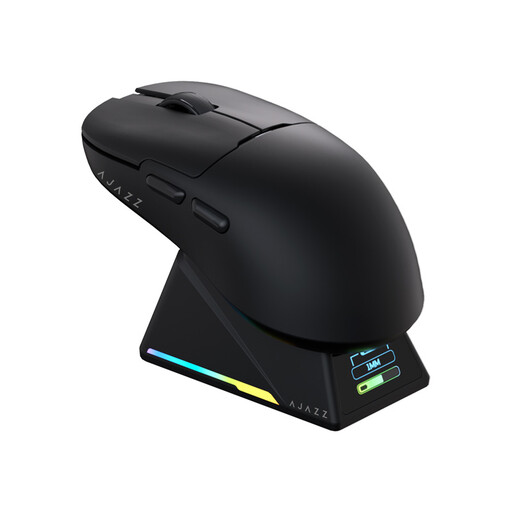 No image available
Consider its listed 56 g weight if you prefer a lighter mouse for a compact setup.
The title specifies 2.4G wireless and wired modes, a PAW3950 sensor, 30K DPI and an 8KHz polling rate. Confirm the exact connection modes for this SKU before relying on Bluetooth, and check click and scroll noise separately.
 No image available
Consider this wireless model if cable-free use matters and you can check its controls in the room.
The listing describes its left and right clicks as silent, but that wording does not establish the sound of the side controls or scroll wheel. Confirm programmable-button support before relying on shortcut mappings.
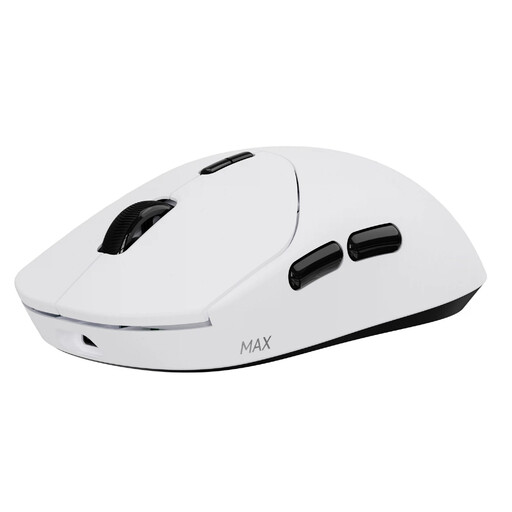 No image available
Its listed 10 programmable buttons are worth considering if you have recurring actions to map.
The title also states 53 g and an up-to-750-hour battery claim. The listing says the long-battery mode requires a driver update, so check software compatibility before relying on it. Check button and scroll noise for bedroom use.
 No image available
Consider it if you want to assess remapped controls alongside several connection options.
The title specifies Bluetooth, 2.4G wireless and USB-C wired connectivity with a PAW3311 sensor. Confirm the mouse’s weight before making portability a deciding factor, and check click and scroll noise in the intended room.
Wireless connectivity alone cannot tell you how loud clicks or scrolling will be. Check evidence for the particular mouse and controls, or confirm the retailer’s return terms before testing it in the room where you play.
They are useful when you have repeated actions you can assign and reach comfortably. Razer lists 19 programmable buttons for the Naga V2 HyperSpeed, while Logitech G lists 13 customisable controls for the G502 X LIGHTSPEED; neither count establishes that the layout will suit your hand.
If you intend to use Razer Synapse for remapping or macros, check that it supports your particular mouse and operating system. Razer describes Synapse as its configuration software, but that does not establish compatibility with every device.
Use an appropriate electrical or battery recycling route rather than household rubbish for items marked with the crossed-out wheelie-bin symbol. GOV.UK advises against putting those batteries and electrical products in household rubbish; follow local collection guidance for the items you have.