
24/7 Customer Support

Free returns

Same-day & Next-day Delivery

Quality Guaranteed

Unlock Your Welcome Offers: FREE Delivery | Up to 80% OFF | Free 30-day JoyPlus trial
Download the APP
A restful night's sleep can feel just out of reach when you're battling a stuffy nose, lingering pet odours, or the constant worry of urban pollution seeping into your sanctuary. For many in the UK, improving the air quality in the bedroom is no longer a luxury but a necessity for better health and well-being. The challenge lies in finding a device that cleans the air effectively without disrupting your peace with a constant hum.
This guide is designed to help you navigate the options. As your Joybuy Product Recommendation Officer, I'll provide practical advice and highlight some noteworthy models to help you find a quiet HEPA air purifier for your bedroom that suits your specific needs, whether you're a light sleeper, a pet owner, or someone looking to manage seasonal allergies.
Choosing the right air purifier involves more than just picking one off the shelf. Here are a few key factors to consider to ensure you get a model that performs well in your bedroom.
The heart of any effective air purifier is its filter. A True HEPA filter is the standard for capturing 99.97% of airborne particles as small as 0.3 microns. This includes common irritants like dust, mould spores, pet dander and pollen, making it an essential feature for an air cleaner for dust and pollen, especially for those dealing with hay fever. Many models also include:
CADR, or Clean Air Delivery Rate, measures how quickly an air purifier can clean a room. It is measured in cubic metres per hour (m?/h). To find the right fit, compare the purifier's recommended room size with the dimensions of your bedroom. For a bedroom, you don't necessarily need the highest CADR on the market, but you do need one that can circulate the air effectively without having to run on its highest (and loudest) setting all night.
For a bedroom, quiet operation is non-negotiable. Look for the noise level, measured in decibels (dB). A model that operates between 20-30 dB on its lowest setting is often described as whisper-quiet and is ideal for light sleepers. Also, consider an energy efficient air purifier, as it will likely be running for many hours. Models with low power consumption and smart features like an auto mode, which adjusts fan speed based on air quality, can help manage electricity costs.
Here are a few models that balance quiet performance with effective air cleaning, making them well-suited for bedroom use.
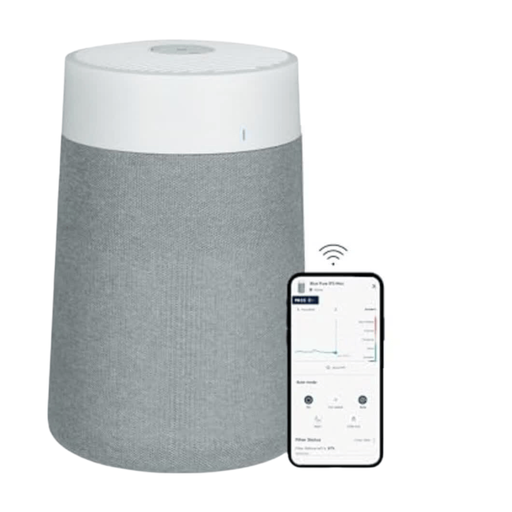
Why It Stands Out: The BLUEAIR 511i Max uses proprietary HEPASilent technology, which combines electrostatic and mechanical filtration. This allows it to achieve high performance with less noise and energy than traditional HEPA filters. It's a smart air purifier UK residents will appreciate, with app integration for scheduling, air quality monitoring and voice control.
Pros:
Who is it for? This is an excellent choice for tech-savvy individuals who want a powerful, quiet and energy-efficient purifier for a small to medium-sized bedroom and appreciate the convenience of smart home integration.
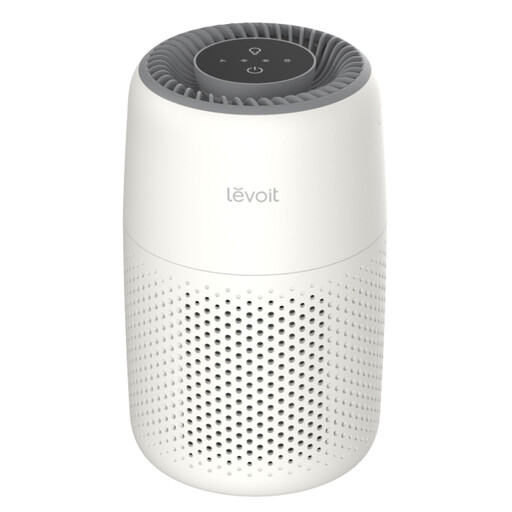
Why It Stands Out: The Levoit Core Mini is the definition of a small room air purifier. Its compact, lightweight design allows it to sit discreetly on a nightstand or desk. A unique feature is the built-in aroma pad, which lets you add a few drops of essential oil to gently fragrance the clean air.
Pros:
Who is it for? Ideal for those with very small bedrooms, students in dorms, or anyone needing a personal air purifier for their immediate vicinity. It's a great entry-level option for users who prioritise simplicity and a compact form factor.
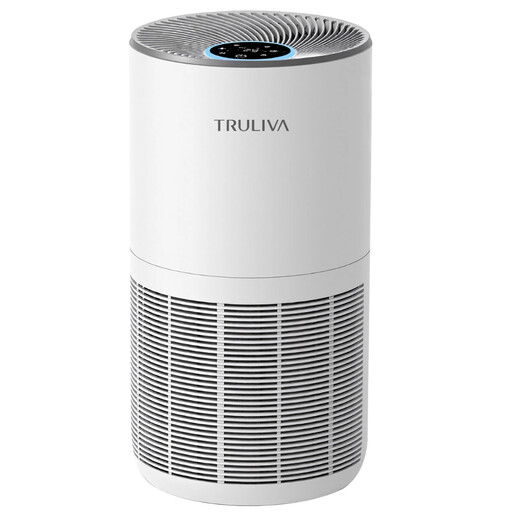
Why It Stands Out: For those needing serious air cleaning power, the TRULIVA model delivers an impressive CADR of 450 m?/h. Its 360° air intake system efficiently pulls in air from all directions, making it highly effective in larger bedrooms or open-plan living areas. The real-time PM2.5 display provides instant feedback on your indoor air quality.
Pros:
Who is it for? This purifier is best suited for individuals with larger bedrooms, severe allergies, or multiple pets. If you're looking for maximum performance and clear, data-driven feedback on your air quality, this is a compelling option.
The world of air purification is constantly evolving, with devices designed for every space and need. If you're exploring other types of air quality solutions, from advanced sensor-based cleaners to different sizes and technologies, our comprehensive collection has you covered.
Discover more in our Sensor Cleaner category.
Q1: Should I run an air purifier all night in my bedroom? Yes, for the best results, it is recommended to run your air purifier continuously, especially while you sleep. This ensures the air remains clean throughout the night, helping to reduce potential allergens and irritants. Most modern purifiers are energy-efficient and have a quiet night mode designed specifically for this purpose.
Q2: How do I know what size air purifier I need for my bedroom? Check the manufacturer's recommended room size and its CADR (Clean Air Delivery Rate). As a general rule, you want a purifier with a CADR that is sufficient to clean the air in your room around 2-5 times per hour. Measure your room's square metreage and choose a model rated for a slightly larger area to ensure it can run effectively on a lower, quieter setting.
Q3: Will a quiet HEPA air purifier help with hay fever and pet allergies? Absolutely. HEPA filters are specifically designed to capture the microscopic particles that trigger allergies. This includes pollen, pet dander, dust mites and mould spores. By running a HEPA purifier in your bedroom, you can create a cleaner air environment that may significantly reduce allergy symptoms and help you breathe more easily, particularly during high-pollen seasons or in a home with pets.