Quiet-study website editors
If you update club events, membership pages or news near other people, repeated clicks may be your first concern. Look for model-specific quiet-button claims, and assess scrolling noise separately.


For straightforward club website edits in a quiet study, start with a mouse whose primary clicks are described as quiet. If you regularly navigate long pages or use shortcuts, consider extra controls; if hand fit matters most during longer sessions, consider a vertical shape. Check wheel noise, hand size and the connection your computer can use before choosing.
If you update club events, membership pages or news near other people, repeated clicks may be your first concern. Look for model-specific quiet-button claims, and assess scrolling noise separately.
If you move frequently between a website editor, browser tabs and documents, reachable buttons and controllable scrolling may be useful. Check that any button-customisation software works with your computer.
If you spend extended periods editing at a desk, give hand fit and mouse position at least as much attention as extra controls. The Health and Safety Executive advises positioning a mouse in line with the elbow.
For club website work in a quiet study, check click and wheel noise first, then weigh navigation controls against hand fit and your computer’s connection options.
| Concern | What to check | Who this matters to |
|---|---|---|
| Click and scroll noise | Check which buttons the quiet claim covers and whether the wheel is also described as quiet. | If I edit pages while others study nearby, repeated clicks and scrolling are the sounds I most want to limit. Around 42% of consumers put low mouse noise first. |
| Navigation and shortcuts | Check button functions, wheel behaviour and software compatibility with your operating system. | When club administration means moving between long pages, tabs and documents, I want controls I can reach without interrupting the task. Around 33% of consumers prioritise that workflow. |
| Hand fit for longer sessions | Check the maker’s hand-size and handedness guidance, button reach and where the mouse will sit beside your keyboard. | If I work at the desk for long stretches, a shape that fits my hand matters more than additional buttons. Around 25% of consumers place fit first. |
Manufacturers use different comparison models and conditions. Logitech compares MX Master 3S click noise with MX Master 3 at one metre; HP’s claim for the 280 Silent concerns its left and right buttons.
Read the claim for the exact model, and check wheel noise separately if you scroll through long pages.
Logitech positions Lift for small-to-medium hands and offers a left-handed option. Its shape alone cannot establish whether its controls will be comfortable for you to reach.
Check the maker’s fit guidance and the seller’s return terms. Keep the mouse close to the keyboard and in line with your elbow, as the Health and Safety Executive advises.
HP describes the 280 Silent as using a 2.4 GHz receiver, while Logitech lists Bluetooth Low Energy and Logi Bolt receiver options for the M650 line. The appropriate choice depends on your computer and available ports.
Confirm the exact variant’s connection and operating-system support before buying.
GOV.UK advises that electrical products and batteries marked with the crossed-out wheelie-bin symbol should not go in household rubbish when they no longer work.
Check the appropriate local collection route for the mouse and any removable battery.
The M650, MX Master 3S and Lift lines offer different approaches to quiet everyday editing, shortcut-led work and vertical hand positioning.
The 280 Silent and 400 Quiet Dual are conventional wireless options for buyers who want quiet primary clicks.
Dell’s Pro Compact Silent Keyboard and Mouse KM555 is relevant if you also need a compact keyboard, rather than a mouse alone.
These mice cover quiet-click options for routine club website editing and a control-rich option for more frequent navigation. Choose by the connection, controls and hand fit that suit your study setup.
 No image available
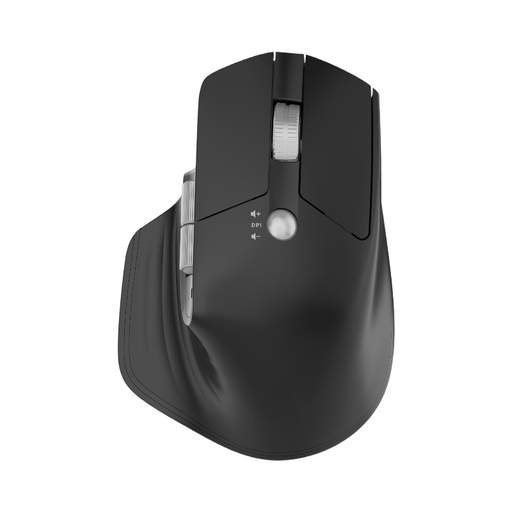
Consider this model if club-site work involves frequent navigation and quiet clicking. Logitech describes Quiet Clicks, MagSpeed scrolling and an 8,000 DPI sensor for MX Master 3S; check that its button-customisation software supports your operating system.
 No image available
A compact option for routine website edits when quiet clicks and a choice of wireless connection matter. Its title specifies adjustable DPI and one AA battery; check wheel noise if you scroll frequently in the study.
 No image available
For straightforward editing, this model offers silent-click wording, Bluetooth or 2.4G wireless connection and one-touch DPI adjustment. Confirm compatibility with your computer and whether the wheel meets your noise needs.
 No image available
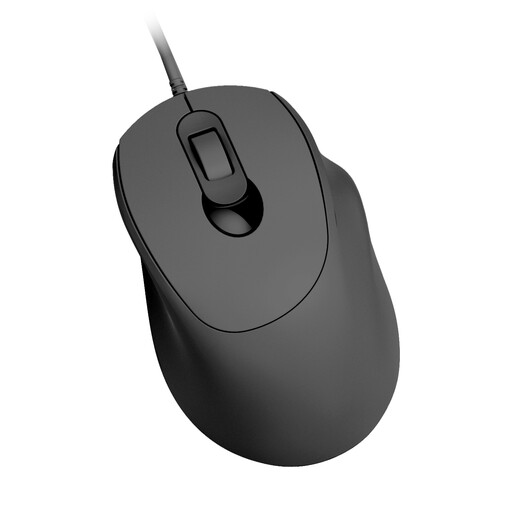
Consider this wired USB model if a cable suits your desk and you want quiet primary clicks. Its title specifies four buttons, 1000/1200/1600 DPI settings and Windows and Mac compatibility; check the additional button’s function if shortcuts matter.
 No image available
A quiet-click option for straightforward edits if a 2.4 GHz USB receiver suits your computer. Its title specifies 1600 DPI and Windows and Mac compatibility; check wheel noise separately if you work through long pages.
No: a quiet-click claim is not a promise of silence. Logitech’s MX Master 3S comparison is against MX Master 3 at one metre, while HP’s stated reduction for the 280 Silent concerns its left and right buttons. Check the wheel separately if scrolling sound matters.
Choose according to your computer’s connections and the exact mouse variant. Bluetooth can preserve a USB port when the computer supports it; a receiver needs a suitable port. Logitech lists Bluetooth Low Energy and Logi Bolt receiver options for the M650 line, whereas HP describes the 280 Silent with a 2.4 GHz dongle.
Keep the mouse close to the keyboard and in line with your elbow. The Health and Safety Executive also advises a separate keyboard and mouse for prolonged laptop use so the screen can be raised; a vertical shape does not replace an appropriate desk setup.
Check the appropriate electrical-waste or battery collection route rather than putting marked items in household rubbish. GOV.UK advises that electrical products and batteries displaying the crossed-out wheelie-bin symbol should be recycled when they no longer work.