Grant writers working near colleagues
Repeated selecting, editing and scrolling make click noise worth checking when colleagues share the workspace.


For grant writing in a shared office, start with a mouse that explicitly specifies quiet clicks, then choose a shape and connection that suit your hand and work device. A conventional mouse involves the least change in grip; a vertical mouse offers a more upright hand position, while a thumb trackball stays in place on a crowded desk. None replaces attention to the whole workstation if prolonged use causes discomfort.
Repeated selecting, editing and scrolling make click noise worth checking when colleagues share the workspace.
Hand fit and mouse position matter when drafting takes hours. The Health and Safety Executive also advises considering the wider workstation rather than the mouse alone.
Moving between desks or work devices makes the available USB ports, Bluetooth support and workplace IT rules part of the buying decision.
Check click noise before choosing a grip, then confirm that the connection works with your device. If you scroll through lengthy guidance documents, check wheel noise separately from button noise.
Choose it when: You want familiar control for selecting text and moving between references without changing your grip substantially.
Trade-off: Moving the mouse needs desk space that a stationary trackball does not.
Choose it when: You prefer a more upright hand position and can find a quiet-click model that fits your hand and handedness.
Trade-off: The unfamiliar grip can take adjustment; an ergonomic label does not establish personal fit or resolve discomfort on its own.
Choose it when: Your shared desk has little room to move a mouse across its surface.
Trade-off: Thumb-operated cursor control feels different, so consider whether it suits intensive editing; check quiet-click claims for the exact model.
| Concern | What to check | Who this matters to |
|---|---|---|
| Noise around colleagues | Look for a quiet-click claim for the exact model. Check the scroll wheel separately if you use it frequently. | If I am editing beside colleagues, repeated clicks must not become a distraction; around 40% of consumers put quiet operation first. |
| Comfort during long sessions | Compare the stated hand-size fit, handedness and grip shape. Consider mouse placement as part of the workstation. | When a long draft makes my usual grip uncomfortable, fit matters more than extra controls; around 30% of consumers make long-session comfort their primary concern. |
| Connection at a shared desk | Confirm Bluetooth requirements or a suitable USB port, and check workplace rules for pairing and optional software. | I need the mouse to work when I change desks or laptops, without relying on a connection my work device cannot use; roughly 20% of consumers prioritise compatibility. |
| Document navigation | Check scrolling controls and any forward/back buttons; confirm whether customisation needs permitted software. | If I move constantly between draft sections and reference material, convenient navigation is my deciding factor; about 10% of consumers put it first. |
Wireless describes the connection, not the sound of the buttons or wheel. Logitech and Kensington identify quiet clicking on particular models rather than across every wireless mouse.
Check the exact model’s click specification, and check wheel noise separately if scrolling through long documents is a frequent task.
Logitech specifies different hand-size or left-handed variants for models including Signature M650 and Lift. A shape described as ergonomic will not fit every hand in the same way.
Match the stated variant to your hand and handedness. If you are changing to a vertical mouse or trackball, check the retailer’s applicable return terms before ordering.
Screen position, seating and mouse placement can still affect prolonged display-screen work after a mouse change.
The Health and Safety Executive advises keeping the mouse in line with the elbow. If discomfort continues at work, raise it through your employer’s workstation assessment process.
A Bluetooth mouse must meet the host device’s requirements, while a receiver needs a suitable port. For example, Microsoft specifies Bluetooth 4.0 or later for its Bluetooth Ergonomic Mouse.
Check the work device’s connection options and whether workplace IT permits any optional configuration software you intend to use.
Its named ranges offer conventional quiet mice, vertical models and thumb trackballs, with different hand-fit and connection choices.
Its relevant office models include a wrist-supported ergonomic mouse and a simpler ambidextrous receiver-based mouse.
The Bluetooth Ergonomic Mouse is relevant to a Windows-focused setup that may involve switching between PCs.
These conventional wired and wireless mice are relevant when you want to keep a familiar mouse shape for shared-office writing. Compare their stated button noise and connection types, then check hand fit and wheel noise for the model you choose.
 No image available
Consider this for quiet clicking when you also want a choice of wireless connection. The title specifies 2.4G+BT, adjustable DPI and one AA battery. If you scroll frequently, confirm wheel noise; also check the dimensions against your hand.
 No image available
This suits a work setup that can use a USB receiver for quiet-click wireless control. The title specifies 2.4GHz wireless, a USB receiver, 1600 DPI and Windows and Mac compatibility. Confirm a suitable port or adapter, along with wheel noise and hand fit.
 No image available
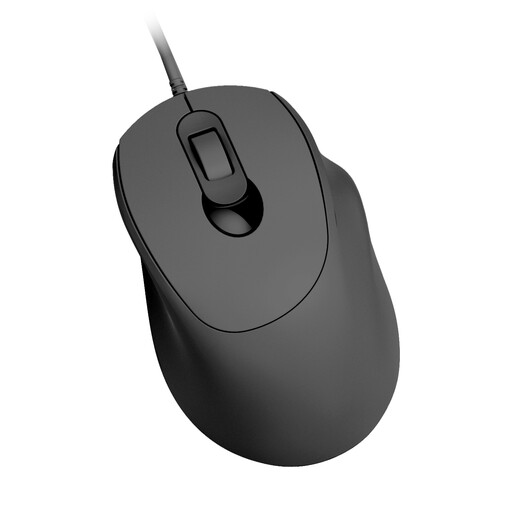
Choose a wired arrangement only if a cable works at your shared desk. The title specifies a USB connection, four buttons, 1000/1200/1600 DPI settings and Windows and Mac compatibility. Quiet clicking is specified for the left and right buttons; check wheel noise and hand fit separately.
 No image available
Consider this gaming-styled mouse only if its lighting and shape also suit your office setup. The title specifies five adjustable DPI levels; the product information describes silent left and right buttons and a USB receiver. Its side buttons are described as unavailable on Mac, so check that limitation, the required port and wheel noise before ordering.
No particular mouse type is required by the UK display-screen equipment guidance cited here. The Health and Safety Executive says employers must assess the workstation when workers use display-screen equipment daily as part of normal work for continuous periods of an hour or more; the assessment considers more than the mouse.
Raise the discomfort with your employer or workstation assessor rather than assuming a new mouse alone will resolve it. The Health and Safety Executive advises addressing problems identified through a display-screen equipment assessment, including changes to the workstation where needed.
Use a separate mouse and keyboard so you can raise the laptop screen for prolonged work. The Health and Safety Executive also advises positioning the mouse in line with your elbow and avoiding a hunched or twisted working posture.
Choose according to the connection your work laptop permits and supports. Microsoft specifies Bluetooth 4.0 or later for its Bluetooth Ergonomic Mouse, while Logitech lists Bluetooth Low Energy or a Logi Bolt receiver for Signature M650; a receiver also needs a suitable USB port.
No: a quiet-click claim should not be read as a promise of no audible sound. Logitech compares click noise on its MX Master 3S with its MX Master 3, but that model-specific comparison does not establish how another mouse—or its scroll wheel—will sound in your office.