For writing customer instructions near colleagues, start with quiet clicks and a connection your work computer permits. A compact Bluetooth mouse suits straightforward editing when Bluetooth is available; dual connectivity offers another option across different desks, while a size-specific shape or advanced scrolling is worth considering for longer editing sessions. Check hand fit and mouse placement rather than relying on a silent-click label alone.
Who this choice affects
Quiet shared-office writers
If you frequently select and revise customer-facing text near colleagues, quieter clicking may matter more than additional controls. Logitech, Dell and HP each describe quiet-click options, though their claims should be judged on their own terms.
Long-session document editors
If you spend extended periods navigating instructions, assess hand fit, scrolling and where the mouse sits on the desk. The Health and Safety Executive advises keeping a mouse within easy reach so it can be used with a straight wrist.
Flexible-desk office workers
If you change computers or desks, check which machines allow Bluetooth pairing and which have an available USB port for a receiver. A quiet mouse is only useful at those desks if its connection method works there.
What to check when choosing
For shared-office instruction writing, establish how the mouse connects before weighing hand fit and scrolling features against the amount of document navigation you actually do.
| Concern | Buying checks | Who this matters to |
|---|
| Click distraction |
Check which buttons are described as quiet and whether wheel noise matters to you. Manufacturer noise percentages use model-specific comparisons. |
When I repeatedly move the cursor and revise text near colleagues, I want clicks to be less distracting; around 36% of consumers put quieter clicking first. |
| Hand fit and placement |
Check the available sizes, your grip and whether the mouse can sit within easy reach. The Health and Safety Executive advises using it with a straight wrist. |
For lengthy editing sessions, I need a shape that fits my hand without an awkward reach; around 29% of consumers prioritise fit and placement. |
| Office connectivity |
Confirm Bluetooth access, an available USB-A port and permission to use a wireless receiver on each work computer. |
Moving between desks makes it important that my mouse connects to the computer in front of me; around 21% of consumers make connection flexibility their primary concern. |
| Navigation and portability |
Decide whether you need faster scrolling through long documents or a compact mouse to carry between desks. |
If I often move through lengthy instructions or pack up my desk, scrolling controls or a smaller body may matter most; around 14% of consumers prioritise these conveniences. |
Buying pitfalls
-
Treating quiet-click percentages as directly comparable
Logitech compares its MX Master 3S click-noise figure with the MX Master 3 under its stated measurement conditions, while HP’s claim concerns the 280 Silent’s left and right buttons. Those figures do not establish which mouse sounds quieter in your office.
Check the buttons, comparison model and test conditions behind each claim. If possible under your workplace arrangements, assess the click and wheel sound yourself.
-
Choosing a receiver mouse before checking the computer
A receiver needs an available USB port, and a managed work computer may restrict accessories. Bluetooth also needs to be available and permitted.
Check the assigned computer’s ports, Bluetooth settings and IT policy before deciding between Bluetooth, a receiver or both.
-
Assuming a shaped mouse fixes an awkward workstation
A contoured shell cannot by itself correct a mouse placed too far away or one that does not fit your hand. The Health and Safety Executive advises keeping the mouse within easy reach and using it with a straight wrist.
Assess the shape in your usual desk position and review the wider workstation if discomfort persists.
-
Putting an old mouse or battery in general rubbish
UK government guidance directs consumers to keep unwanted electrical products and batteries out of household rubbish.
Use an appropriate electrical-waste or battery collection route, handling removable batteries separately where appropriate.
Relevant brands to consider
Logitech
Logitech’s quiet office-mouse range includes the compact M240 Silent, size-specific Signature Plus M750 and scrolling-focused MX Master 3S.
- Logitech specifies dongle-free Bluetooth for the M240 Silent and offers the M750 in small-to-medium and larger hand-size versions.
- Check the connection method and hand fit of the particular model; a quiet-click claim does not establish how every mouse will feel at your desk.
Dell
Dell’s Pro Compact Silent Mouse MS355 is a compact option for desks where Bluetooth and receiver connectivity may both be useful.
- Dell specifies Bluetooth or RF-dongle connection and describes quiet clicking, scrolling and gliding for the MS355.
- Check that the chosen connection is permitted on your work computer; Dell’s description is not a cross-brand noise measurement.
HP
HP’s 280 Silent is relevant to a conventional desk setup using a 2.4 GHz USB receiver.
- HP specifies quieter left and right buttons and a thumb-rest shape for the 280 Silent.
- Its receiver requires an available, permitted USB port; assess whether the shape fits your hand.
Joybuy product choices
These mice offer wired, Bluetooth and USB-receiver approaches to writing near colleagues. Match the connection to your work computer, then check click sound, hand fit and scrolling against your usual editing tasks.
 No image available
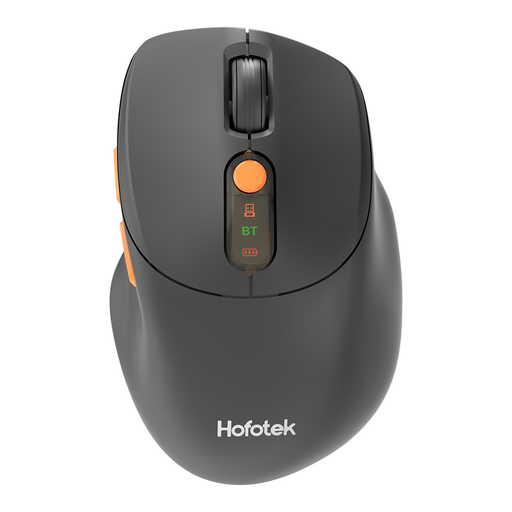
HOFOTEK M311 2.4G+BT Silent Office Mouse, black-orange
Consider this for quiet-click writing when you need a choice between Bluetooth and 2.4 GHz connectivity; confirm which connection your work computer permits.
The listed configuration has adjustable DPI and uses one AA battery. Check the wheel sound and whether the shape fits your hand for longer sessions.
View on Joybuy
 No image available
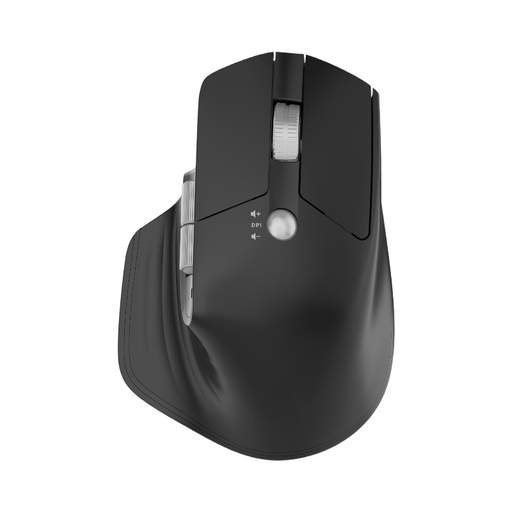
Ochama Bluetooth/2.4G Wireless Silent-Click Mouse
This is an option for repeated editing clicks when Bluetooth access varies between work computers; check whether the USB receiver is permitted where you will use it.
The listed configuration has one-touch DPI adjustment. Assess the shape in your usual mouse position rather than relying on its ergonomic description.
View on Joybuy
 No image available
Philips 3000 Series SPK7378B/00 Wireless Mouse, EU Version, black
Consider this quiet-click receiver model for a work computer with an available, permitted USB port.
The listed configuration uses 2.4 GHz wireless connectivity with a USB receiver and specifies 1600 DPI. Check wheel sound and hand fit if you edit for long periods.
View on Joybuy
 No image available
Rexsun V2 Wired Silent-Click USB Mouse, black
A wired connection avoids wireless pairing and receiver decisions, provided the cable suits your desk arrangement and the USB connection is permitted.
The listed mouse has four buttons and 1000/1200/1600 DPI settings, with Windows and Mac compatibility stated in its name. Check its click and wheel sound if either is important in your shared office.
View on Joybuy
 No image available
ET Wireless Gaming Mouse with LED Backlight
This USB-receiver option may suit a fixed desk where quieter button clicks matter; confirm that the receiver is permitted and assess the sound for yourself.
The listed configuration has five adjustable DPI settings. Consider whether its backlit gaming design and shape suit an office writing setup.
View on Joybuy
Common questions
Should I choose Bluetooth or a USB receiver for a shared-office mouse?
Choose Bluetooth when your work computer allows it and keeping a USB port free matters; a receiver is an option when an available port and workplace policy allow one. If you move between computers with different arrangements, a dual-connectivity mouse such as the Dell MS355 gives you both connection methods.
Is a silent-click mouse enough if my hand or wrist feels uncomfortable?
No: quieter buttons do not establish that a mouse fits your hand or that your workstation is well arranged. The Health and Safety Executive advises keeping the mouse within easy reach, using a straight wrist and avoiding a tight grip; review the wider setup if discomfort persists.
When does a UK employer need to assess a computer workstation?
The Health and Safety Executive says employers must assess a workstation when a worker uses display screen equipment daily as part of normal work for continuous periods of an hour or more. That assessment concerns the workstation and working conditions, not just the choice of mouse.
How should I dispose of an old wireless mouse in the UK?
Use an appropriate electrical-waste collection route rather than putting the mouse in household rubbish. UK government guidance also directs consumers to recycle batteries separately through suitable collection facilities.


