Quiet shared-desk timetable checker
You compare arrivals, routes or service changes beside colleagues and want less click noise without giving up a familiar mouse shape. Logitech and HP describe quiet-click features on specific models.


Start with click noise and a scroll control you can use comfortably across long timetable pages. A conventional mouse preserves familiar movement, while a stationary trackball makes more sense when there is little room to move one; consider a vertical shape chiefly when fit during longer sessions is your priority. Check the exact model’s connection method and hand fit, because those features vary even within a product range.
You compare arrivals, routes or service changes beside colleagues and want less click noise without giving up a familiar mouse shape. Logitech and HP describe quiet-click features on specific models.
Your laptop, paperwork or a neighbouring user leaves little room for mouse movement. Logitech and Kensington position stationary trackballs as options for a tight or busy desk.
You navigate schedules for extended periods and need to consider hand fit, pointing posture and scrolling alongside desk space. A different mouse shape is only part of assessing the wider workstation setup.
Decide whether nearby colleagues, available desk space, navigation between pages and devices, or longer-session fit is your main constraint; then check the features of the exact mouse you are considering.
| Concern | What to check | Who this matters to |
|---|---|---|
| Click noise | Check the exact variant’s quiet-click description and any stated comparison baseline. | When I check service changes beside colleagues, repeated clicks should be less distracting. Around 33% of consumers put quiet operation first. |
| Desk space | Compare the space needed to move a conventional mouse with a stationary trackball; check thumb or finger control and hand fit. | If papers and a laptop occupy most of the shared surface, I need pointer control within a fixed area. Roughly 27% of consumers prioritise desk footprint. |
| Scrolling and switching | Check the wheel’s modes, supported devices and operating systems, and whether a receiver is needed or supplied. | Moving through long timetables or between computers makes navigation my main concern. Around 20% of consumers place scrolling and device switching first. |
| Long-session fit | Check hand-size guidance, handedness and button reach; consider the wider workstation and breaks too. | When timetable work continues for much of the day, I care most about whether the shape suits my hand and setup. Roughly 20% of consumers put longer-session comfort first. |
Logitech and HP describe click noise for particular models using different wording and comparison baselines. Their claims do not establish a like-for-like comparison between brands.
Check the claim for the exact variant, including what it is compared with, rather than ranking mice by unrelated noise-reduction figures.
Bluetooth pairing and receiver support differ by model. Logitech says the MX Anywhere 3S can use a Logi Bolt receiver, but that receiver is not included.
Check each computer’s Bluetooth capability and ports, then confirm what comes with the mouse.
Your setup may require an available USB-A port or a separately obtained compatible receiver.
Logitech positions Lift for small to medium hands, while Kensington describes SlimBlade Pro for average to larger hands. A vertical grip and a finger-operated trackball also involve different pointing motions.
Consider whether you prefer conventional movement, thumb control, finger control or a vertical grip, and check fit before committing.
The Health and Safety Executive identifies workstation design and display-screen use patterns as considerations in discomfort and fatigue. Mouse shape alone does not address screen placement or work routine.
Look at mouse placement, chair and screen arrangement, and breaks alongside the device itself.
Its relevant range spans compact conventional mice, stationary trackballs and vertical models, giving you different shapes to consider for the same desk task.
A trackball option if keeping the pointing device stationary is more important than preserving conventional mouse movement.
Its relevant conventional mice offer familiar shapes for buyers comparing quiet clicking and connection methods.
These mice cover conventional wireless and vertical shapes for the shared-desk task. Compare their stated connections and click features, then check scrolling and fit against the way you work.
 No image available
Consider this conventional mouse if you prefer familiar movement while navigating timetables. Check its click noise, wheel behaviour and hand fit against your shared-desk routine rather than assuming the shape will suit every user.
 No image available
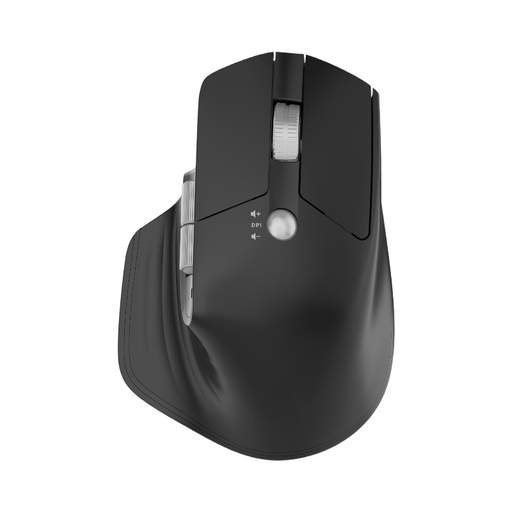
For a desk where quiet clicks and a choice of wireless connection matter, the M311 is described as silent and specifies 2.4G+BT connectivity. Its name also identifies adjustable DPI and one AA battery; check the wheel and hand fit if you spend long periods comparing pages.
 No image available
If you want conventional mouse movement with a quiet-click claim, this model specifies Bluetooth/2.4G wireless connection and one-touch DPI adjustment. Check its scrolling behaviour and whether the shape fits your hand for longer sessions.
 No image available
For a desk computer where a USB receiver is practical, this mouse specifies 2.4GHz wireless connection, a USB receiver and 1600 DPI. Its name describes silent clicks; check wheel behaviour and hand fit if timetable navigation is a frequent task.
 No image available
Consider this model if a different hand position is your main reason for changing mice; its name specifies a detachable wrist rest. Check whether its shape fits your hand and confirm its click noise before choosing it for a quiet shared desk.
Choose Bluetooth if the computer supports it and keeping a USB port free matters; choose a receiver only after confirming the mouse supports that method and what is supplied. Logitech says MX Anywhere 3S can use a Logi Bolt receiver, but the receiver is not included.
A trackball can make sense when you cannot spare room to move a conventional mouse, because the pointing device stays in place. Logitech positions ERGO M575S for small or busy setups; check whether thumb or finger control and the model’s hand fit suit you.
Follow the instructions for the exact model rather than assuming every ball comes out the same way. Kensington describes a removable ball on SlimBlade Pro and a ball-ejection system on Pro Fit Ergo TB450.
Consider the whole workstation as well as mouse fit. The Health and Safety Executive says display-screen-equipment rules apply to workers who use such equipment daily for continuous periods of an hour or more; mouse placement, screen arrangement and work routine all deserve attention.